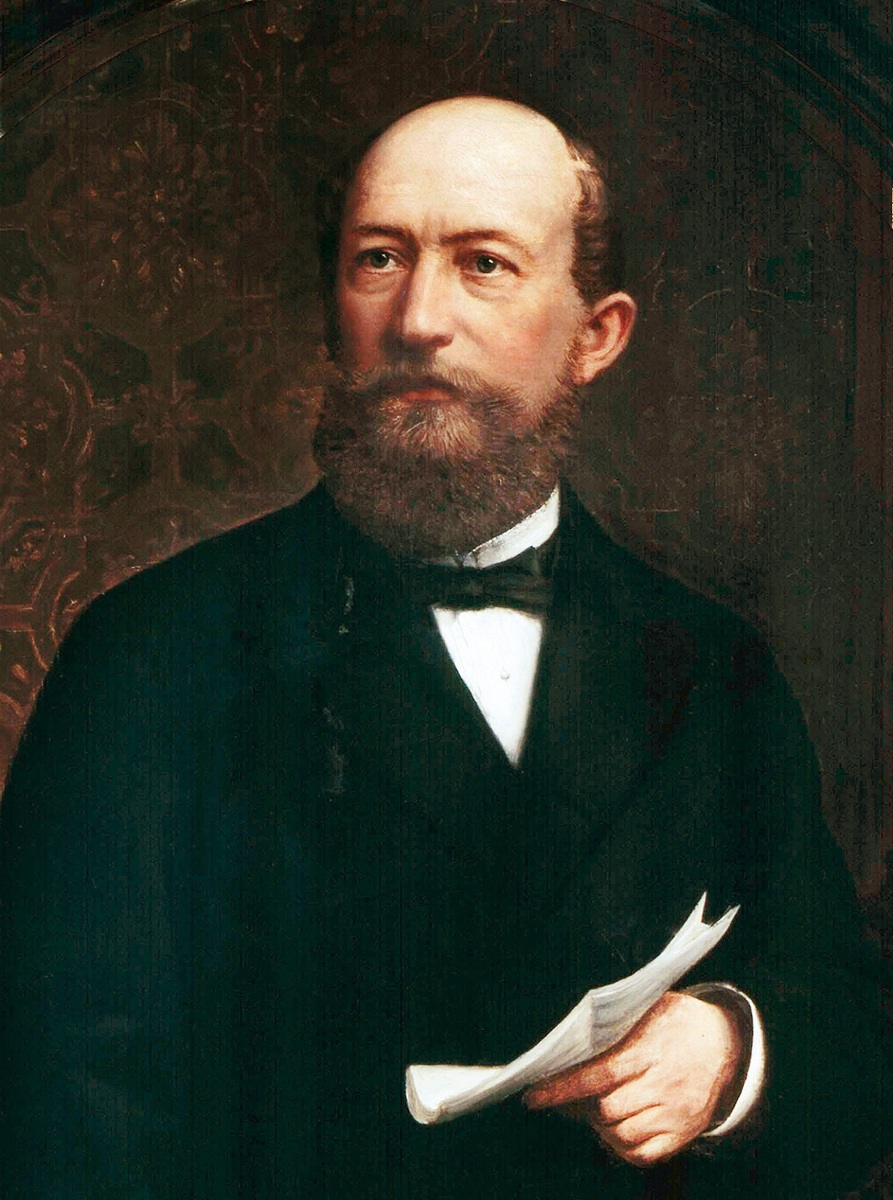
The Bayer Company (Friedrich Bayer et Compagnie) was founded
On Aug. 1, 1863, the general partnership “Friedr. Bayer et comp.” was founded in Barmen, Germany by dye salesman Friedrich Bayer and master dyer Johann Friedrich Weskott. The company manufactured and sold synthetic dyestuffs.
The extraction of these dyes from coal tar derivatives had only been invented a few years previously, opening up a new field of business for the still young chemical industry. Their market was the textile industry, which was rapidly growing in the wake of industrialization. The natural dyes used until then were scarce and expensive. New inventions, such as the synthesis of the red dye Alizarin and the high demand for tar dyes, led to a boom in new companies. During this time, numerous dye factories were established, but only innovative companies with their own research and the ability to seize opportunities in the international market managed to survive over the long term. Bayer was one of them.
From 1881 to 1913, Bayer developed into an internationally active chemical company. Although dyes remained the largest business area, new fields of business emerged.
As early as 1888, Bayer had established a pharmaceutical department, which generated an increasingly larger share of total sales. This period also saw the beginnings of the production of organic basic and intermediate products for dyes and pharmaceuticals, as well as inorganic chemicals. In 1904, Bayer began manufacturing photochemicals – developers for films – and in 1906, research into rubber synthesis was initiated.
Tags:
Source: Bayer AG
Credit: Photo: Friedrich Bayer, 1863, Courtesy: Wikipedia.