Protein Walks on Legs to Keep Our Nerve Cells Alive
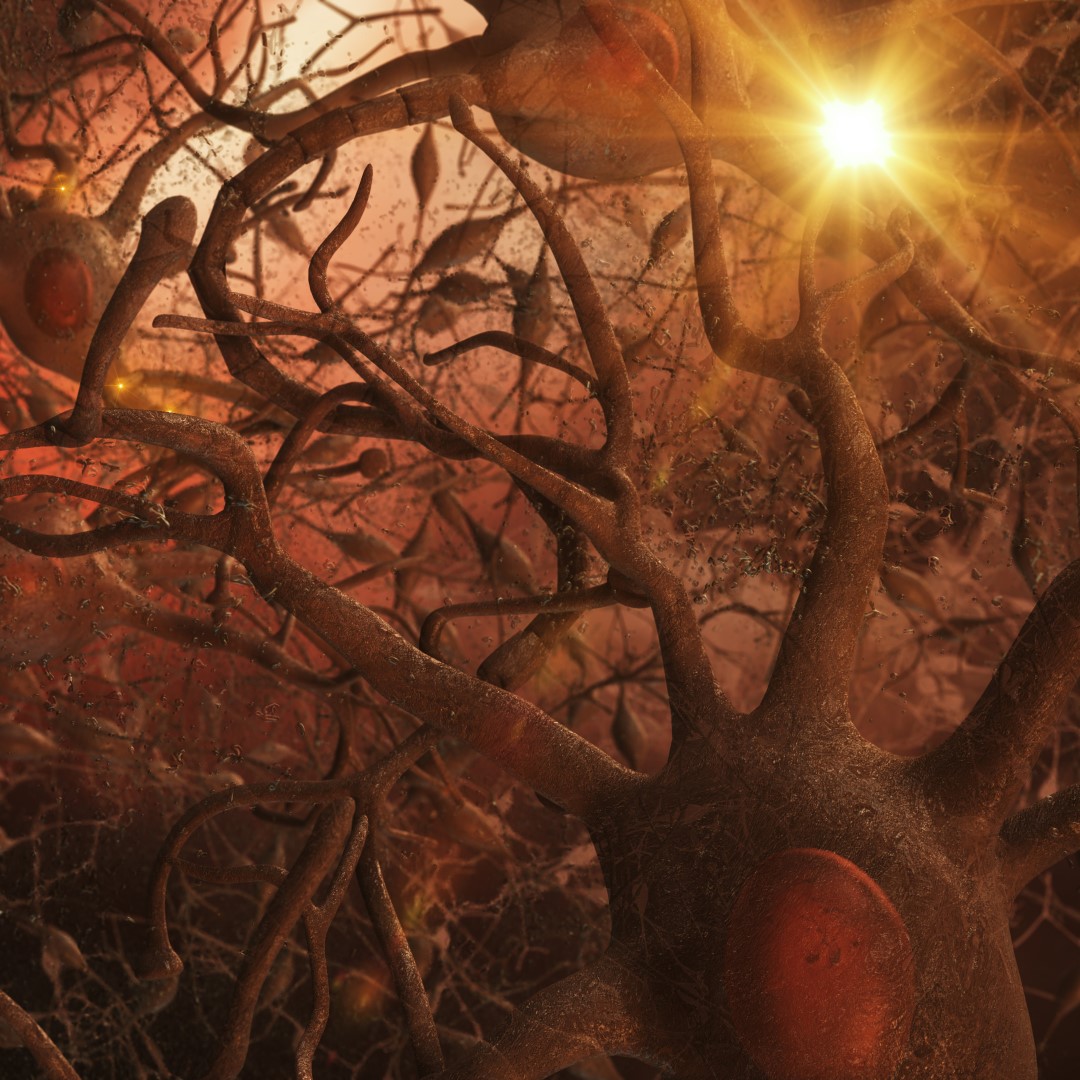
On Jul. 15, 2026, a University of California, Davis (UC Davis) led study have unveiled a new structure of this walking protein, showing how cells control it. A nerve cell resembles a vast tree with branches that communicate with thousands of other cells. To function, it depends on a motor protein that walks on two legs, hauling urgent cargo from the center of the cell to the faraway tips of every branch.
The kinesin-1 protein is crucial to nerves. If it malfunctions, brain cells can no longer send packages of neurotransmitters and other cargo to where they are needed. Cells sicken and die, triggering diseases that cause paralysis, seizures, and cognitive deficits.
The discovery, published in Science Advances, could lay a foundation enabling treatments for these incurable diseases, said coauthor Richard McKenney, a professor of molecular and cellular biology: “If you want to design drugs, having these clear structures will be a major advance for that. This will open up a lot of new scientific questions.”
“It’s a simple machine that will move in one direction if you turn it on,” said McKenney. But as with the enchanted broomstick in the famous story, kinesin-1 has no common sense of its own — so the cell has to turn it on and off, exactly when needed. McKenney and his collaborators knew that kinesin-1 normally exists in a turned-off state. The cell turns it on by latching a protein called MAP7 onto its back. But the mechanics of this on-off switch remained a mystery.
Al-Bassam’s team, led by Md Ashaduzzaman, a postdoctoral fellow, used a method called cryo-electron microscopy to take thousands of pictures of the turned-off protein. Merging these images together, they produced a clear picture of how kinesin-1 looks when it’s turned off.
The turned-off broomstick was actually folded in half, with its top end wedged between its legs so it can’t walk. A connector on one half of the broomstick latches onto the other half, acting as a rubber band to keep it folded. This folded structure acts as a double lock, immobilizing the legs and obstructing the docking site where cargo attaches — so even if the legs moved, they’d have nothing to carry. Al-Bassam and McKenney found that when MAP7 attaches to kinesin-1 to turn it on, it wedges in and pops the rubber band loose. This causes the broomstick to unfold, freeing its legs and exposing the top section where cargo is attached.
The discovery could shed light on closely related proteins present in all animals, plants, fungi, and single-celled protists. Importantly, it has implications for some incurable neurodegenerative diseases, such as amyotrophic lateral sclerosis (ALS), Charcot-Marie-Tooth Disease Type 2, and hereditary spastic paraplegia 10, which cause cognitive problems, seizures, blindness, paralysis, muscle weakness, pain, and other debilitating symptoms.
Tags:
Source: University of California, Davis
Credit: