Contagious Cancer Likely Crossed an Ocean, Triggering Severe Outbreak in Pacific Northwest Clams
On Jun. 23, 2026 – researchers from the Pacific Northwest Research Institute in Seattle announced they have identified a severe outbreak of a rare contagious cancer in soft-shell clams in Washington state’s Puget Sound and found evidence that the disease was recently introduced to the Pacific Northwest from Atlantic Coast populations.
The study, published in the Proceedings of the National Academy of Sciences (PNAS), reports that the cancer’s prevalence exceeded 75% at two Puget Sound locations by 2024, making it one of the most significant outbreaks of bivalve transmissible cancer documented in the region.
Unlike most cancers, which remain confined to a single individual, bivalve transmissible neoplasia (BTN) spreads when living cancer cells pass from one animal to another through seawater. The disease has previously been found in soft-shell clams along the Atlantic Coast but had never been documented in West Coast populations.
Researchers first detected the disease in 2022 in clams collected from Triangle Cove and the Stanwood area of Puget Sound. Follow-up surveys revealed that prevalence increased dramatically over the next two years. By 2024, more than three-quarters of clams sampled at both locations tested positive for the disease.
Genetic analyses showed the cancer belongs to the same lineage previously identified on the East Coast of the U.S., indicating a recent transcontinental transfer. The outbreak appears to be in its early stages, offering researchers a rare chance to observe how wild clam populations respond to the disease.
The study also found that soft-shell clam populations in Puget Sound include hybrids of two closely related species, Mya arenaria and Mya japonica. Preliminary evidence suggests the Japanese species may be less susceptible to the disease, raising new questions about how host genetics influence cancer transmission and disease resistance.
The findings demonstrate how contagious cancers can spread across vast geographic distances and highlight the potential of environmental DNA to track emerging marine diseases in the wild. Because the outbreak was identified at an early stage in a hybridizing clam population, it also provides a rare opportunity to study how resistance to a transmissible cancer may evolve in a natural population.
Tags:
Source: Pacific Northwest Research Institute
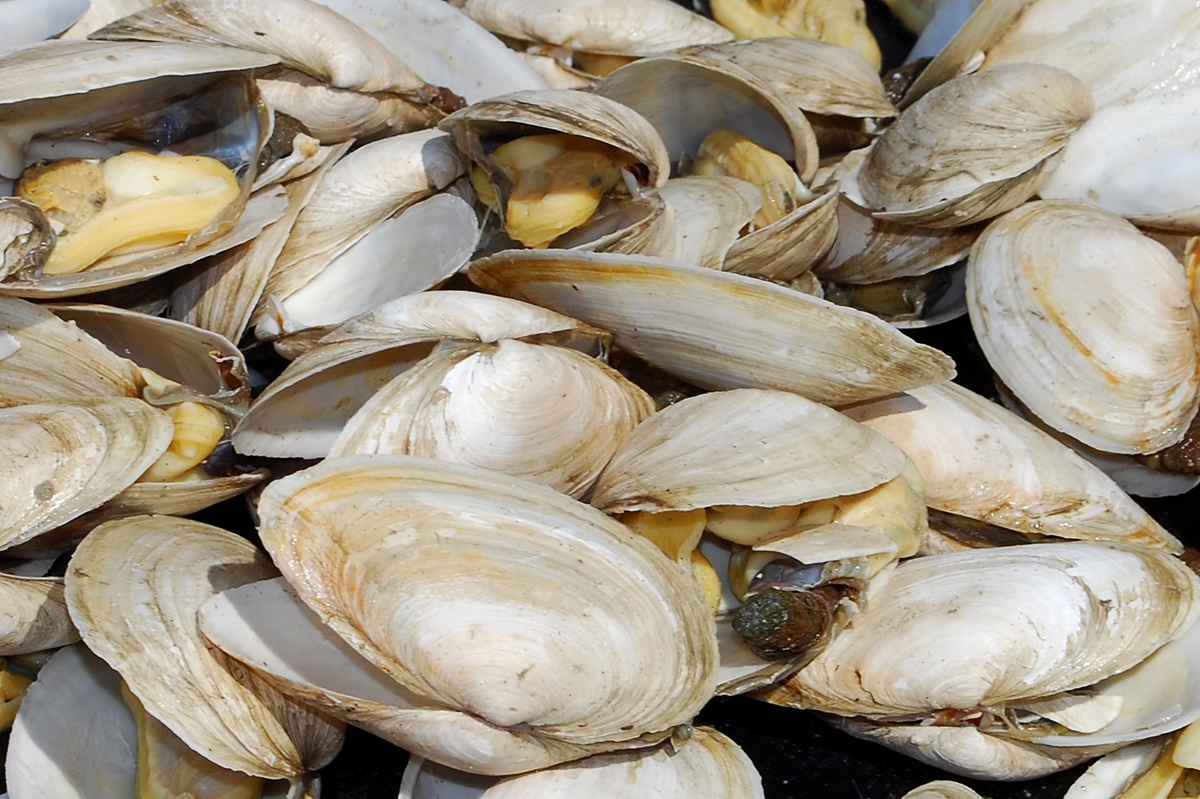
Credit: Photo: Steamed clams (steamers), Gloucester, Massachusetts, Courtesy: Wikipedia.