U.S. Fish and Wildlife Service and Partners Announce Innovative Cloning Advancements for Black-footed Ferret Conservation
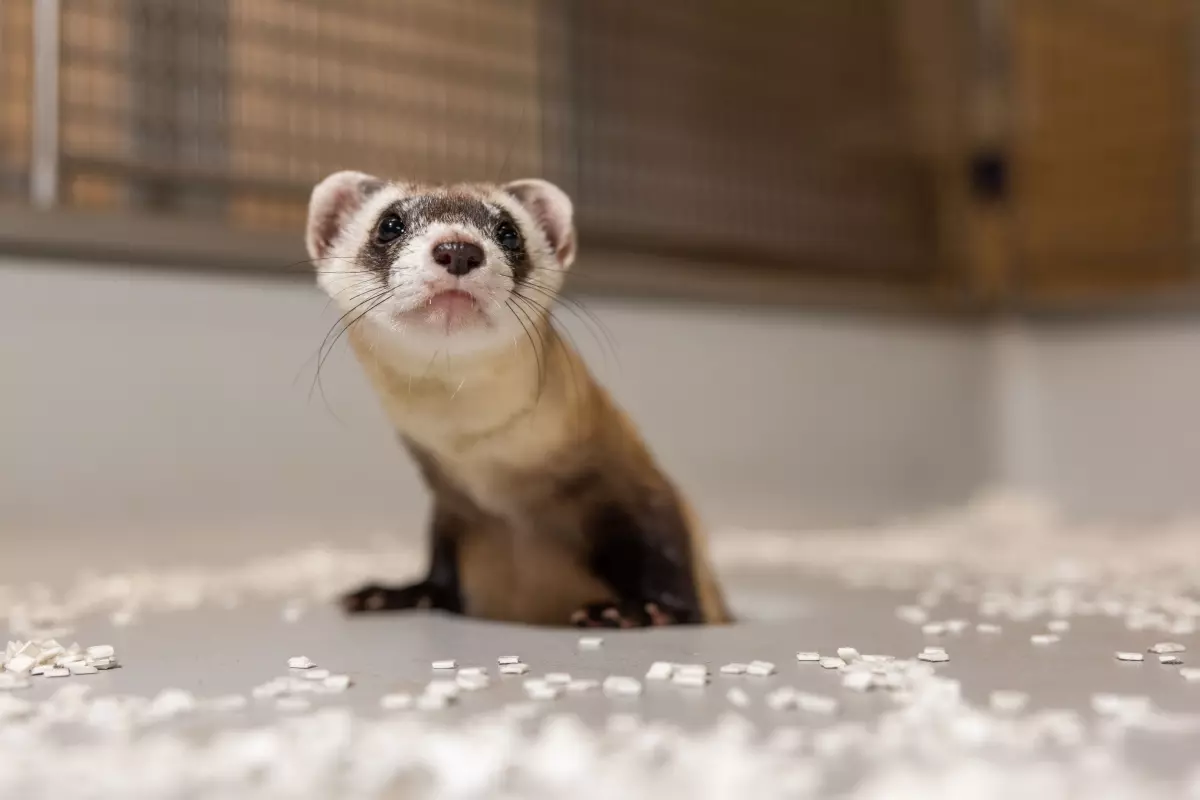
On Apr. 17, 2024, the U.S. Fish and Wildlife Service and its genetic research partners announced the birth of two new black-footed ferret clones – known as Noreen and Antonia – and are providing an update on their latest efforts to breed previously cloned black-footed ferret, Elizabeth Ann.
Noreen was born at the National Black-footed Ferret Conservation Center in Colorado, while Antonia resides at the Smithsonian’s National Zoo & Conservation Biology Institute in Virginia. Both were cloned from the same genetic material as Elizabeth Ann. They are healthy and continue to reach expected developmental and behavioral milestones. The Service and its research partners plan to proceed with breeding efforts for Noreen and Antonia once they reach reproductive maturity later this year.
This scientific advancement to clone the first U.S. endangered species is the result of an innovative partnership among the Service and critical species recovery partners and scientists at Revive & Restore, ViaGen Pets & Equine, Smithsonian’s National Zoo and Conservation Biology Institute, San Diego Zoo Wildlife Alliance, and the Association of Zoos and Aquariums. The application of this technology to endangered species addresses specific genetic diversity and disease concerns associated with black-footed ferrets. The Service views this new potential tool as one of many strategies to aid species recovery alongside efforts to address habitat challenges and other barriers to recovery.
Elizabeth Ann remains healthy at the National Black-footed Ferret Conservation Center in northern Colorado, exhibiting typical adult ferret behavior. Planned efforts to breed Elizabeth Ann were unsuccessful due to a condition called hydrometra, where the uterine horn fills with fluid. Her other uterine horn was not fully developed, which is not unusual in other black-footed ferrets and therefore not believed to be linked to cloning. Elizabeth Ann otherwise remains in excellent health, symbolizing the early progress in biotechnology for species conservation.
Elizabeth Ann, Noreen and Antonia were cloned from tissue samples collected in 1988 from a black-footed ferret known as Willa and stored at San Diego Zoo Wildlife Alliance’s Frozen Zoo. These samples contain three times more unique genetic variations than found on average in the current population. Introducing these currently unrepresented genes into the existing population would significantly benefit the species’ genetic diversity.
All black-footed ferrets alive today, except the three clones, are descendants of the last seven wild individuals. This limited genetic diversity leads to unique challenges for their recovery. Besides genetic bottleneck issues, diseases like sylvatic plague and canine distemper further complicate recovery efforts. Cloning and related genetic research could offer potential solutions, aiding concurrent work on habitat conservation and reintroducing black-footed ferrets into the wild.
Ongoing collaboration with innovative partners is driving scientific progress, underscoring the crucial role of conservation partnerships in safeguarding and improving American biodiversity. The Service will continue to provide updates as the research progresses. This research does not in any way supplant or diminish the Service’s efforts to recover the species in the wild. Those efforts, including reintroduction and monitoring of extant populations across the Great Plains, are ongoing, and the Service continues to collaborate with many partners working to conserve habitat for the species.
Tags:
Source: U.S. Fish and Wildlife Service
Credit: Photo: Black-footed ferret clone Antonia. Courtesy: Roshan Patel, Smithsonian Conservation Biology Institute.