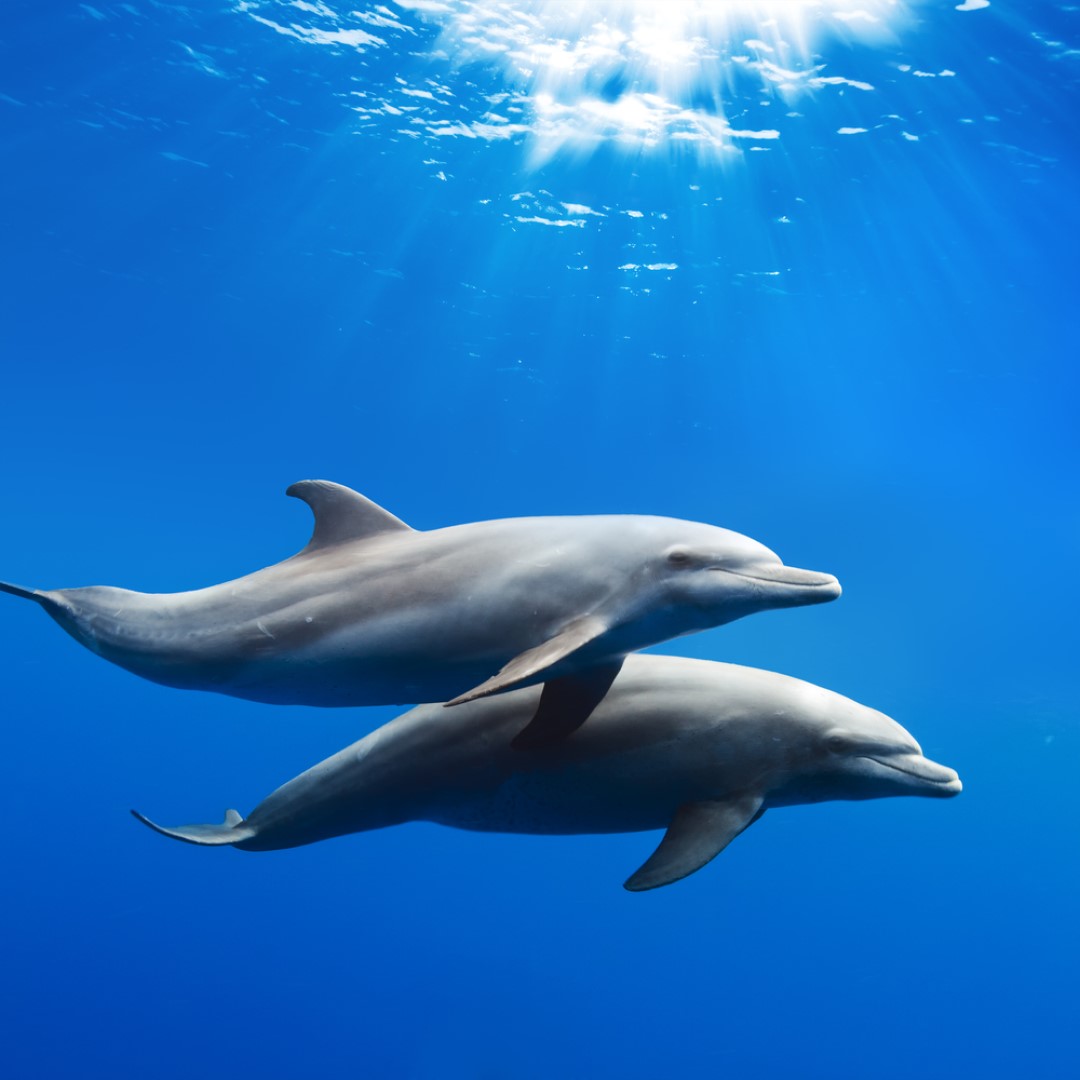
25-year dolphin study revealed factors contributing to aging rates in long-lived mammals
On Aug. 10, 2020, scientists from Epitracker and the Translational Genomics Research Institute (TGen) announced the results from a groundbreaking, 25-year study of bottlenose dolphins that identified factors differentiating individuals with slow and accelerated aging rates. The study results, published in the Proceedings of the National Academy of Sciences, highlighted how biological differences between dolphins, living in the same natural ocean environment and receiving routine medical examinations under the care of the U.S. Navy, may inform new approaches to slow degradative processes associated with aging.
Although sex differences in human populations can explain a large fraction of interindividual variation in disease susceptibility and aging phenotypes, aging rate biomarkers in our study remained independent and linear predictors of aging, controlling for sex. This is despite the fact that female dolphins are known to live longer than male dolphins. Potential reasons why male dolphins have shorter lives compared with females in the wild may include higher risks of trauma due to combat with other males; greater vulnerability to predation from being in smaller groups; larger territorial ranges, which takes them through riskier habitats; and accumulation of higher concentrations of persistent organic pollutants. Most of these reasons for the shorter lifespan of male dolphins are due to acute events and would not be expected to be reflected in linear aging rate indices. As with humans, further investigations are warranted to evaluate potential nontraumatic chronic factors that may contribute to shorter lifespans in males.
In conclusion, despite having a homogenous ocean environment, fish-based diet, and routine healthcare, individual dolphins exhibited variation in the rate of aging based on commonly used blood-based clinical biomarkers. Their data also support the notion that individual dolphins with accelerated aging are more susceptible to clinically relevant and aging-associated conditions, including anemia and lymphopenia. Thus, our unique dolphin longitudinal cohort may be ideal for prioritizing nonenvironmental, genetic factors as targets for longevity-enhancing or geroprotective agents that may slow aging rates and improve the health span of long-lived mammals. Thus, identifying the genetic determinants of the four blood-based aging rate indices in dolphins would be of great value, as these indices reflect hematologic and immune changes with age that could in turn reflect organismal or system-wide cellular senescence processes associated with aging
Tags:
Source: Proceedings of the National Academy of Sciences
Credit: