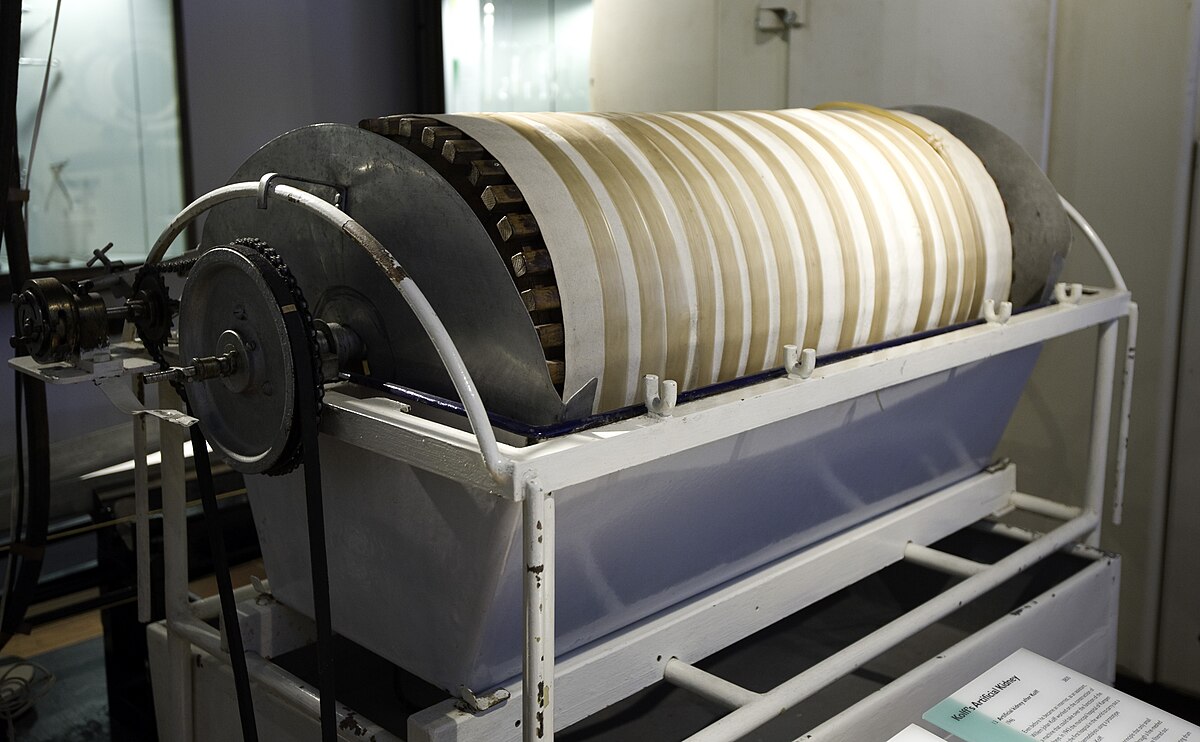
World’s first long-term dialysis patient was treated on an artificial kidney at the University of Washington Hospital
On Mar. 9, 1960, In Seattle the world’s first long-term dialysis patient Clyde Shields was treated on an artificial kidney at the University of Washington Hospital.
Belding Scribner had the idea of a shunt connecting indwelling arterial and venous cannulas in the forearm between dialyses, to maintain patency of the cannulas, Quinton used Teflon tubing to make the device, and Dillard was the surgeon who implanted the first shunt.
The patient, Shields, was a 39-year-old man dying from uremia secondary to chronic glomerulonephritis. The shunt worked, and he lived a further 11 years on dialysis. Scribner took Quinton and Clyde to the American Society for Artificial Internal Organs (ASAIO) meeting in April and showed Clyde to physicians interested in dialysis, and Quinton demonstrated fabrication of the shunt.
In June 1960, 2 landmark papers describing cannulation and the treatment were published in the Transactions of the ASAIO. Today there are an estimated 5.3 to 10.5 million patients with end-stage renal disease living worldwide.
The dialysis treatment allowed him to live an additional eleven years before dying of cardiac disease.
Tags:
Source: University of Washington
Credit: Photo: Kolff Artificial Kidney. Courtesy: Museum Boerhaave.