UMN Institute scientist links ancient virus to cancer risk
On Mar. 16, 2020, the Hormel Institute, University of Minnesota announced published research concerning remnants of ancient viruses found in human chromosomes and how this may affect the risk of developing cancer and other diseases.
In published research, Dr. Contreras-Galindo and the team of researchers found out that people without centromere virus remains are more prone to develop a disease called cutaneous T-cell lymphoma, a type of cancer affecting the skin, but they did not find any association with other cancers or skin conditions. Additionally, the fewer centromere virus remains they found, the higher the chance the people developed a severe form of cutaneous T-cell lymphoma, called Sèzary Syndrome.
The researchers also explored the effect of the removal of centromere virus remains in diseases of the T-cells (cells that mediate the immune system of a person) like HIV. When reviewing HIV patients, the researchers found that patients without virus DNA remains in their centromeres somewhat avoided the negative effects of HIV infection. Those patients also survived longer in contrast to patients that retained these centromere virus remains.
Dr. Contreras-Galindo reasons that intact centromere DNA is important for the division and function of T-cells. Abnormal centromeres, like centromeres lacking the remains of the virus DNA, may affect the function of T-cells and be involved in cancer development. Yet, these defects somehow prevent the negative infection effects of current viruses, such as HIV.
Dr. Contreras-Galindo’s article “Structural variation of centromeric endogenous retroviruses in human populations and their impact on cutaneous T-cell lymphoma, Sézary syndrome, and HIV infection” was published in BMC Medical Genomics.
Tags:
Source: Masonic Cancer Center
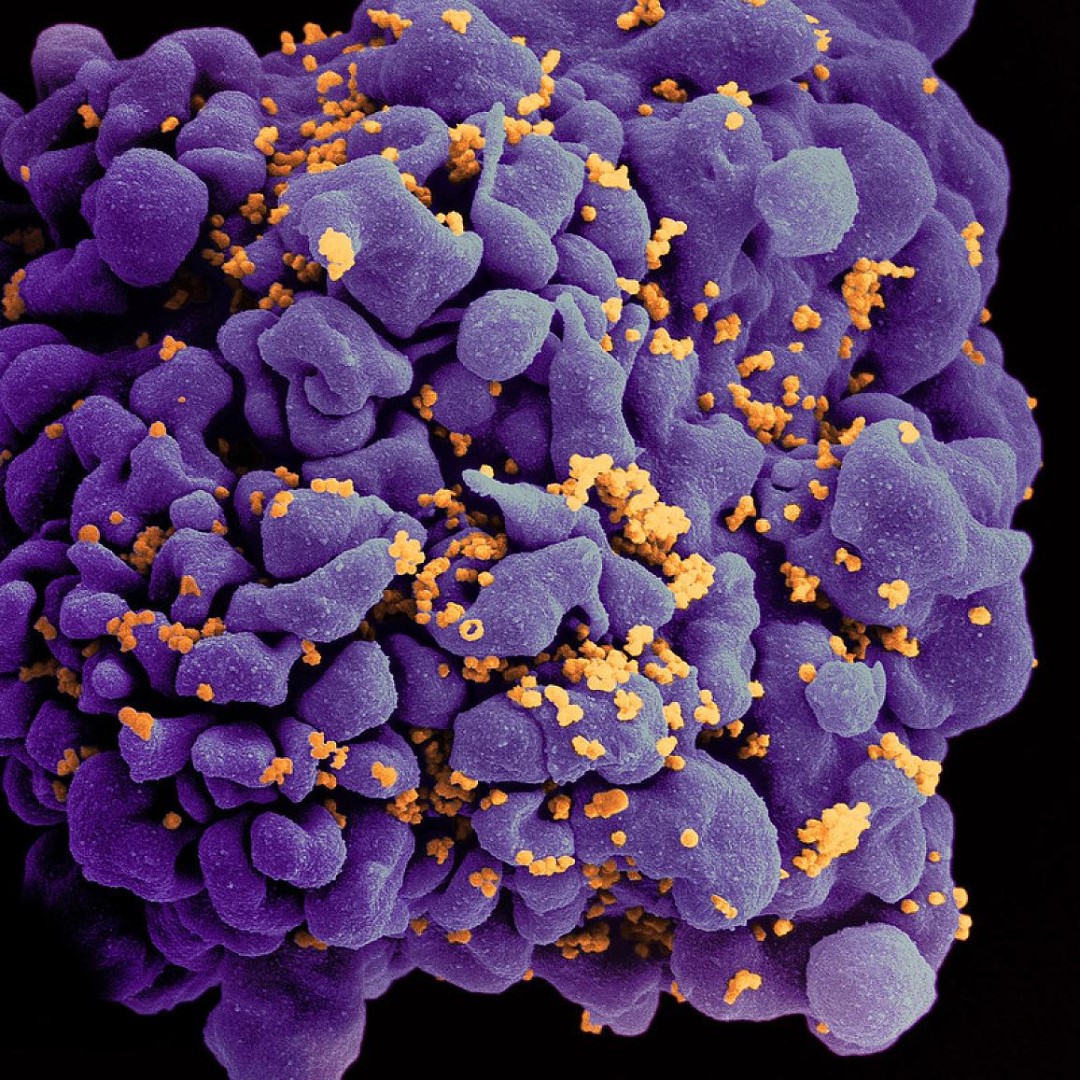
Credit: Photo: Microscopy of HIV-infected H9 T cell, colorized in orange, courtesy the National Institute of Allergy and Infectious Diseases.