Tomatoes, carrots, and lettuce store pharmaceutical byproducts in their leaves
On Mar. 12, 2026, Johns Hopkins University (JHU) researchers release study findings that suggest that some vegetables may be better candidates for wastewater irrigation than others.
In areas where freshwater is scarce, farmers often turn to treated wastewater to irrigate crops. And many regulators and consumers worry about exposing food to compounds routinely found in wastewater, including many psychoactive medications that treat mental disorders.
Federally funded research from JHU found that tomatoes, carrots, and lettuce store those chemicals in their leaves—good news for tomato and carrot lovers who eat the fruit and roots of those vegetables, respectively. The research, published in Environmental Science and Technology, is part of an effort to explore the safety of using municipal wastewater, most commonly after being filtered through treatment facilities, to irrigate crops.
In a temperature-controlled chamber, the researchers fed tomatoes, carrots, and lettuce a liquid growth solution made of ultrapure water, salts, nutrients, and one of the four medications for up to 45 days. They sampled different tissues from each of the plants and used advanced chemical analysis to determine how the medications are absorbed by plants, what byproducts the plants produce from them, and where those chemical byproducts ultimately end up in the plant.
Pharmaceuticals and their byproducts tended to accumulate in the leaves. Tomato leaves contained a concentration of pharmaceuticals more than 200 times higher than that of their fruits, while the concentrations in carrot leaves were roughly seven-fold that of the edible roots. But the researchers cautioned those concentrations are not cause for alarm; they only help to create a map of where the chemical compounds go.
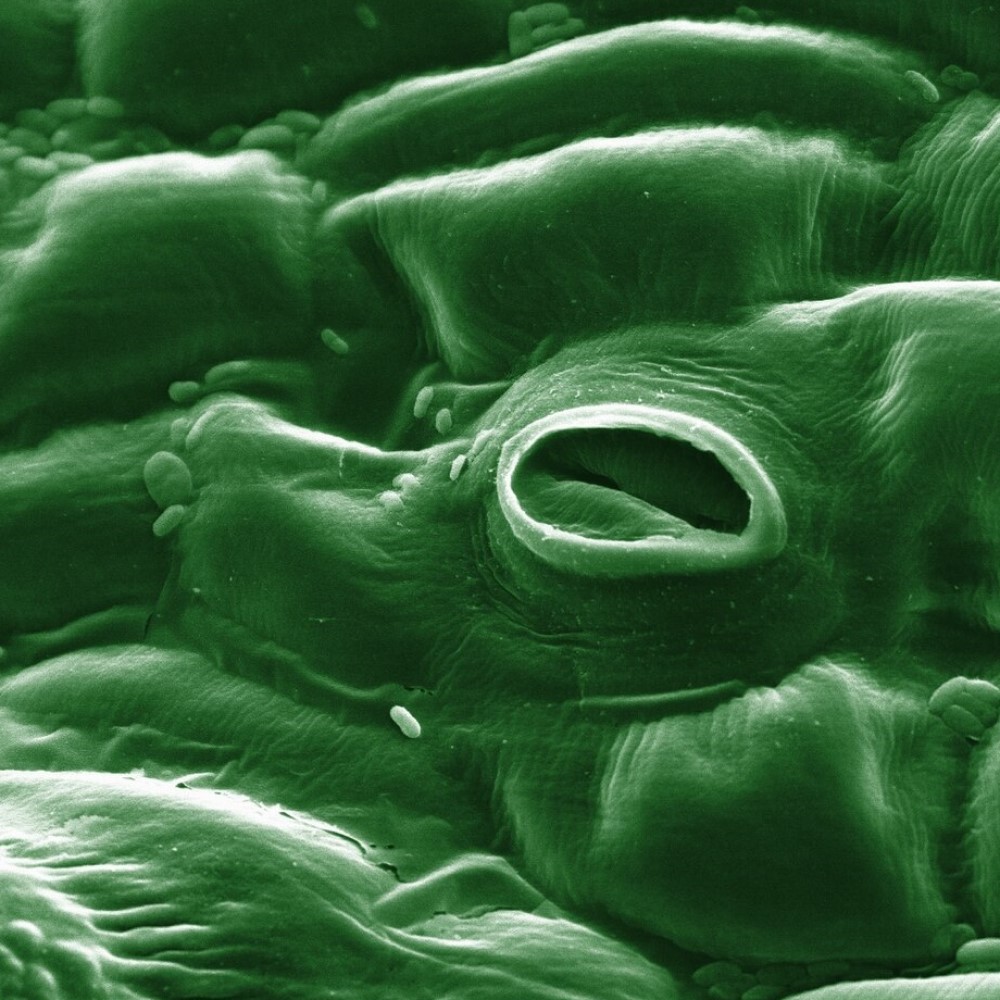
Water, which acts like a superhighway by carrying nutrients and other molecules to various parts of the plant, likely played a role in moving the drug compounds, the researchers said. Most water travels through the roots, through the body of the plant, and into the leaves. Pharmaceuticals and their byproducts ride this wave until they hit the leaves, where water molecules evaporate through pores called stomata, leaving the drug compounds behind.
Instead, plants stick the compounds into the cell walls of leaves or in vacuoles, which act as trash bags for cells. Over time, these pharmaceuticals and their byproducts build up in the plant tissue with nowhere to go, the researchers said.
Tags:
Source: Johns Hopkins University
Credit: Photo: Tomato leaf stomata using a scanning electron microscope (SEM). Courtesy: Dartmouth University.