Tomato’s hidden mutations revealed in study of 100 varieties
On Jun. 17, 2020, Howard Hughes Medical Institute (HHMI) investigators reported they had identified long-concealed hidden mutations within the genomes of 100 types of tomato, including an orange-berried wild plant from the Galapagos Islands and varieties typically processed into ketchup and sauce. Their analysis described in the journal Cell, is the most comprehensive assessment of such mutations to date.
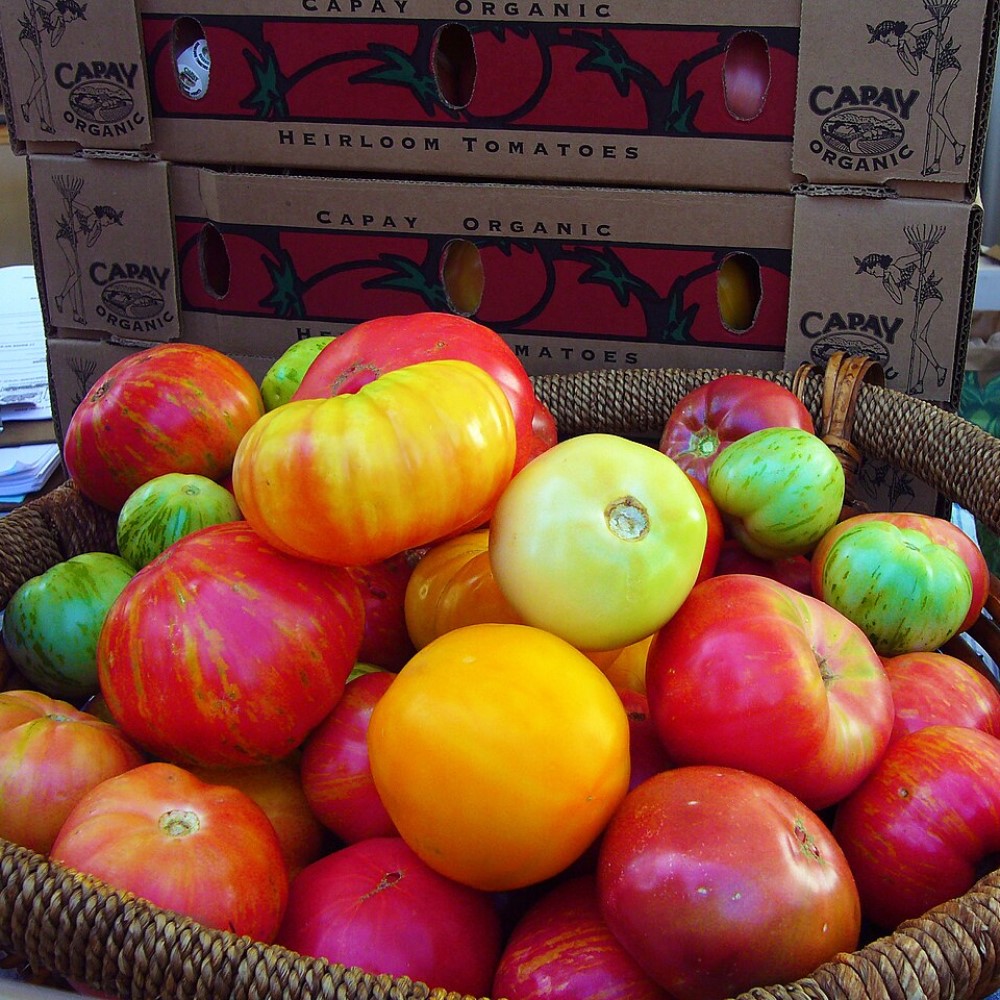
Human appetites have transformed the tomato – DNA and all. After centuries of breeding, what was once a South American berry roughly the size of a pea now takes all sorts of shapes and sizes, from cherry-like to hefty heirloom fruit.
Mutations, or changes, in the four types of DNA letters carried within an organism’s cells can alter its physical characteristics. Scientists studying plants have generally focused on a small, tractable kind of mutation, in which one DNA letter is swapped for another.
The new study, a collaboration with Michael Schatz at Johns Hopkins University and others, identified more than 200,000 structural mutations in tomatoes using a technique called long-read sequencing. HHMI’s Zachary Lippman likens it to looking through a panoramic window at large sections of the genome. By comparison, more conventional sequencing offered only a peephole, he says.
The majority of the mutations they found do not change genes that encode traits. But what’s clear, Lippman says, is that many of these mutations alter mechanisms controlling genes’ activity. One such gene, for instance, controls tomato fruit size. By modifying DNA structure – in this case, the number of copies of the gene – Lippman’s team was able to alter fruit production. Plants lacking the gene never made fruit, while plants with three copies of the gene made fruit about 30 percent larger than those with just a single copy.
Lippman’s team also demonstrated how DNA structure can influence traits in an example he calls “remarkably complex.” They showed that four structural mutations together were needed for breeding a major harvesting trait into modern tomatoes.
These sorts of insights could help explain trait diversity in other crops and enable breeders to improve varieties, Lippman says. For instance, perhaps adding an extra copy of the size gene to tiny ground cherries, a close relative of the tomato, could increase their appeal by making them larger, he says.
Tags:
Source: Howard Hughes Medical Institute
Credit: Photo: Capay heirloom tomatoes at Slow Food Nation. Courtesy Wikipedia.