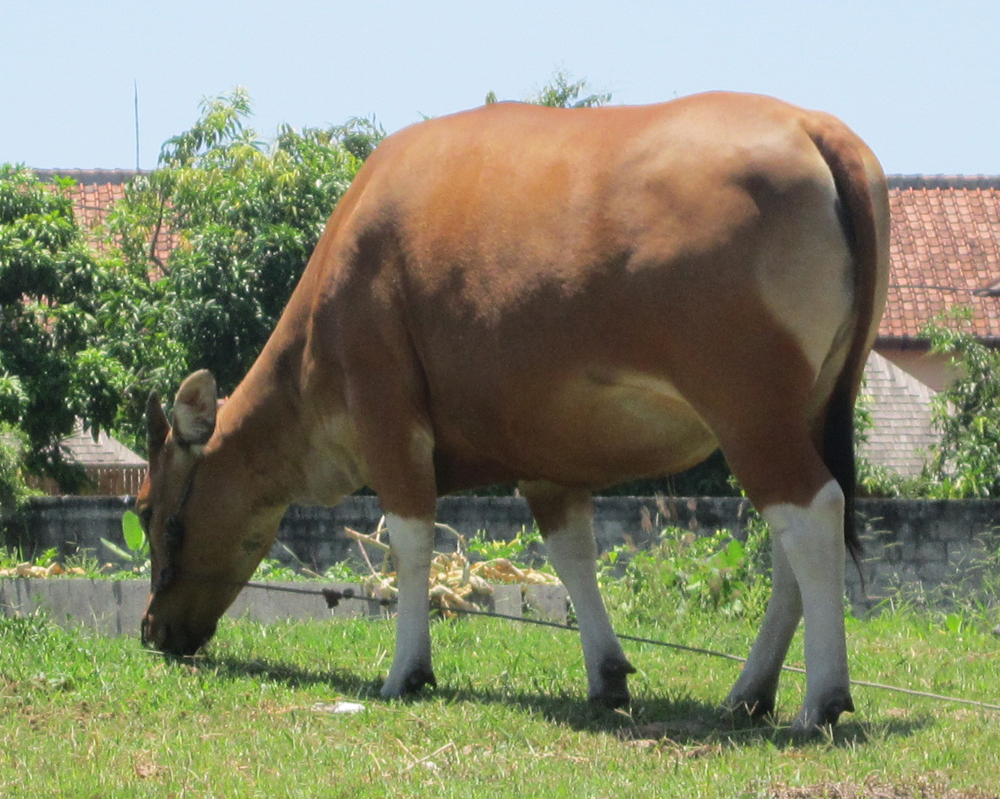
The banteng, an endangered species, was cloned for the second time
On Apr. 1, 2003, the birth of a cloned banteng from a surrogate mother cow was announced by scientists at Advanced Cell Technology, now Astellas Institute for Regenerative Medicine, of Worcester, Mass. The cloning project was the result of a collaboration between Advanced Cell Technology, the San Diego Zoo, Iowa State University and Trans Ova Genetics.
Bantengs, or Bali cattle (Bos javanicus), have been hunted for their slender, curved horns and now number fewer than 8,000 in the wild, mostly scattered in small herds on the island of Java. Bantengs once roamed in large numbers through the bamboo forests of Indonesia, Malaysia, Burma and other Asian nations. However hunting and habitat destruction have reduced their numbers by more than 80% in the past 20 years.
The banteng clones were born to Angus cows on April 1 and 3, 2003.The banteng calves were cloned using frozen cells from an animal that died in 1980 without producing any offspring. The initial step to this process occurred in June 2002, with the transfer of nuclei from banteng cells to the ova of domestic cattle. The embryos were then transferred to the Trans Ova Genetics research center in Iowa.
The banteng embryos were implanted into ordinary domestic cows, which successfully gestated these calves. Veterinarians at Trans Ova’s Genetic Advancement Center delivered the calves via caesarean section. Specialists from the San Diego Zoo, Iowa State University, and Trans Ova Genetics provided care for the newborns.
The project initially achieved 16 pregnancies but only two of the cloned embryos reached the full gestation period. A similar project to clone a Gaur in 2001 succeeded in producing a live calf but the animal died shortly after birth.
Tags:
Source: CABI Digital Library
Credit: