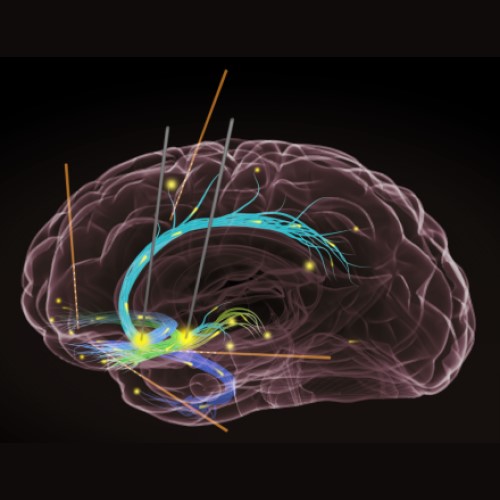
Researchers wirelessly recorded human brain activity during normal life activities
On May 3, 2021, the National Institutes of Health announced that researchers wre able to wirelessly record the directly measured brain activity of patients living with Parkinson’s disease and to then use that information to adjust the stimulation delivered by an implanted device. Direct recording of deep and surface brain activity offers a unique look into the underlying causes of many brain disorders. This project, published in the journal Nature Biotechnology, was funded by the National Institutes of Health’s Brain Research Through Advancing Innovative Neurotechnologies (BRAIN) Initiative.
Deep brain stimulation (DBS) devices are approved by the U. S. Food and Drug Administration for the management of Parkinson’s disease symptoms by implanting a thin wire, or electrode, that sends electrical signals into the brain. In 2018, the laboratory of Philip Starr, M.D., Ph.D. at the University of California, San Francisco, developed an adaptive version of DBS that adapts its stimulation only when needed based on recorded brain activity. In this study, Dr. Starr and his colleagues made several additional improvements to the implanted technology.
The implications of this type of recording are significant. The brain activity patterns (neural signatures) normally used to identify problems such as Parkinson’s disease symptoms have traditionally been recorded in clinical settings over short periods of time. This new technology makes it possible to validate those signatures during ordinary daily activities. Another advantage to recording over long periods of time is that distinct changes in brain activity (biomarkers) that could predict movement disorders can now be identified for individual patients. Ro’ee Gilron, Ph.D., a postdoctoral scholar in Dr. Starr’s lab and first author of this study, explained that this allows for a level of customized DBS treatment that was impossible to achieve previously.
One important consideration that arises is the ethical implication of (nearly) all-day brain recording. Since its beginning, the NIH BRAIN Initiative has recognized the importance of addressing potential ethical considerations pertaining to the development and use of devices that record or modulate brain activity. For instance, the NIH BRAIN Neuroethics Working Group is a group of experts in neuroethics and neuroscience that serves to provide the NIH BRAIN Initiative with input relating to neuroethics—a field that studies the ethical, legal, and societal implications of neuroscience. Alongside funding for neurotechnology research, the Initiative also funds research on the ethical implications of advancements in neurotechnology.
Tags:
Source: National Institutes of Health
Credit: