Henrietta Lacks’ family settled lawsuit with biotech company that used her cells without consent
On Aug. 1, 2023, more than 70 years after doctors at Johns Hopkins Hospital took Henrietta Lacks’ cervical cells without her knowledge, a lawyer for her descendants said they have reached a settlement with a biotechnology company that they accused of reaping billions of dollars from a racist medical system.
Tissue taken from the Black woman’s tumor before she died of cervical cancer became the first human cells to continuously grow and reproduce in lab dishes. HeLa cells went on to become a cornerstone of modern medicine, enabling countless scientific and medical innovations, including the development of the polio vaccine, genetic mapping and even COVID-19 vaccines. Despite that incalculable impact, the Lacks family had never been compensated.
Lacks’ cells were harvested in 1951, when it was not illegal to do so without a patient’s permission. But lawyers for her family argued that Thermo Fisher Scientific Inc., of Waltham, Massachusetts, continued to commercialize the results long after the origins of the HeLa cell line became well known. The company unjustly enriched itself off Lacks’ cells, the family argued in their lawsuit, filed in 2021.
The settlement came after closed-door negotiations that lasted all day Monday inside the federal courthouse in Baltimore. Some of Lacks’ grandchildren were among the family members who attended the talks.
A poor tobacco farmer from southern Virginia, Lacks got married and moved with her husband to Turner Station, a historically Black community outside Baltimore. They were raising five children when doctors discovered a tumor in Lacks’ cervix and saved a sample of her cancer cells collected during a biopsy. Lacks died at age 31 in the “colored ward” of Johns Hopkins Hospital. She was buried in an unmarked grave.
Tags:
Source: Associated Press
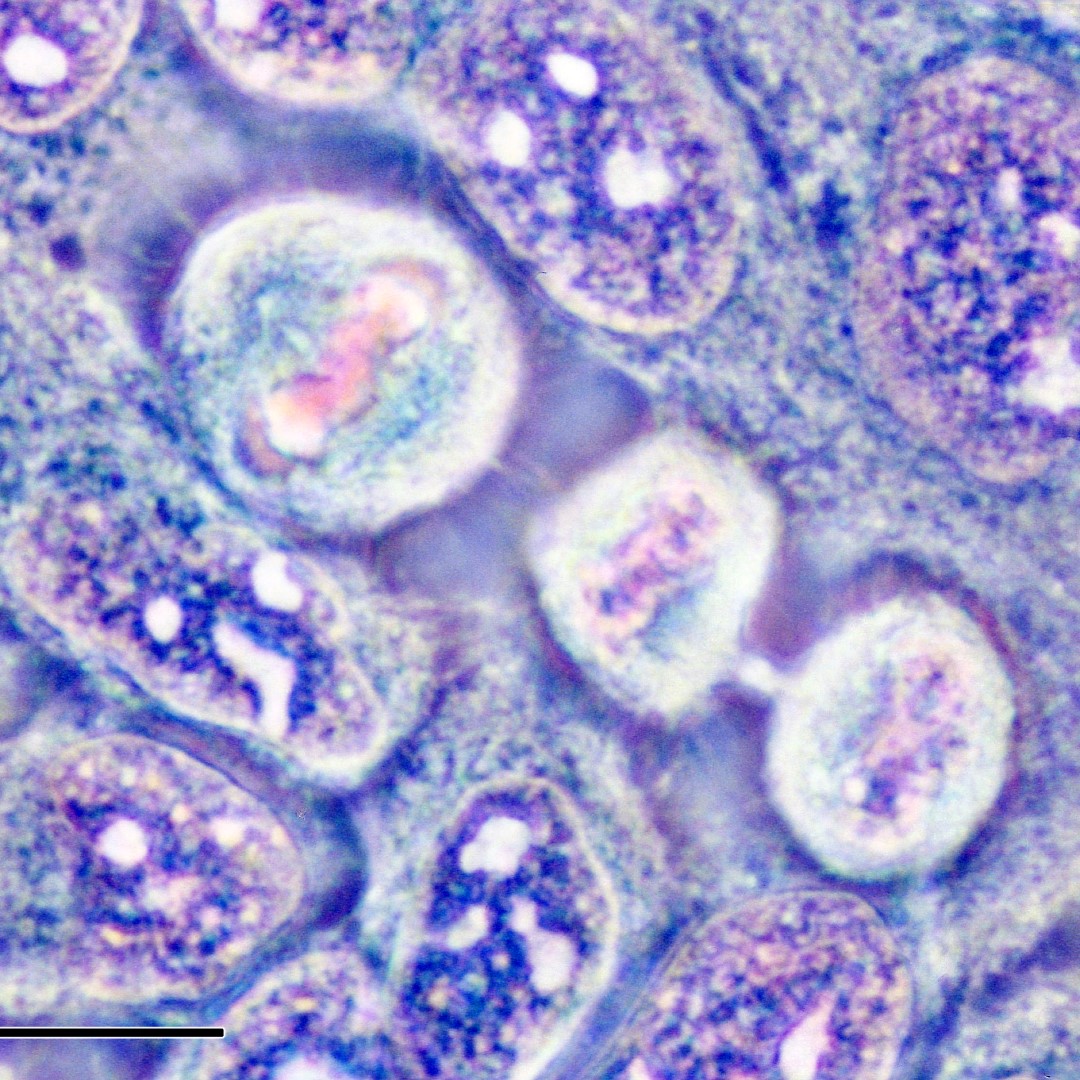
Credit: Image: Dividing HeLa cells in culture. The cells can be seen metaphase and telophase, different stages of cell division. Courtesy: Josef Reischig.