Paralyzed mountain lion found in Colorado first case of “staggering disease” in North America
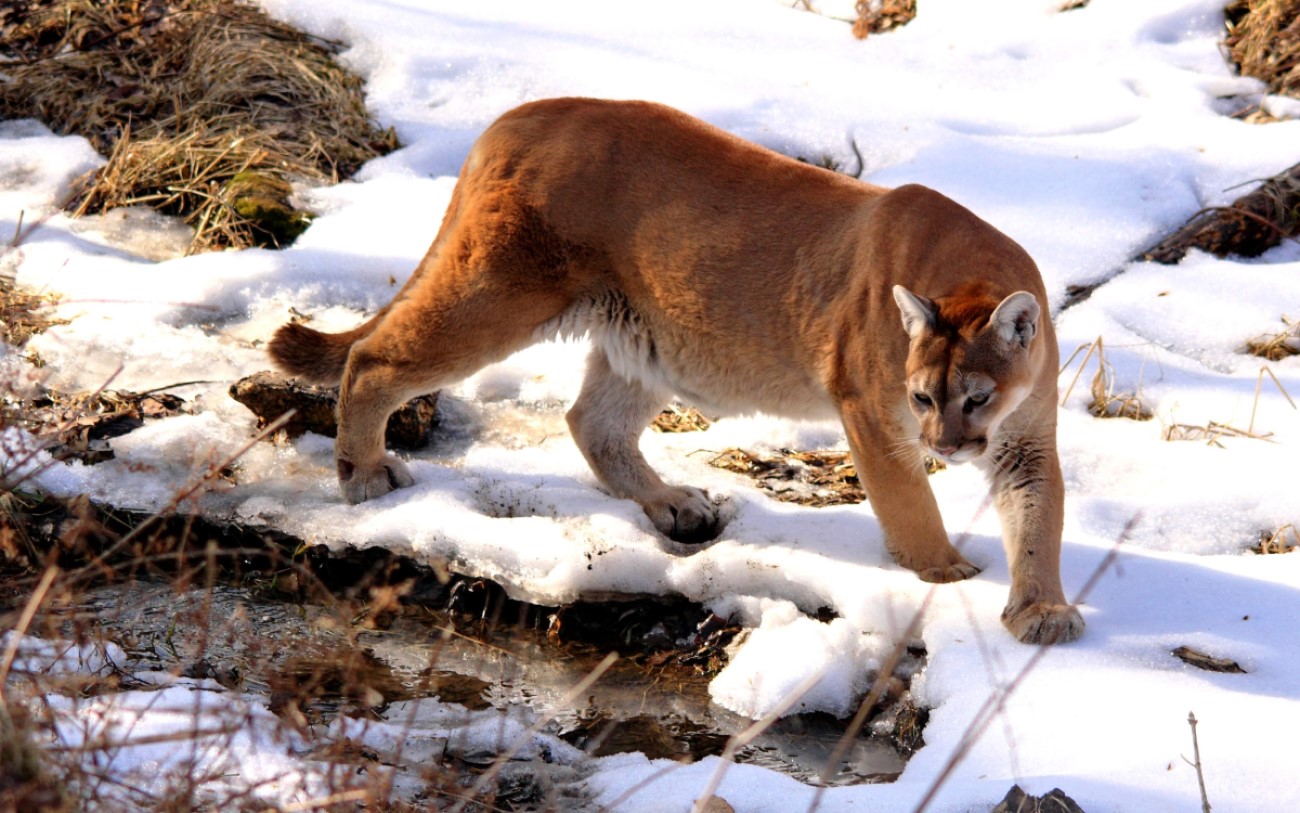
On Jul. 15, 2024, Colorado Parks and Wildlife officials announced the first finding of ‘rustrela virus’ in a mountain lion in North America. The study, published in the journal “Emerging Infectious Diseases,” reported that officials had to euthanize a sick mountain lion in Douglas County they had received on May 12, 2023 that was unable to use its hind legs.
The lion had been observed in a residential area of Douglas County, Colorado, USA. The animal was reluctant to rise and had markedly decreased capacity to move or bear weight on the hind end. The animal appeared depressed but was still responsive to stimuli. Wildlife officers tranquilized the animal and then euthanized it by gunshot to the chest to prevent destruction of neurologic tissues. We conducted a postmortem investigation including necropsy, histopathology, immunohistochemistry, molecular diagnostics, and metatranscriptome sequencing to investigate potential causes of the disease.
Initial diagnostic tests did not detect feline panleukopenia virus, canine distemper virus, West Nile virus, Toxoplasma gondii, influenza A virus, rabies virus, or feline infectious peritonitis virus in the central nervous system. The team used pooled brain and spinal cord tissue to extract total RNA, then conducted metatranscriptome sequencing to obtain sequence fragments (reads). Those fragments were used to de novo assemble a single contiguous sequence (contig) with homology to known sequences of rustrela virus (RusV). The contig represented the whole viral genome and matched RusV reference strains.
An analysis of tissues from the mountain lion revealed the presence of the rustrela virus, which was identified as the cause of “staggering disease,” a usually fatal neurologic syndrome recognized in domestic cats. Scientists do not know how widespread the virus is in either domestic cats or wildlife populations. In Europe, rustrela virus causes staggering disease in cats, but also has been found in a wide range of other species, including rodents, a donkey and marsupials.
The results demonstrate the presence of a RusV variant in North America that is divergent from those previously described from Europe. The clinical signs, histologic lesions, and infected target cells observed for the wild mountain lion in Colorado, USA, meet the case definition for staggering disease. A causative role for RusV is likely, further supporting previous work identifying RusV as the causative agent of staggering disease in domestic cats from Austria, Sweden, and Germany, and in lions from zoologic collections in Germany.
This report is limited to a single case of staggering disease in Colorado. To determine whether RusV is enzootic in this region, we recommend further investigations, including retrospective RusV testing of tissues from feline encephalitis cases of unknown causes in North America. Surveillance for RusV in small rodents might identify a local reservoir host because rodents of the genus Apodemus have been identified as likely RusV reservoir hosts in Europe through real-time reverse transcription PCR and sequencing of mice brain tissues. Although Apodemus mice are not indigenous to North America, several genera of small rodents are found throughout Colorado and could serve as candidates for further screenings. In addition, future studies should consider that the zoonotic potential of RusV has not been determined.
Of note, a remarkably broad range of other mammalian RusV hosts has been identified in Germany, including equids, mustelids, rodents, and marsupials, raising concerns about a zoonotic potential of RusV. Given the wide host range of the virus in Europe, RusV should be considered as a possible cause for neurologic diseases in all mammal species in North America.
Tags:
Source: U.S. Centers for Disease Control and Prevention
Credit: