NIAID Discovery Leads to Novel Probiotic for Eczema
On Jun. 26, 2024, the National Institute of Allergy and Infectious Diseases (NIAID) announced that research has led to the availability of a new over-the-counter topical eczema probiotic. The probiotic is based on the discovery by scientists at NIAID that bacteria present on healthy skin called Roseomonas mucosa can safely relieve eczema symptoms in adults and children. R. mucosa-based topical interventions could simplify or complement current eczema management, when used in consultation with an individual’s healthcare provider. A milestone for eczema sufferers, the availability of an R. mucosa-based probiotic is the result of seven years of scientific discovery and research in NIAID’s Laboratory of Clinical Immunology and Microbiology (LCIM).
Eczema—also known as atopic dermatitis—is a chronic inflammatory skin condition that affects approximately 20% of children and 10% of adults worldwide. The condition is characterized by dry, itchy skin that can compromise the skin’s barrier, which functions to retain moisture and keep out allergens. This can make people with eczema more vulnerable to bacterial, viral and fungal skin infections. R. mucosa is a commensal bacterium, meaning it occurs naturally as part of a typical skin microbiome. Individuals with eczema experience imbalances in the microbiome and are deficient in certain skin lipids (oils). NIAID researchers demonstrated that R. mucosa can help restore those lipids.
In Phase 1/2 open-label and Phase 2 blinded, placebo-controlled clinical studies, most people experienced greater than 75% improvement in eczema severity following application of R. mucosa. Improvement was seen on all treated skin sites, including the inner elbows, inner knees, hands, trunk and neck. The researchers also observed improvement in skin barrier function. Additionally, most participants needed fewer corticosteroids to manage their eczema, experienced less itching, and reported a better quality of life following R. mucosa therapy. These benefits persisted after treatment ended: therapeutic R. mucosa strains remained on the skin for up to eight months in study participants who were observed for that duration
Tags:
Source: National Institute of Allergy and Infectious Diseases
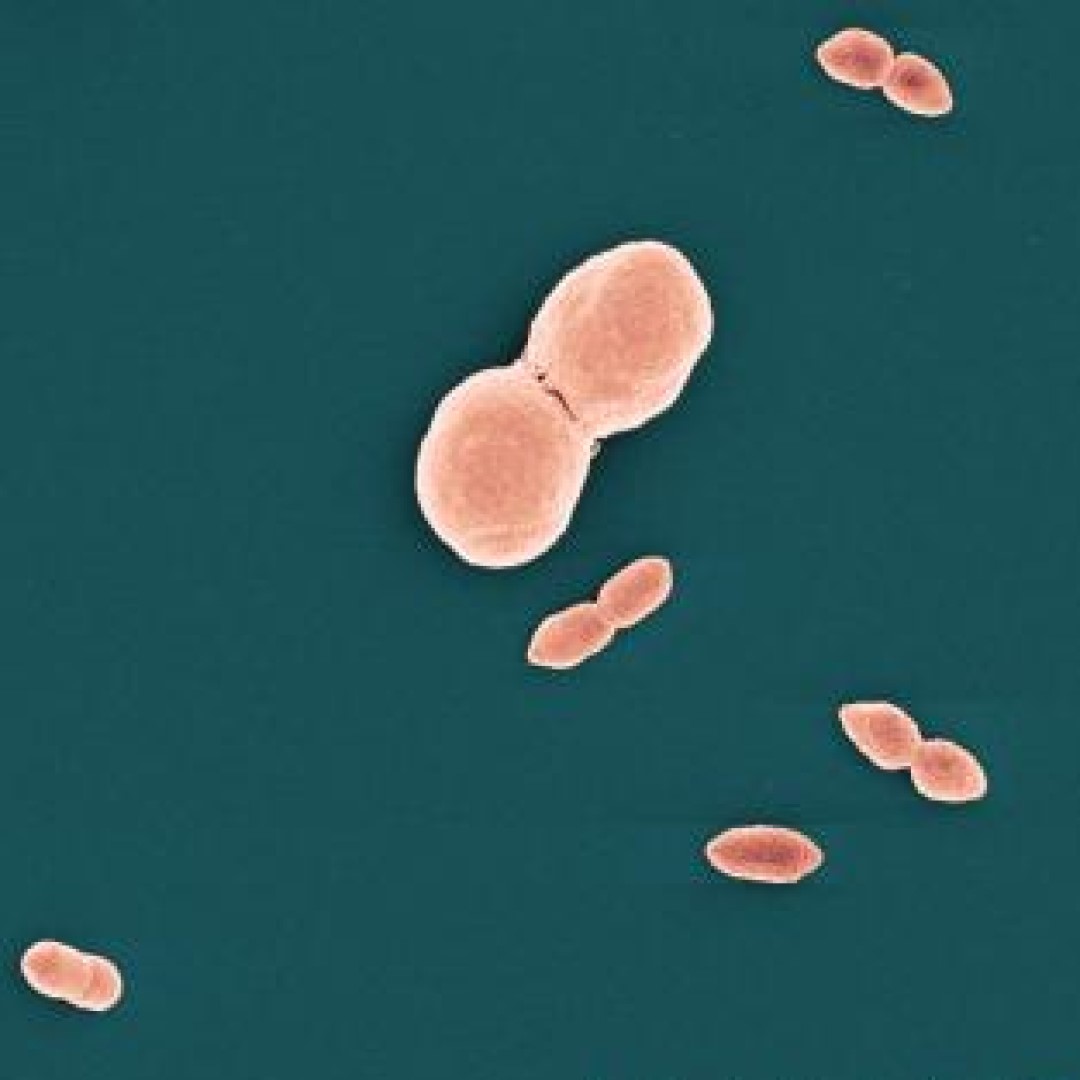
Credit: Image: Colorized electron micrograph of Roseomonas mucosa bacteria, courtesy: Emily Fitzmeyer and Monica Paneru, Rocky Mountain Laboratories, NIAID, Hamilton, Montana.