Bio bred microbes isolated that eat plastic
On May 2, 2018, Reed College announced that bio major Morgan Vague ’18 had isolated and bred three strains of bacteria that consume and degrade polyethylene terephthalate (PET)-0 the ubiquitous plastic used in textiles, packaging, and soft-drink containers -opening up the tantalizing possibility of using microbes to fight pollution.
The Reed recruited an unlikely ally in the fight against plastic pollution – bacteria. Certain strains of bacteria produce lipase, a fat-digesting enzyme that can break down plastic molecules and render them palatable.
At the beginning of her quest, Morgan went hunting for microbes in locations with high levels of petroleum pollution, on the theory that those bacteria were most likely to have evolved biological mechanisms for digesting plastic. She traipsed around refineries in her hometown of Houston, Texas, digging up samples of soil, sand, and water around Galveston Bay. Then she began the long, laborious process of screening her samples for lipase. Out of roughly 300 separate strains of bacteria, she identified 20 that produced the enzyme; three of these boasted high levels of lipase.
Then came the acid test. Morgan put three test tubes of bacteria on a forced diet of solid plastic, consisting of strips she cut out of old bottles of Nestle water that she bought at Safeway. With no other source of nourishment, the bacteria had a stark choice—eat plastic or die. Over the course of several weeks, she anxiously monitored the colonies for signs of growth.
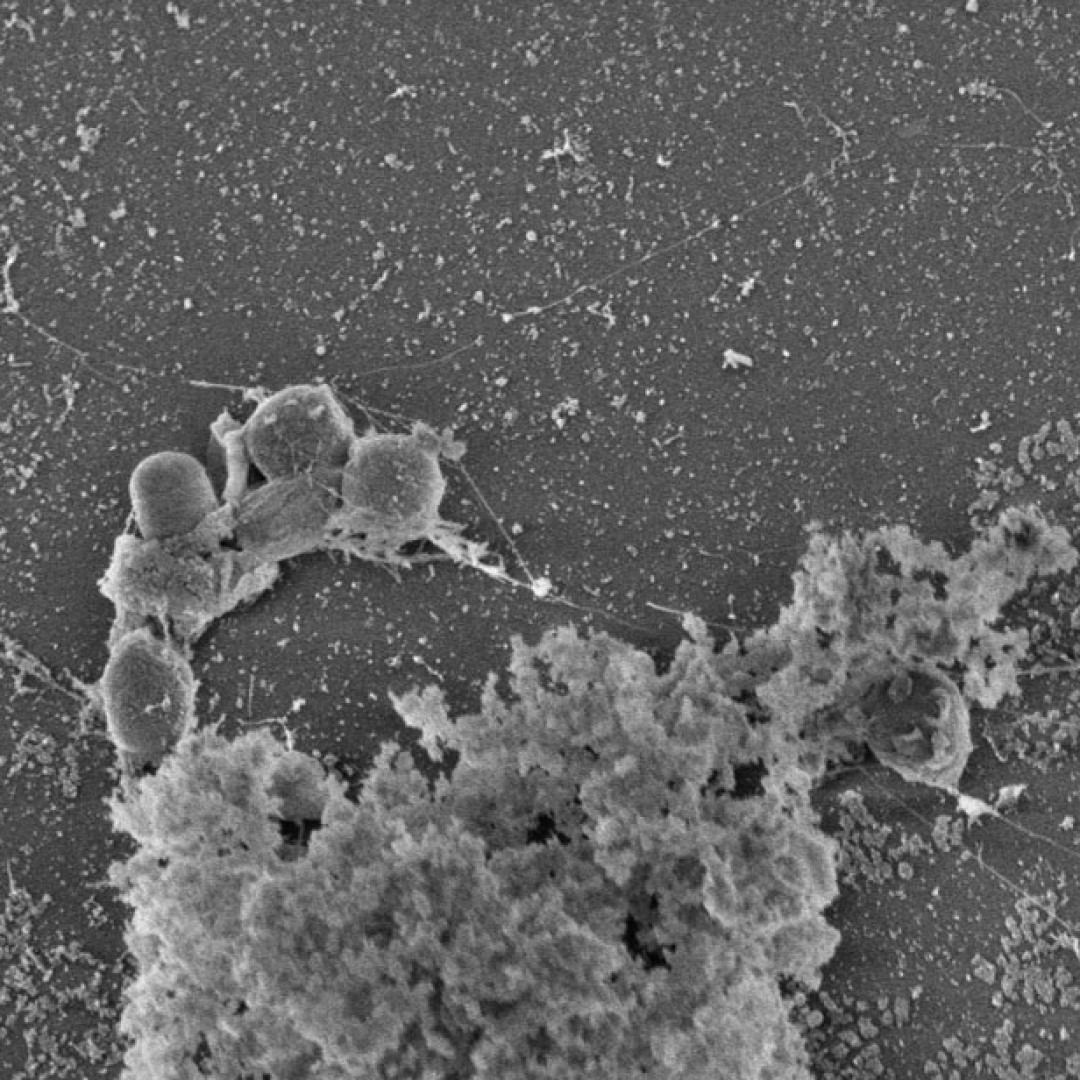
The first glimmer of hope came when she noticed a tiny colony of bacteria forming on the surface of a strip of PET—suggesting that the microbes might consider the plastic toothsome. Then, on a Monday afternoon, she peered through a microscope and noticed that the colony was generating a fluffy structure known as extracellular polymeric substance—a telltale sign that it was thriving.
The three substrains of bacteria are Pseudomonas putida, Bacillus cereus, and a hitherto unknown strain tentatively known as Pseudomonas morganensis, since Morgan appears to be the first researcher to identify it.
Morgan will spend the summer at Reed experimenting with ways to speed up the bacterial digestion process—right now it takes months for the bacteria to significantly degrade PET—and see if it can be deployed on an industrial scale.
Tags:
Source: Reed College
Credit: Microscopy Image: courtesy Claudia S. Lopez, PhD, Director of the Multiscale Microscopy Core at Oregon Health & Science University.