Researchers demonstrated heat-induced pyroelectricity in viruses
On Sept. 25, 2023, researchers at the University of California, Berkeley reported that engineered viruses also can generate electricity when exposed to heat, a finding that may pave the way for next-generation biosensors and diagnostic tools.
As reported in the journal Advanced Materials, researchers discovered for the first time “heat-induced electrical potential generation on a virus,” a phenomenon known as pyroelectricity. This work may shed light on how biomaterials — cells, tissues and proteins — generate electricity at a molecular level as well as lead to the development of biomaterials with novel medical, pharmaceutical, environmental and energy applications.
“Through this study, we gained valuable insights into the relationship between protein structures and electrical properties,” said principal investigator Seung-Wuk Lee, professor of bioengineering at UC Berkeley and faculty scientist at Lawrence Berkeley National Laboratory. “We discovered that when we apply heat to virus particles, they undergo structural changes that lead to changes in spontaneous polarization and the generation of electric potential.”
Interest in bioelectricity — electric potential generated within living cells — dates to ancient Egypt and exploded in the 18th century, when Luigi Galvani discovered that electrical stimulation could induce muscle contraction in frog legs. While our scientific understanding of this phenomenon has vastly improved over the years, questions remain due to the complexity of biomaterials and the limited tools available to study them. Lee thinks viruses might help us find the answers.
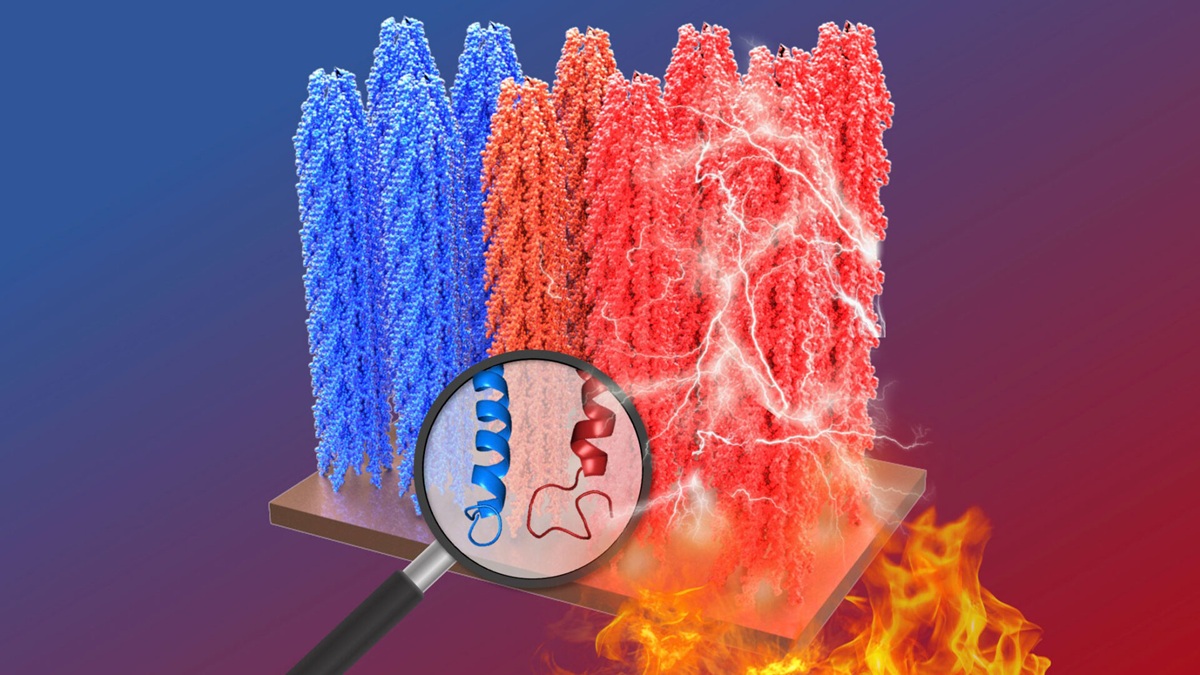
In this latest study, Lee and his team put this theory to the test. They genetically engineered a portion of the M13 phage’s protein coating to create upright structures, pointing in the same direction, and in a nanometer scale. They then observed and measured the virus’ electric response to heat. According to Lee, their findings showed that heat denatures, or melts, the protein coating on the engineered phage, causing a difference in electrical potential.
Next, the researchers investigated the M13 phage’s pyroelectric responses to other molecules. Peptides genetically tuned to be responsive to specific nonvolatile and volatile organic compounds were attached to the protein coating of the engineered pyroelectric phages. When these phages were exposed to the different solvents, they generated different pyroelectric responses depending on chemical species and their concentrations.
Lee and his team believe that this approach to engineering phages with tailored pyroelectric properties could open the door to other applications. This includes building handheld devices that use pyroelectricity to sense other viruses and detect new strains.
Tags:
Source: University of California, Berkeley
Credit: Image: Courtesy of Seung-Wuk Lee.