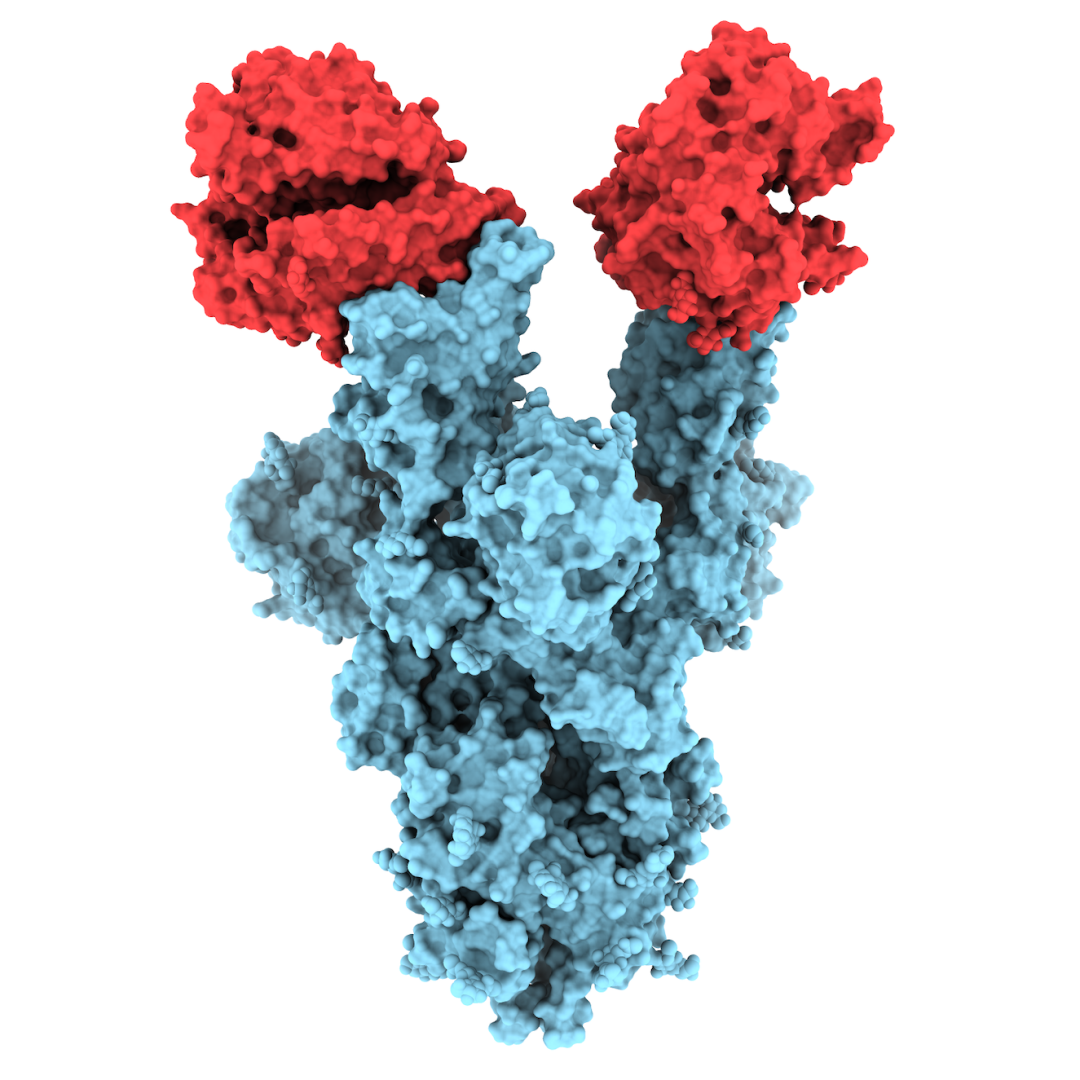
COVID-19 coronavirus spike holds infectivity details
On Feb. 24, 2020, researchers reported that the spikes crowning the new coronavirus that causes COVID-19 atypical pneumonia have divulged how they attach, fuse and gain entry to cells. Analysis of the spike architecture and its mechanics has locating the virus’ vulnerabilities, and revealed other information that could prompt the discovery of countermeasures against this virus.
A research team at the University of Washington School of Medicine and Fred Hutchinson Cancer Research Institute used cryo-electron microscopy and other investigative methods to help determine the structure and function of the SARS-CoV-2 spike protein and its chemical binding affinities as these relate to both infection and immune responses, and thereby obtain ideas for blocking the virus’ ingress to cells.
By closely examining the structure of the new coronavirus spike protein, the researchers did uncover something that sets it apart from the other SARS-related coronaviruses. Walls said that the research team unexpectedly found a furin cleavage site at a boundary between two subunits of the spike protein in the newly emerged coronavirus. It is not yet known if this difference is expanding the kinds of cells the new coronavirus could infect or enhancing its transmissibility, in a way that might be similar to that of highly pathogenic avian flu viruses.
As a whole, details contained in the results reported in this week’s paper may help to explain the efficiency of the new coronavirus in delivering its viral code into human cells, and its rapid transmission among people.
At present, there are no preventatives or approved, specific treatments (aside from experimental therapies) that can be directed at the new coronavirus.
Tags:
Source: University of Washington
Credit: