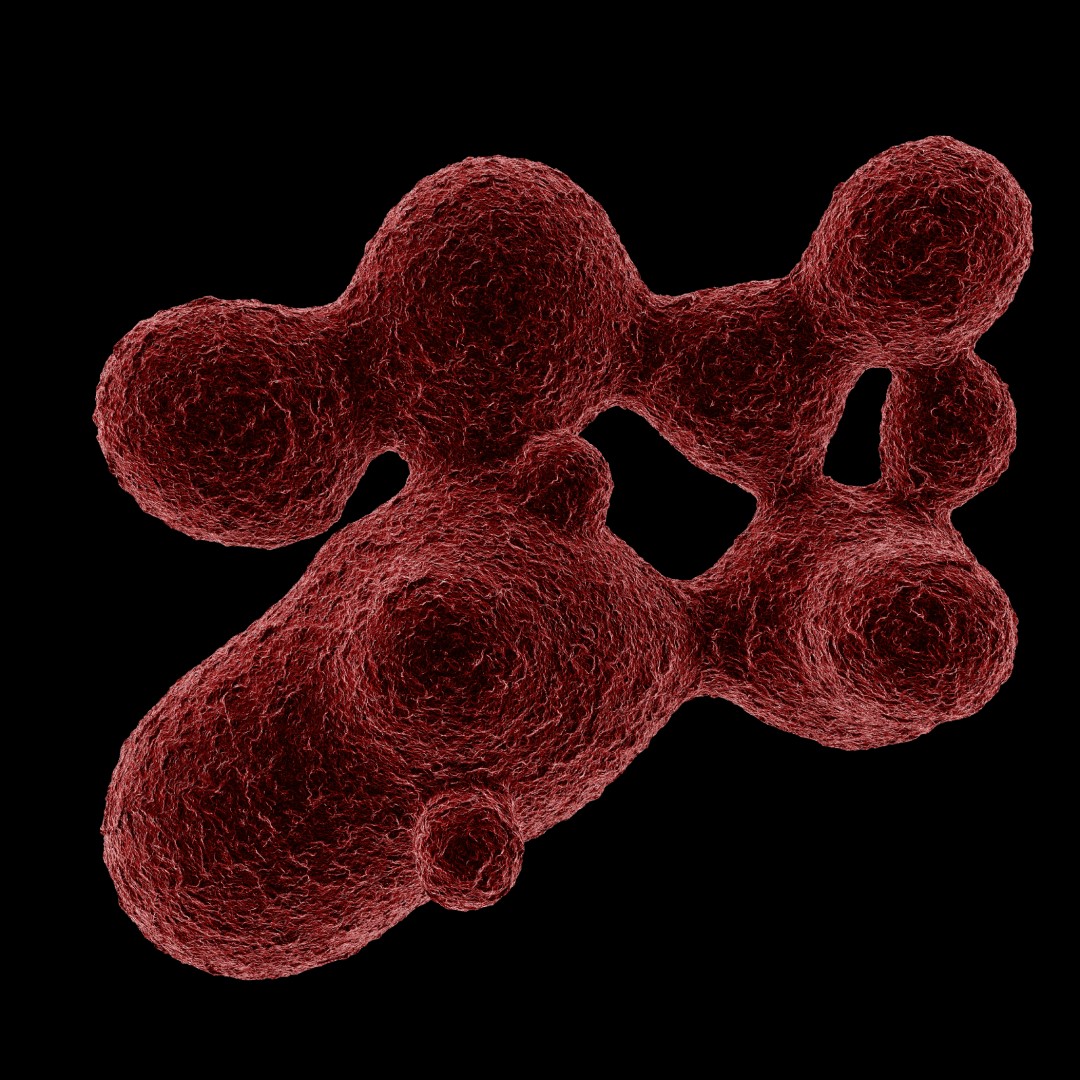
Scientists at Sanford Burnham Prebys have identified the long-sought structure of an essential blood protein: Vitronectin
On Sept. 11, 2019, scientists at Sanford Burnham Prebys announced they had identified the long-sought structure of an essential blood protein: Vitronectin. Knowing the protein’s structure could lead to medicines that kill multi-drug-resistant bacteria, halt cancer metastasis, treat age-related macular degeneration (AMD) and more. The study was published in Science Advances.
“For decades, scientists have speculated about the shape of Vitronectin, but no one had a true answer,” says Francesca Marassi, PhD, senior author of the study and professor at Sanford Burnham Prebys’ NCI-designated Cancer Center. “Our findings provide a blueprint for understanding and targeting this important human protein.”
Since Vitronectin’s discovery in the 1960s, scientists recognized that the protein is an important drug target and sought to decipher its complex structure. The protein regulates many fundamental processes, including blood clotting, immunity, tissue development and cell attachment. When these functions are disrupted, disease can arise: Deadly tumor metastasis occurs when cancer cells gain the ability to spread through the body, and pathogens such as Y. pestis (plague), H. influenzae (pneumonia, meningitis), N. gonorrhoeae (gonorrhea) and H. pylori (stomach ulcers), hijack Vitronectin to evade detection by our immune system. However, without a 3D structure, understanding of the protein’s precise function in the body and the ability to design medicines that block or enhance this function were limited.
To visualize the protein’s structure, Marassi and her team analyzed evolutionary clues and then turned to X-rays and magnetic resonance, an MRI-like technology. The researchers found that the functional site of Vitronectin forms a four-bladed propeller with a negatively charged center that binds calcium. This work revealed the binding site of the protein Ail, which Y. pestis bacteria use to hijack Vitronectin and evade the immune system—an important insight for antibiotic drug development in the event plague becomes antibiotic resistant or is ever weaponized.
Having the structure of Vitronectin in hand is already revealing new insights into human disease. With this information, Marassi made the connection that the shape of Vitronectin correlates with its known involvement in AMD, a condition marked by progressive loss of sight.
Tags:
Source: Sanford Burnham Prebys
Credit: