Siteman Cancer Center became one of the first cancer centers nationwide to offer newly approved CAR-T cell therapy called Yescarta
On Oct. 18, 2017, the Siteman Cancer Center at Barnes-Jewish Hospital and Washington University School of Medicine in St. Louis announced it is one of the first centers nationwide to offer a new immunotherapy that targets certain blood cancers. Newly approved by the Food and Drug Administration (FDA) for types of advanced non-Hodgkin lymphoma in adults, the CAR-T cell therapy harnesses a patient’s own immune system to fight cancer.
Washington University doctors and researchers were involved in clinical trials that led to the FDA approval of the new CAR-T cell therapy, called Yescarta, and are working to develop other immunotherapies that attack cancer.
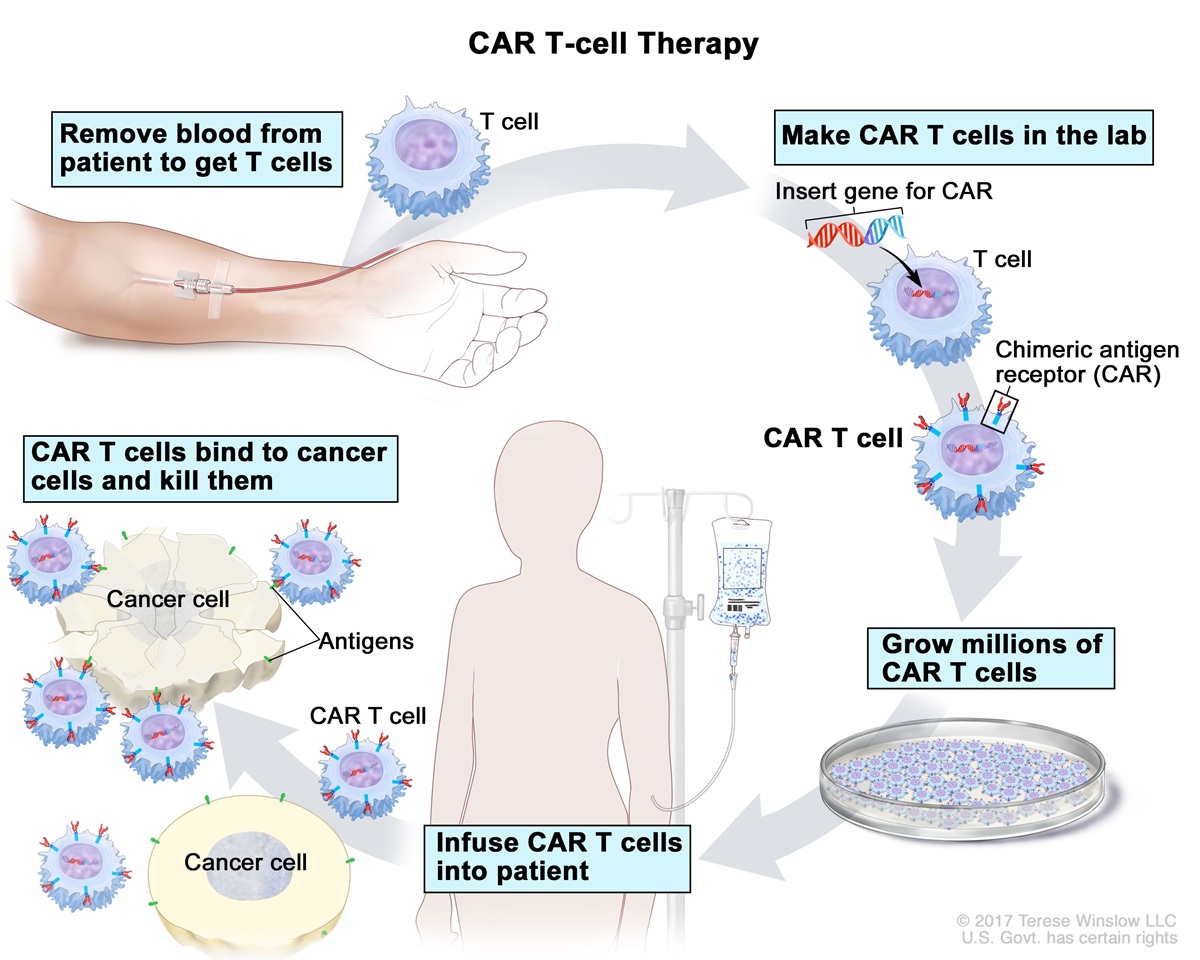
At the heart of the new therapy are the immune system’s T cells, which typically fight off disease. In cancer patients, T cells lose the ability to recognize and attack cancer cells. CAR-T cell therapy involves extracting a patient’s own T cells and genetically altering – or supercharging – those cells to home in on cancer cells and destroy them.
The first cancers to be treated with CAR-T cell therapy include certain types of large B-cell lymphomas in adults and acute lymphoblastic leukemia (ALL) in children. Diffuse large B-cell lymphoma is the most common type of non-Hodgkin lymphoma in adults. CAR-T cell therapy for pediatric ALL was approved by the FDA at the end of August and is available through Siteman Kids at St. Louis Children’s Hospital. Such cancers in children and adults are characterized by the production of too many B cells, a type of white blood cell that is also a part of the immune system.
Currently, CAR-T therapy for adults with non-Hodgkin lymphoma is available only to patients whose cancer has not responded to standard treatments — including chemotherapy and bone marrow transplantation. Kite Pharma, a Gilead company, developed the new treatment.
Clinical trials of CAR-T therapy have shown what doctors have called remarkable remission rates among children with ALL and adults with lymphomas and multiple myeloma. In patients whose disease has not responded to standard therapies or has relapsed, CAR-T therapy has achieved from 40 to 80 percent remission rates. Some patients have remained in remission for several years.
If cancerous cells find ways to fly under the radar of immune surveillance, the new therapy renders these cancers visible again.
Tags:
Source: Siteman Cancer Center
Credit: