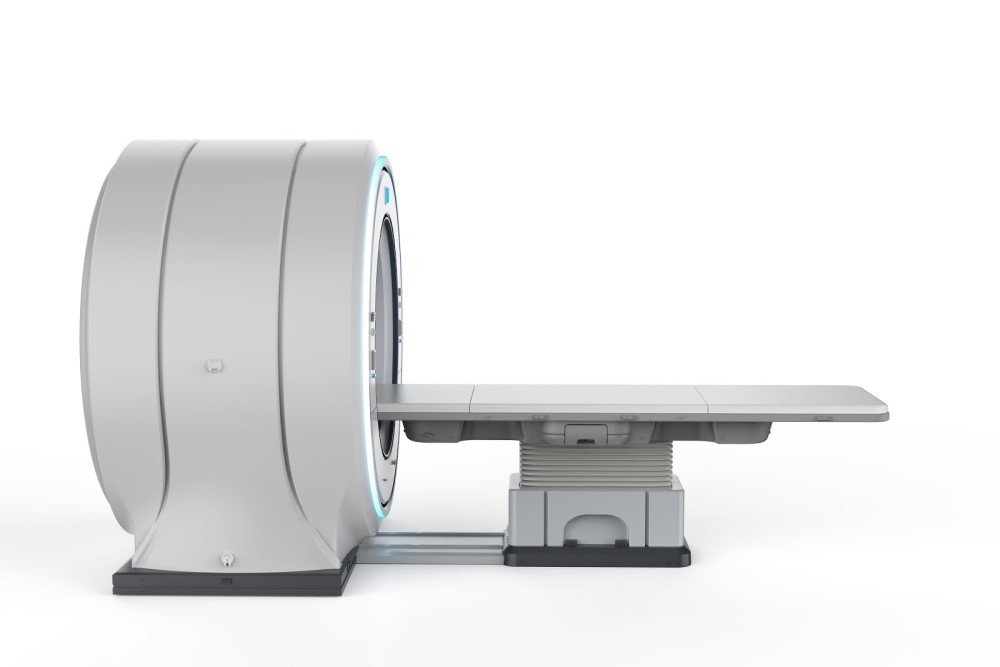
MRI detected cancers in the opposite breast of women newly diagnosed with breast cancer
On Mar. 28, 2007, Magnetic Resonance Imaging (MRI) scans of women who were diagnosed with cancer in one breast detected over 90% of cancers in the other breast that were missed by mammography and clinical breast exam at initial diagnosis, according to a new study. Given the established rates of mammography and clinical breast exams for detecting cancer in the opposite, or contralateral breast, adding an MRI scan to the diagnostic evaluation effectively doubled the number of cancers immediately found in these women.
A total of 969 women with a recent diagnosis of unilateral breast cancer and no abnormalities on mammographic and clinical examination of the contralateral breast underwent breast MRI. The diagnosis of MRI-detected cancer was confirmed by means of biopsy within 12 months after study entry.
The absence of breast cancer was determined by means of biopsy, the absence of positive findings on repeat imaging and clinical examination, or both at 1 year of follow-up.
MRI detected clinically and mammographically occult breast cancer in the contralateral breast in 30 of 969 women who were enrolled in the study (3.1%). The sensitivity of MRI in the contralateral breast was 91%, and the specificity was 88%. The negative predictive value of MRI was 99%. A biopsy was performed on the basis of a positive MRI finding in 121 of the 969 women (12.5%), 30 of whom had specimens that were positive for cancer (24.8%); 18 of the 30 specimens were positive for invasive cancer. The mean diameter of the invasive tumors detected was 10.9 mm. The additional number of cancers detected was not influenced by breast density, menopausal status, or the histologic features of the primary tumor.
The researchers concluded MRI can detect cancer in the contralateral breast that is missed by mammography and clinical examination at the time of the initial breast-cancer diagnosis.
Tags:
Source: U.S. National Library of Medicine
Credit: