OHSU VGTI received a $3.5 million NIH grant to assist in development of AIDS vaccine
On May 25, 2004, researchers at the Vaccine and Gene Therapy Institute (VGTI) and the Oregon National Primate Research Center at OHSU announced receipt of a $3.5 million grant from the National Institutes of Health (NIH) to develop new methods for vaccinating humans against human immunodeficiency virus (HIV), the virus that causes AIDS. The National Institute of Allergy and Infectious Diseases funded the research.
The research team hoped to develop a new class of viral vaccine vectors to serve as the basis of HIV vaccine. Vectors are modified viruses used to safely deliver proteins from a disease-causing virus to the body.
The research team is hoping to develop a new class of viral vaccine vectors to serve as the basis of HIV vaccine. Vectors are modified viruses used to safely deliver proteins from a disease-causing virus to the body. Vectors infect individuals, but do not cause any disease themselves. Rather, they serve to present the proteins from a disease-causing virus to the vaccinated person’s immune system. This presentation allows the system to generate an immune response capable of protecting the vaccinated person from subsequent encounters with the disease-causing virus.
Most of the HIV vaccine development to date has focused on weakened viral vectors designed to infect the vaccinated person only briefly, insuring that the vector itself does not persist and potentially cause problems. For example, current approaches for HIV vaccines include weakened versions of the smallpox vaccine virus (vaccinia) or adenovirus engineered to produce HIV proteins. Both of these vectors can only survive for a limited time in the human body before they are eliminated by the immune system. While these vectors can generate high anti-HIV immune responses immediately following vaccination, these responses decline with time and may not produce an immune response of the correct characteristics to contain a chronic aggressive virus like HIV.
The OHSU researchers are hoping to develop a viral vector based on cytomegalovirus (CMV). It’s believed that approximately 70 percent to 90 percent of the population currently is infected with CMV, a virus that causes little to no effects in immunologically normal hosts, but generates large immune responses that persist for life. CMV vectors have the capacity to re-infect such already infected individuals and generate immune responses to new proteins engineered into the vector. To develop and test this vaccine method, scientists will study animals at OHSU’s Oregon National Primate Research Center.
Tags:
Source: eurekalert
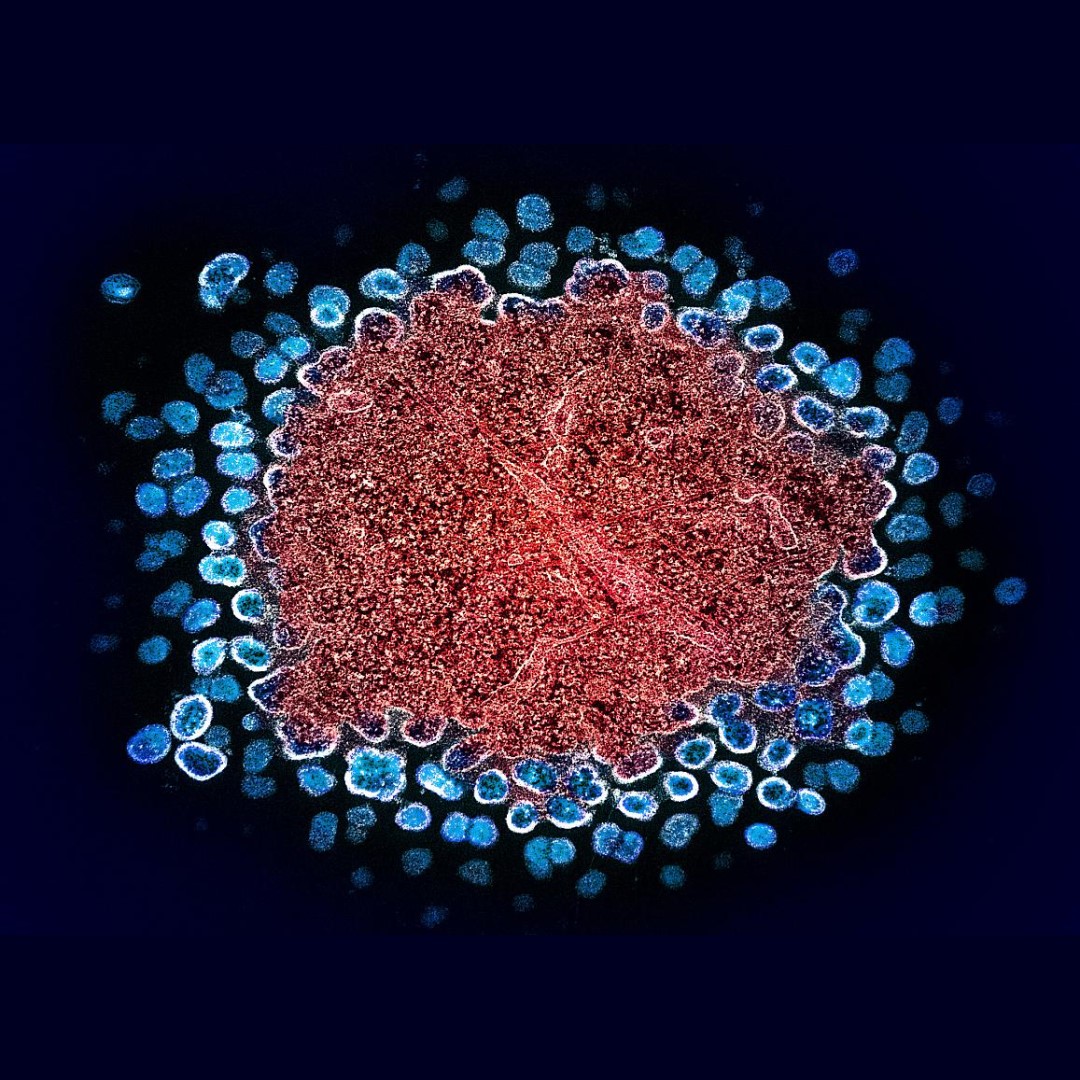
Credit: Photo: Electron microscopice image of HIV particles. Courtesy: National Institute of Allergy and Infectious Diseases.