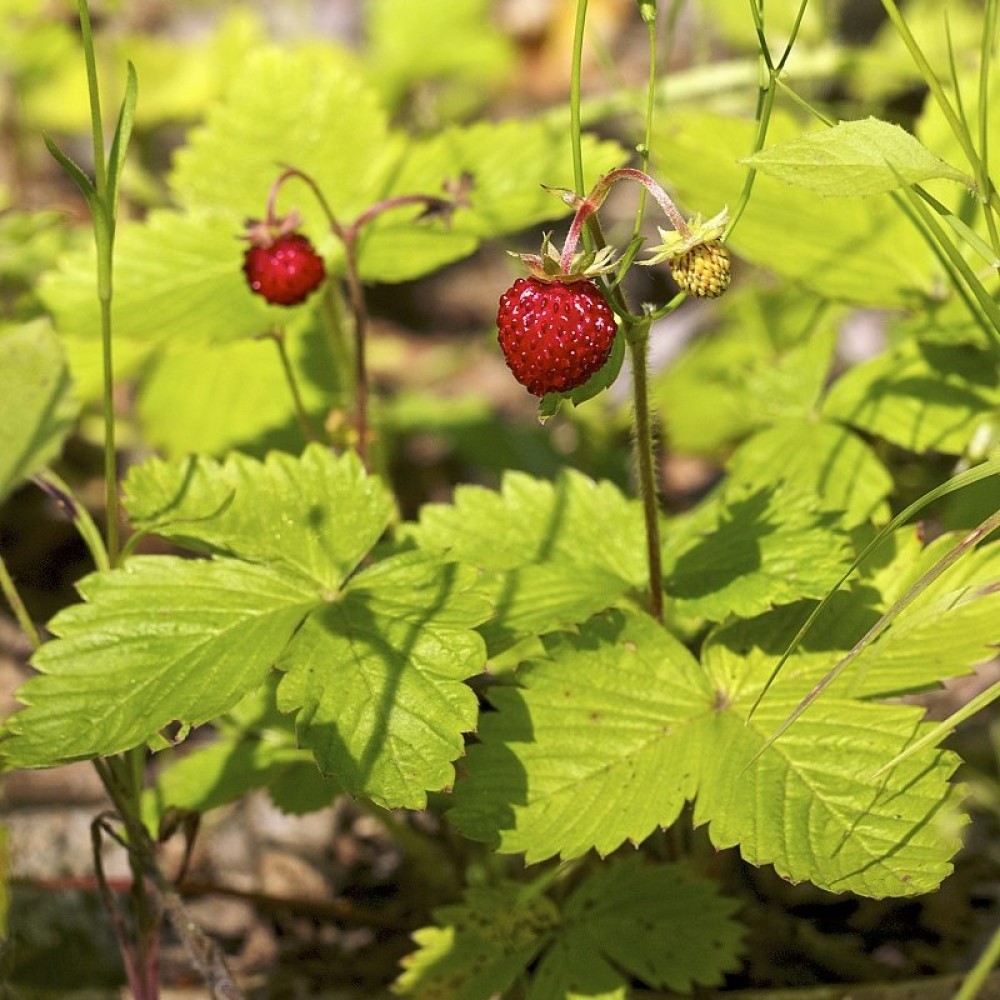
Advanced Genetic Sciences announced Frostban bacteria successfully protected strawberries from below-freezing temperatures
On Jun. 8, 1987, Advanced Genetic Sciences announced that its Frostban (Ice-minus) bacteria successfully protected strawberries from below-freezing temperatures and that the genetically altered bacteria did not escape from the test plot during the six-week trial. Frostban was sprayed on a small plot of strawberries April 24 in what was the nation’s first open-air testing of a genetically engineered microorganism.
Ice-minus bacteria is a variant of the bacterium Pseudomonas syringae (P. syringae) that lacks the ability to produce a certain surface protein. The “ice-plus” nucleation-active protein (INA protein) found on the outer bacterial cell wall acts as the nucleating centers for ice crystals. The crystals facilitate ice formation, hence the designation “ice-plus”. The ice-minus variant of P. syringae is a mutant, lacking the gene responsible for ice-nucleating surface protein production, and protects the plants from below freezing temperatures.
The federal Environmental Protection Agency and the Contra Costa County Board of Supervisors have approved the test, leaving only the state Department of Food and Agriculture to give the final permit.
The state agency gave preliminary approval Feb. 19, inaugurating a 45-day period for public comment, which ends April 5. After that, the department will make its final decision on whether to issue a research authorization permit.
Tags:
Source: United Press International
Credit: