The Nobel Prize in Physiology or Medicine awarded to Francis Crick, James Watson and Maurice Wilkins
On Oct. 18, 1962, the Nobel Prize in Physiology or Medicine was awarded jointly to Francis Crick, James Watson and Maurice Wilkins “for their discoveries concerning the molecular structure of nucleic acids and its significance for information transfer in living material.
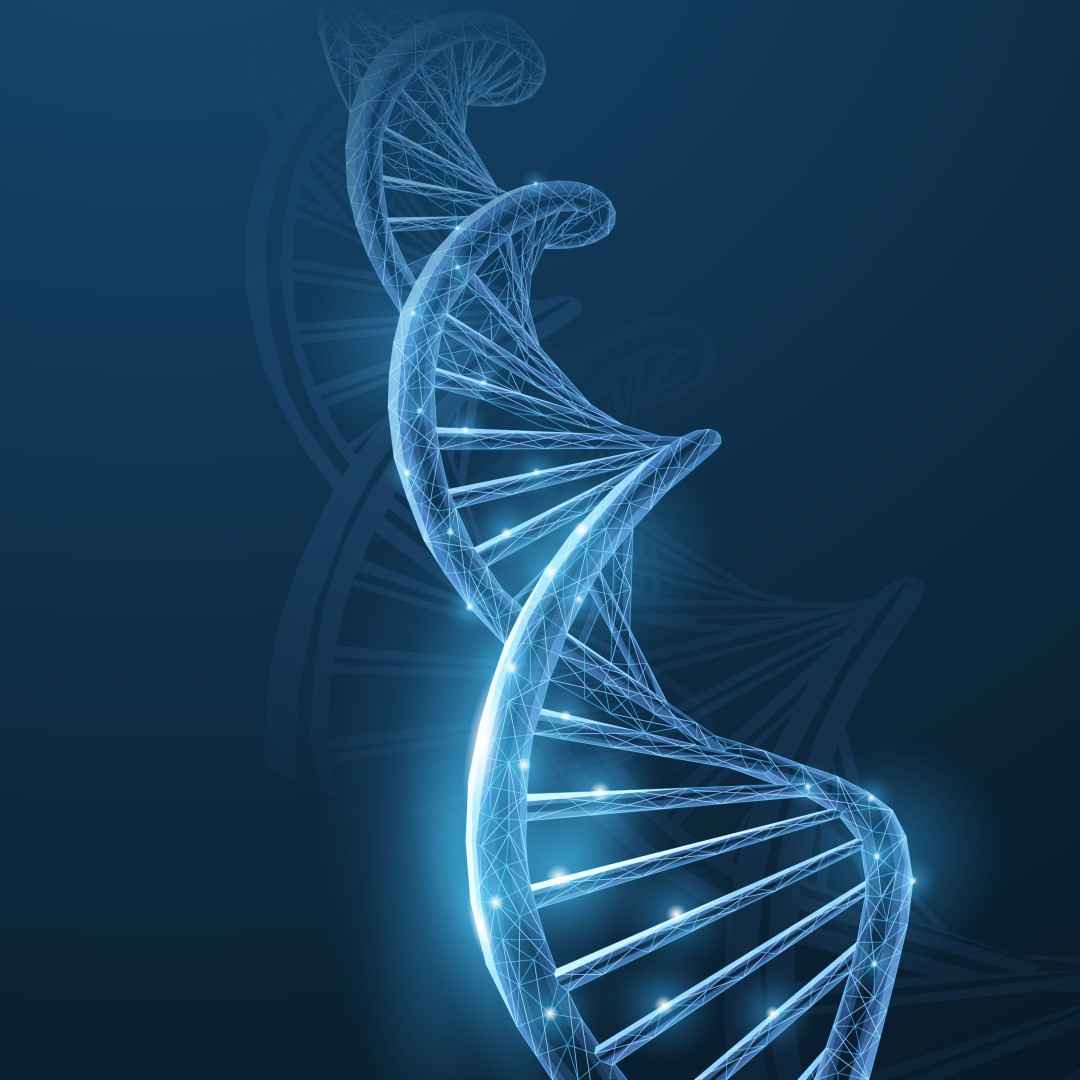
In 1944, Oswald Avery proved that DNA is the bearer of organisms’ genetic code. Further explanation was provided when Francis Crick and James Watson determined the structure of the DNA molecule in 1953. This structure–a long double helix–contains a long row of pairs of four different nitrogen bases, which allow the molecule to function like a code. The molecule’s structure also explains how it is able to copy itself. The nitrogen bases always pair in the same constellations, so that if a molecule is split, its halves can be supplemented so that they form copies of the original molecule.
During the 1930s, a number of laboratories began to use a method called x-ray crystallography to map large, biologically important molecules. Maurice Wilkins and Rosalind Franklin worked to determine the structure of the DNA molecule in the early 1950s at King’s College in London. While they did not succeed in mapping the structure, their results–not least of all Franklin’s x-ray diffraction images–were important in Francis Crick’s and James Watson’s eventual unlocking of the mystery–a long spiral with twin threads.
Franklin, whose work contributed to the discovery, died before this date and the rules do not allow a Nobel Prize to be awarded posthumously.
Tags:
Source: The Nobel Foundation
Credit: