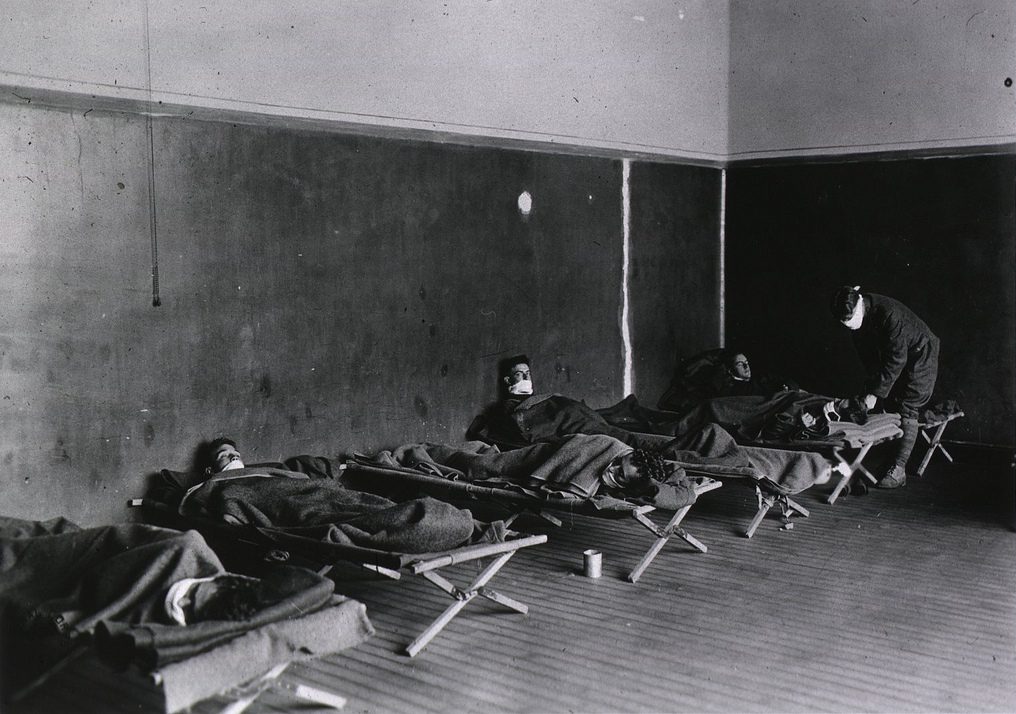
Soldiers at Camp Meade near Baltimore were reported infected with influenza
On Sept. 24, 1918, a small number of influenza cases among soldiers at Camp Meade–some 25 miles north of Baltimore and on the route to Washington, DC–were reported to military medical officers. The victims were believed to have contracted the disease while away from camp. Each sick soldier was isolated immediately, but no further actions were taken; for the time being, visitors were still allowed to enter the camp and soldiers were allowed to visit Baltimore
on leave.1
The disease moved with amazing rapidity, and within a few days there were 1,900 soldiers at the camp ill with influenza. Officers quickly implemented measures to slow or halt the spread of the disease. Large gatherings were banned, and the Hostess House, theater, and base YMCA were closed. Civilians were barred from visiting, except valid employees, and no soldier was permitted to leave the camp.
Meanwhile, approximately 300 cases of influenza were reported at Fort McHenry, the famous Army installation from the War of 1812 and now home to a large military hospital complex, and nearly 1,150 cases at the Aberdeen Proving Ground in Edgewood, some 25 miles up the Chesapeake Bay from Baltimore. As the disease ravaged the nearby military installations, Baltimore’s thousands of civilian contract laborers who worked at Camp Meade, Fort McHenry, the Proving Grounds, and area shipyards brought more than their dinner pails home at the end of the day, infecting themselves, their families, and associates with influenza.
The city health department would later report that the first ten cases of influenza to strike Baltimore’s civilian population occurred in late-September among these laborers.4 From this small batch of cases would follow Baltimore’s influenza epidemic.
Initially, while Baltimore newspapers focused on the thousands of military cases being treated, city Health Commissioner Dr. John D. Blake maintained that he was not worried about a similar outbreak among civilians.
Tags:
Source: Influenza Encyclopedia, University of Michigan Center for the History of Medicine
Credit: Photo: Courtesy University of Michigan Center for the History of Medicine.