Typhoid struck Minnesota Volunteer Infantry camping at the Minnesota State Fairgrounds
On Jul. 16, 1898, 400 members of the Fifteenth Minnesota Volunteer Infantry were hospitalized with typhoid after camping at a temporary camp site at the Minnesota State Fairgrounds. U.S. Army Surgeons decided the epidemic’s source was the public water of Minneapolis. By early August water tests found typhoid bacteria in fairgrounds water tanks.
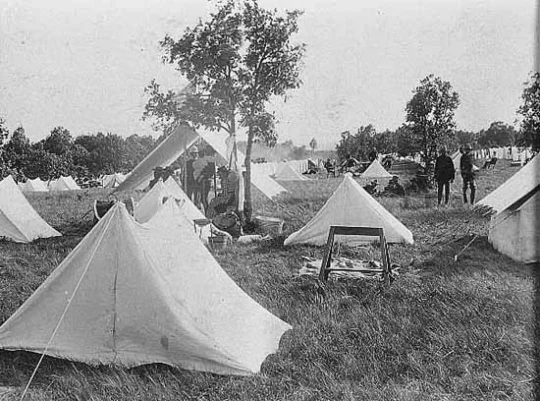
In 1898 the Spanish–American War began and the Fifteenth Minnesota Volunteer Infantry was assembled on the fairgrounds. The state expected so many volunteers that it created a temporary camp at the state fairgrounds. Prospective soldiers began arriving at the fairgrounds on July 5, and by July 18, 1,326, men had enlisted. The regiment was one of the largest groups ever assembled in Minnesota. The camp became a center of public activity as citizens came to see the regiment train.
At the fairgrounds soldiers participated in training, parades and drills. Temperatures were abnormally hot and camp hospitals were filled. On July 16th alone doctors recorded seventy-five soldiers in the hospitals. Doctors dismissed most conditions as minor and the result of drinking too much water.
However, by July 25 doctors began to report men whose conditions failed to improve. Because the soldiers had been drinking so much water, doctors suspected the fairgrounds water supply was the source of the illness. By early August water tests found typhoid bacteria in fairgrounds water tanks. During the course of the month, typhoid became an epidemic in the camp. Soldiers were succumbing at an average rate of twenty per day. On August 23, Colonel H.A. Leonhauser moved the regiment to Fort Snelling, hoping to escape the epidemic. Fort Snelling was unique because it had its own well for fresh water.
In Minnesota that summer, 360 men were hospitalized with typhoid. As the Fifteenth Regiment prepared to transfer to Camp Meade in Pennsylvania to complete their basic training, new cases continued to appear. An additional forty men were hospitalized before the epidemic finally began to decline in mid-September, after the men had reached Camp Meade.
Tags:
Source: Minnesota Historical Society
Credit: Photo: Minnesota State Fairgrounds, U.S. Army camp, 1898. Courtesy: Minnesota Historical Society.