Greenland Polar Bears Test Postive for H5N1 avian flu antibodies
On Oct. 13, 2026, an University of Inland Norway-led team reported that highly pathogenic avian influenza (HPAI) is an emerging ecologic and public health threat in the Arctic. Seasonal bird migrations to Arctic nesting grounds create a hot spot for HPAI outbreaks, amplifying interspecies interactions and the risk for viral reassortment and dissemination across migratory flyways. Recent detection of HPAI in wild Arctic mammals, along with their nutritional and cultural relevance for Indigenous peoples, emphasizes a strong need for surveillance in Arctic ecosystems.
Polar bears (Ursus maritimus) are Arctic apex predators that face increased challenges associated with their ecologic position at the interface between marine and terrestrial ecosystems. Climate warming and the subsequent loss of sea ice leads to increased time spent on land and exposure to terrestrial pathogens through the exploitation of new food sources. Cases of deceased polar bears infected with HPAI have been reported in Alaska, USA (H5N1 in 2023), and Svalbard, Norway (H5N5 in 2026), emphasizing that these emerging viruses may pose a risk to Arctic species.
As part of an ongoing collaboration with Indigenous hunters, heart blood was collected during subsistence harvests from polar bears that appeared healthy near Scoresby Sound (Ittoqqortoormiit) in East Greenland during the hunting season (January–May). they screened 109 plasma samples (collected during 2016–2025) for antibodies against all influenza A viruses by using a competitive ELISA (cELISA) that targets the influenza A virus (IAV) nucleoprotein (ID Screen Influenza A Antibody Competition Multi-Species; Innovative Diagnostics), according to the manufacturer’s instructions. They detected no IAV antibodies before 2024. Three bears (all male) harvested during 2024 had signal-to-noise values within the positive range (<45%) of the cELISA (21% [95% CI 8%–48%]; n = 3/14); the number increased to 6 bears (5 male, 1 female) in 2025 (43% [95% CI 21%–67%]; n = 6/14)
HPAI spillover to mammalian hosts typically occurs through ingestion of infected birds or through contaminated environments. Transmission to wild mammals may involve multiple mechanisms, including direct contact through mucosal or nasal secretions, scavenging dead birds or bird eggs or infected mammals, and mother-to-offspring transmission through lactation. Further studies are needed to identify which mechanisms are relevant for polar bears, although the most likely route is by eating dead or infected birds and mammals.
HPAI spillover to mammalian hosts typically occurs through ingestion of infected birds or through contaminated environments. Transmission to wild mammals may involve multiple mechanisms, including direct contact through mucosal or nasal secretions, scavenging dead birds or bird eggs or infected mammals, and mother-to-offspring transmission through lactation. Further studies are needed to identify which mechanisms are relevant for polar bears, although the most likely route is by eating dead or infected birds and mammals. The study was published in Emerging Infectious Diseases.
Tags:
Source: Emerging Infectious Diseases
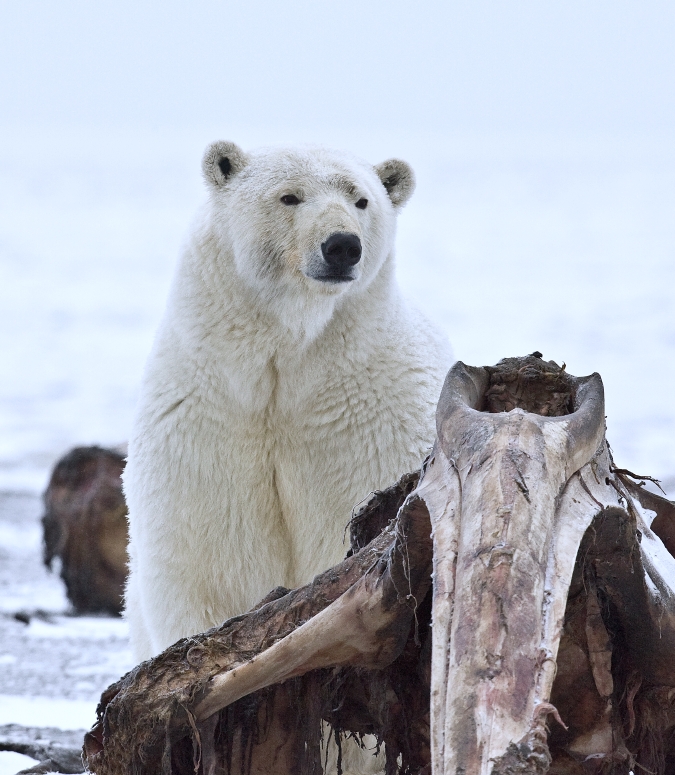
Credit: Photo: Polar Bear (Sow), Arctic National Wildlife Refuge, Alaska. Courtesy: Wikipedia.