Genomes from Oceania offer new clues to human evolution
On Jun. 11, 2026, a new Yale University-led study provides one of the most detailed and comprehensive analyses to date of genetic variation in human populations in Oceania, filling a major gap in representation in genomics research. Despite harboring remarkable diversity, populations in this vast region in the South Pacific historically have been overlooked in global human genetic studies, which have often focused largely on peoples of European descent, researchers say.
The study, published in the journal Science, shows how the genes that ancient humans acquired after mating with extinct hominins continue to shape the biology, health, and survival of our species today.
For the study, the research team sequenced the genomes of 177 individuals across 12 distinct populations in different parts of Near Oceania — the southwestern portion of the Pacific region that includes Papua New Guinea, the Bismarck Archipelago, and the Solomon Islands — and analyzed them alongside a massive dataset of 1,284 previously published genomes from individuals worldwide.
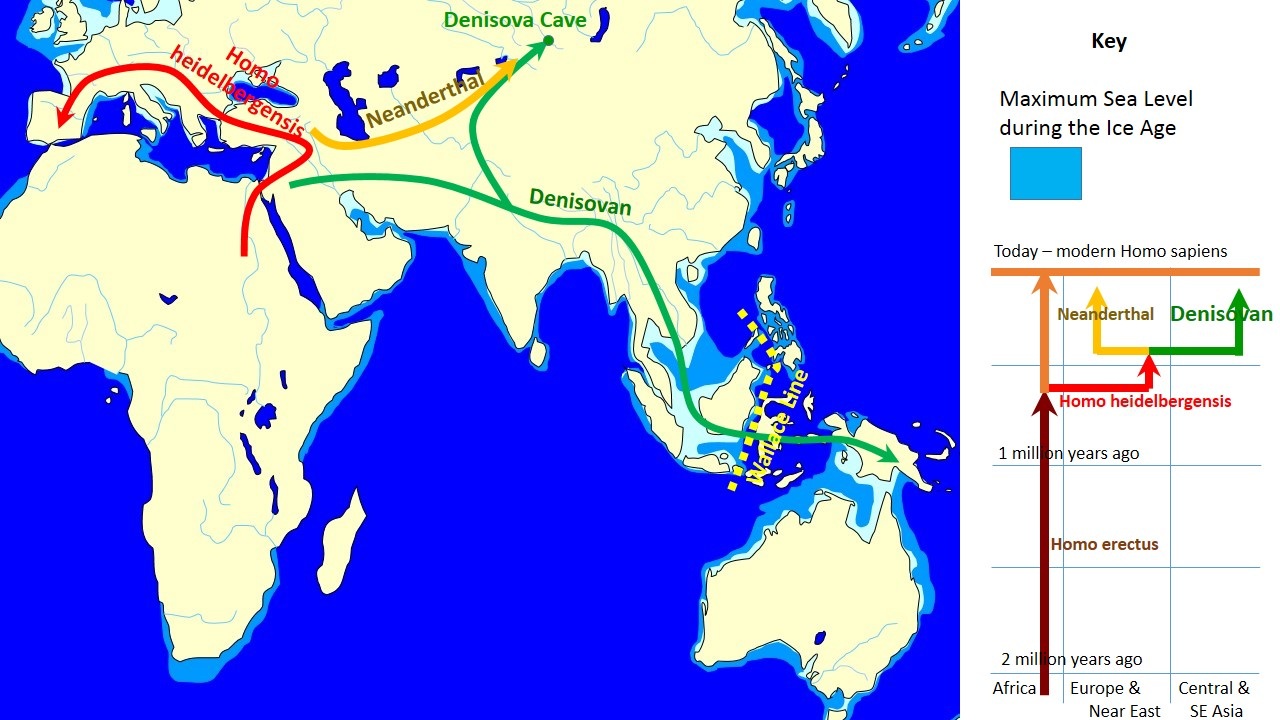
By tracing the deep history of the Pacific’s earliest pioneers, who migrated to the region by at least 45,000 years ago, the researchers uncovered unprecedented insights into human evolutionary history and adaptation. For example, they discovered that ancestors of Near Oceanic populations mated with at least three distinct groups related to Denisovans — an enigmatic hominin group initially discovered from fossil fragments in Siberia.
Mating between ancient humans and Denisovans left a legacy of many genetic variants, including some that contribute to functions in present-day humans, the researcher said. For the new study, the researchers used an advanced functional genomic technique known as a “massively parallel reporter assay” to physically test the functional consequences of these genetic variants and identified over 3,100 that alter gene expression. This analysis provided some of the largest-scale evidence for how specific, adaptive genetic variants inherited from Denisovans function inside humans today, the researchers say.
They found that a substantial proportion of these adaptive and functional variants affected the interferon-gamma signaling pathway, a vital component of the human immune system that defends against infectious pathogens.
The study also revealed that Denisovan DNA influences skeletal development. The researchers discovered adaptive variants inherited from Denisovans in a specific gene called TRPS1. This same gene has been under strong positive selection in central African rainforest hunter-gatherers and highland populations in Ecuador, showing how evolution can result in recurrent local adaptations in different regions of the world.
Tags:
Source: Yale University
Credit: Illustration: The evolution and geographic spread of Denisovans as compared with Neanderthals, Homo heidelbergensis and Homo erectus. Courtesy: John D. Croft, Wikipedia.