USDA Invests in Projects to Strengthen New World Screwworm Preparedness and Response
On Jun. 16, 2026, the U.S. Department of Agriculture (USDA) is announcing funding for 40 breakthrough projects to bolster the nation’s defenses against New World screwworm (NWS). These innovative proposals, which will receive a combined total of about $105 million, promise to sharpen detection, accelerate control and eradication tools, and strengthen rapid-response capabilities.
USDA launched the NWS Grand Challenge on January 21, 2026, part of a five-pronged plan to support producers’ success, protect the nation’s food supply, and build long-term resilience against NWS. The Grand Challenge called on innovators from federal and non-federal entities to help in the efforts to prevent the spread of NWS by developing high-impact projects to enhance detection, control, and eradication readiness.
USDA reviewed 226 applications, requesting about $664 million in total funding. Projects were selected based on their innovative approaches, scientific gold standards, and their potential to make a significant impact on the prevention and response to NWS.
In addition to the 40 projects announced today, work has already started on two additional USDA-funded projects that are a part of the Grand Challenge. Texas A&M AgriLife Research is assessing the feasibility, efficacy, and operational readiness of electron beam (eBeam) technology as a non-radioactive alternative to cobalt-60 gamma irradiation for sterilizing NWS pupae in sterile insect technique programs, and the University of Florida is evaluating two U.S.-made X-ray irradiators for sterilizing NWS pupae using secondary screwworm as a surrogate.
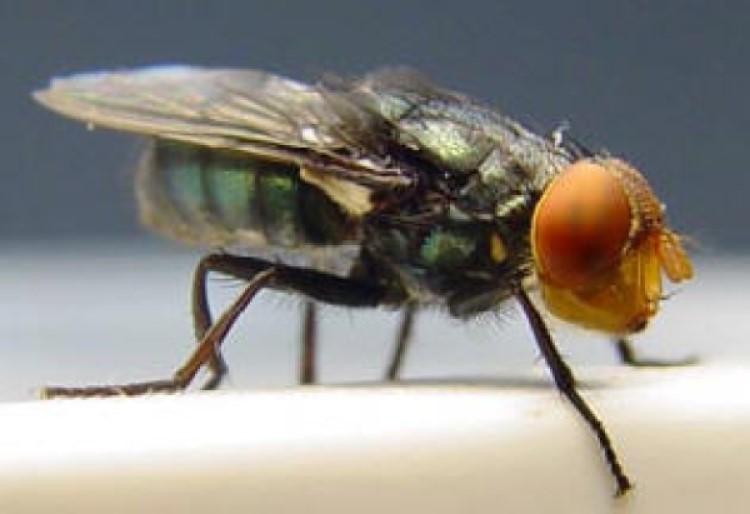
NWS is a serious pest that affects livestock, pets, wildlife, and, less commonly, people and birds. USDA’s ongoing efforts to fight NWS include sterile fly production, surveillance, and cross-border collaboration. The Grand Challenge complements these efforts by fast-tracking next-generation technologies and research that strengthen U.S. preparedness and response capabilities.
Tags:
Source: U.S. Department of Agriculture
Credit: