Prions Identified that that cause Brain Disease
On Apr. 9, 1982, Stanley Prusiner, at the University of California, San Francisco (UCSF), published a paper in the journal Science showing that infectious proteins called ‘prions’ caused a degenerative nerve disease in sheep. This transformed the scientific understanding of how certain diseases are transmitted, contradicting the prevailing ‘central dogma’ of molecular biology. Creutzfeldt-Jakob disease (CJD) and related illnesses affecting people and animals involve the degeneration of brain cells.
Prusiner discovered an unprecedented class of pathogens that he named prions. Prions are proteins that acquire an alternative shape that becomes self-propagating. As prions accumulate, they cause neurodegenerative diseases in animals and humans. Prusiner’s discovery lead him to develop a novel disease paradigm: prions cause disorders such as CJD in humans that manifest as (1) sporadic, (2) inherited and (3) infectious illnesses.
Today, Prusiner is Director of the Institute for Neurodegenerative Diseases and Professor of Neurology and Biochemistry at the UCSF. Much of Prusiner’s current research focuses on developing therapeutics that reduce the levels of the specific prions responsible for Alzheimer’s, Parkinson’s, MSA, the FTDs, CTE and CJD.
Tags:
Source: Science
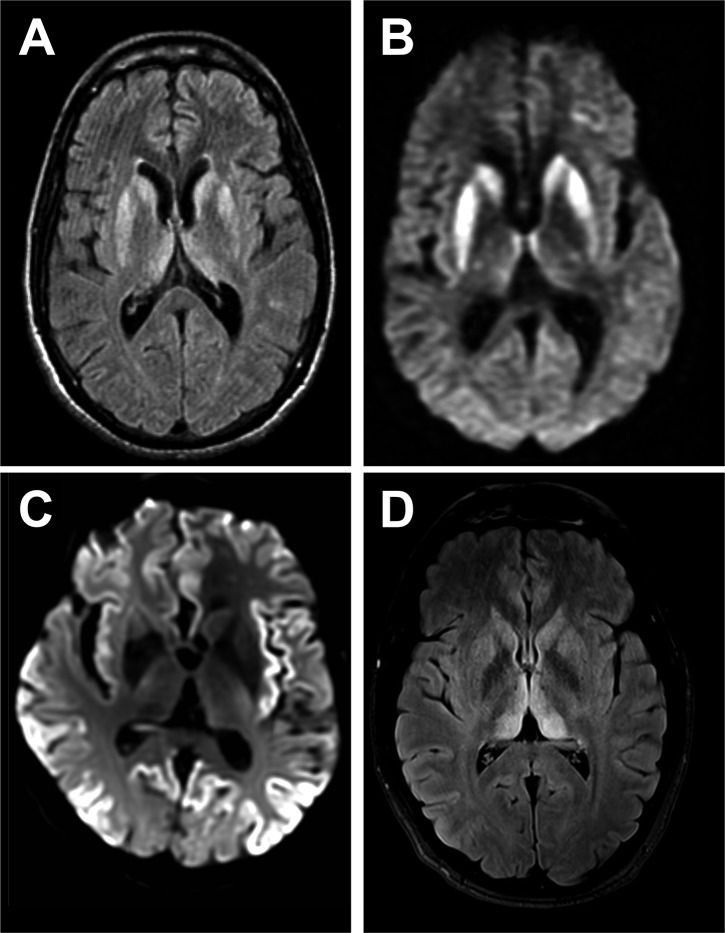
Credit: Photo: Creutzfeldt–Jakob disease typical FLAIR-MRI features. (A and B) Visible basal ganglia lesions, more obvious on diffusion-weighted sequences (B). (C) Striking cortical ribboning with normal basal ganglia. Courtesy: Wikipedia.