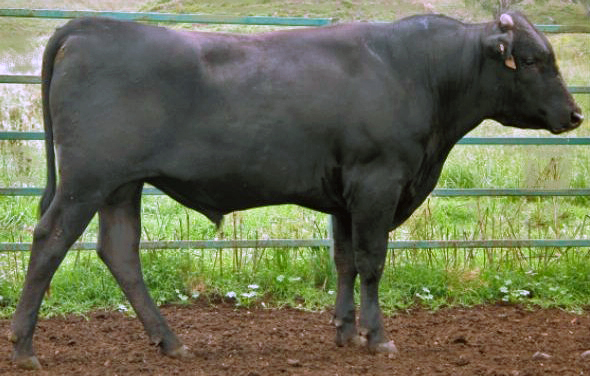
Here’s the Beef: Japan Clones Adult Cows
On Oct. 8, 1998, a team from Kinki University reported the first successful cloning of adult cows. To date, five groups had produced a total of 19 calves cloned from adults as part of an ongoing government campaign to improve the quality of beef cattle.
The bull calves were born on December 21, 23, 24, and 30, 1998 and February 7 and 8, 1999, respectively. Overall, we obtained a higher pregnancy and calving rate from embryos derived from cells at passage 10 (64 and 29%) than from those at passage 15 (25 and 17%), but these differences were not statistically significant.
The researchers used cells taken from the oviducts and cumulus, the tissue that surrounds the oocytes, or egg cells, of a single adult cow. The scientists starved the cells into quiescence, then transferred their DNA-carrying nuclei into egg cells stripped of their own nuclei. After reactivating the cells with an electric shock, the group grew several oocytes in culture to the blastocyst stage. They then selected 10 blastocysts and implanted them in five hosts. All became pregnant.
The study demonstrated that adult somatic cells remained totipotent for cloning after long-term culture. This suggests the feasibility of targeted genetic manipulations such as gene knockout using cultured somatic cells before cloning to produce knockouts or other types of genetically engineered cloned animals. Cloning using site-specific genetically manipulated cells would be a valuable tool with applications in agriculture, medicine, and basic biological research.
Their study findings appeared in the journal Science.
Tags:
Source: National Library of Medicine
Credit: Photo: Marbling of Wagyu beef, a Japanese beef cattle breed.