WHO declared mpox outbreak a public health emergency of international concern
On Aug. 14, 2024, The World Health Organization declared that the upsurge of mpox in the Democratic Republic of the Congo (DRC) and a growing number of countries in Africa constitutes a public health emergency of international concern under the International Health Regulations (2005) (IHR).
Mpox has been reported in the DRC for more than a decade, and the number of cases reported each year has increased steadily over that period. In 2023, reported cases increased significantly, and the number of cases reported to-date exceeded last year’s total, with more than 15 600 cases and 537 deaths.
Dr Tedros’s declaration came on the advice of an IHR Emergency Committee of independent experts who met earlier in the day to review data presented by experts from WHO and affected countries. The Committee informed the Director-General that it considers the upsurge of mpox to be a PHEIC, with potential to spread further across countries in Africa and possibly outside the continent.
The Director-General will share the report of the Committee’s meeting and, based on the advice of the Committee, issue temporary recommendations to countries.
Mpox has been reported in the DRC for more than a decade, and the number of cases reported each year has increased steadily over that period. Last year, reported cases increased significantly, and already the number of cases reported so far this year has exceeded last year’s total, with more than 15 600 cases and 537 deaths.
The emergence last year and rapid spread of a new virus strain in DRC, clade 1b, which appears to be spreading mainly through sexual networks, and its detection in countries neighbouring the DRC is especially concerning, and one of the main reasons for the declaration of the PHEIC.
In the past month, over 100 laboratory-confirmed cases of clade 1b have been reported in four countries neighbouring the DRC that have not reported mpox before: Burundi, Kenya, Rwanda and Uganda. Experts believe the true number of cases to be higher as a large proportion of clinically compatible cases have not been tested.
Tags:
Source: World Health Orgainzation
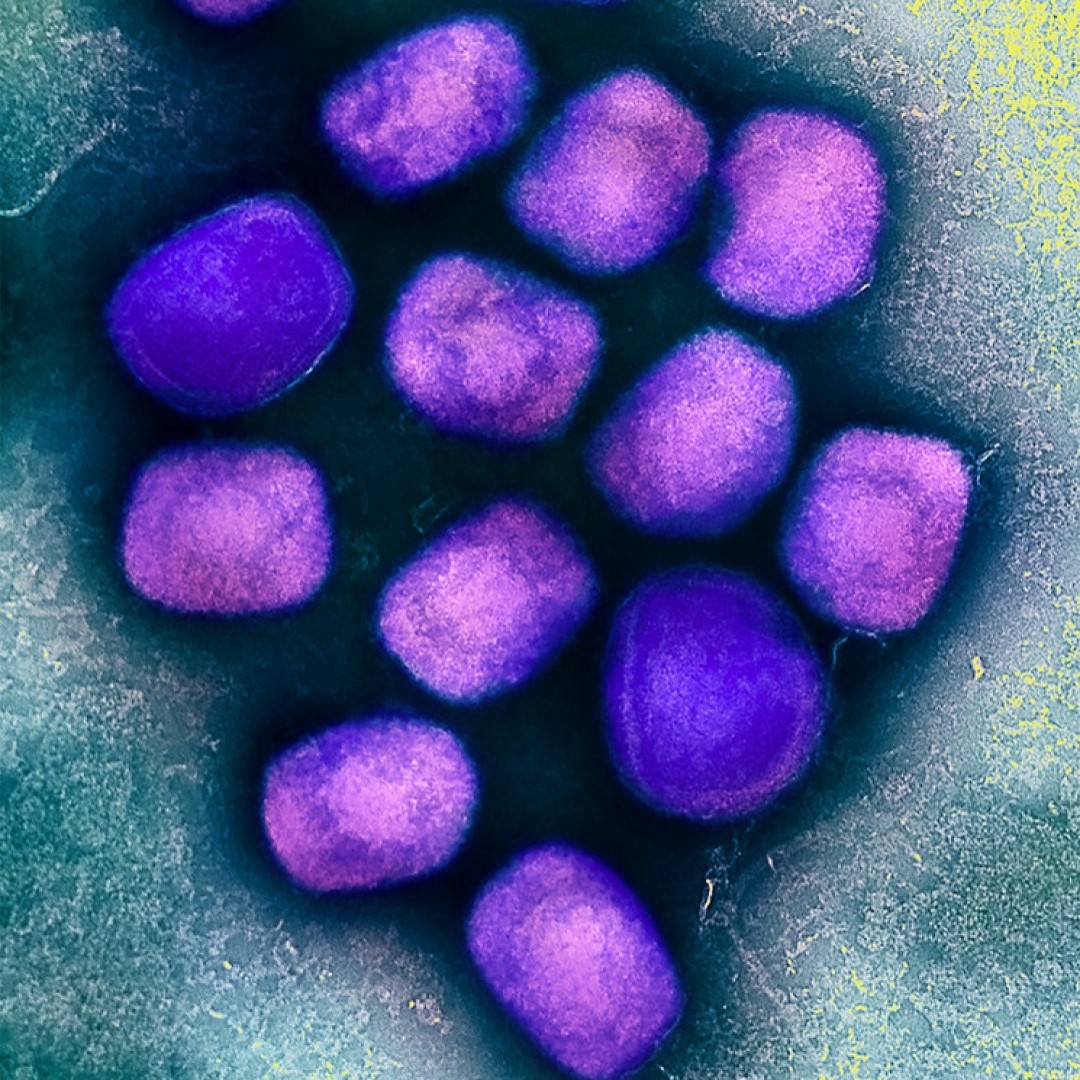
Credit: Photo: Microscopy of mpox virus, courtesy, National Institute of Allergy and Infectious Diseases