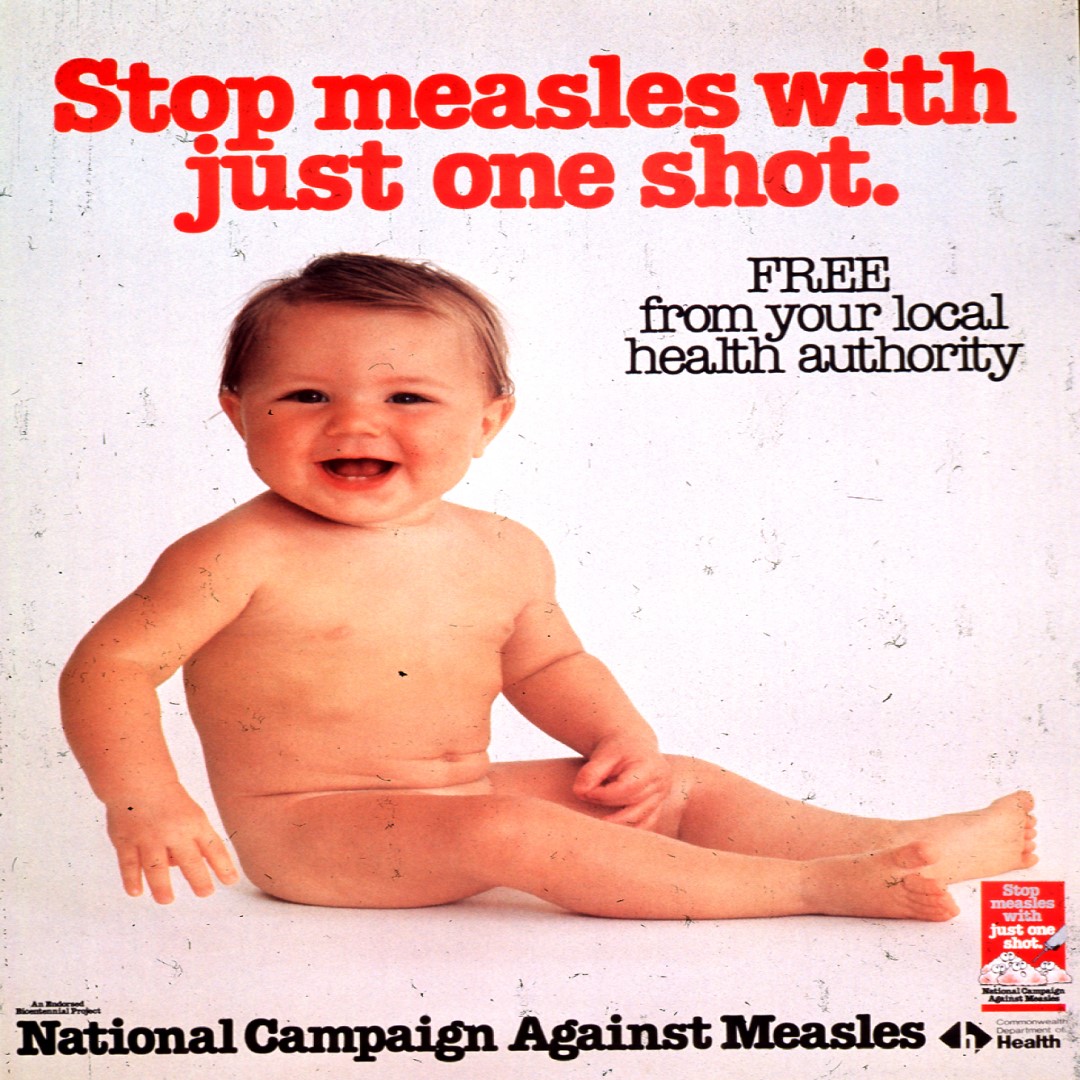
The first live virus measles vaccine (Rubeovax by Merck) was licensed
On Mar. 21, 1963, the first live virus measles vaccine (Rubeovax by Merck) was licensed. Other live virus measles vaccines were eventually licensed (M-Vac by Lederle, Pfizer-vax Measles-L by Pfizer, and generic vaccines by Lilly, Parke Davis, and Philips Roxane).
In September 1963 the US Surgeon General Luther Terry published a statement on the status of measles vaccines. The live vaccine had by this time been given to some 25 000 people in the United States. A single dose produced an effective antibody response in more than 95% of susceptible children—a response that trials had shown persisted for at least three years. Although 30% to 40% of these children showed signs of temporary high fever and a rash after vaccination, side effects could be reduced by coadministration of γ globulin.
Inactivated vaccine produced no side effects, but it was unclear whether it could provide protection of adequate duration. If protection was of too short duration, there was a risk of measles infection being postponed to an older age, when its effects could be more serious.
Approximately 15 million children were given one of the new measles vaccines starting with their licensing in 1963 and continuing until mid-1966, and the reported incidence of the disease fell by half.15 On the basis of this success, with material and financial support from the Centers for Disease Control and Prevention, and inspired by the social and political climate of the time, in 1967 a campaign was launched to eliminate measles from the United States.
Some 11.7 million doses of measles vaccine were distributed in 1967–1968, and the estimated number of cases of measles fell from 900 000 to 250 000. However, because budgetary politics subsequently led to fluctuating federal support for community-based immunization programs, the expectation that measles would soon be eradicated was to prove wildly overoptimistic.
Tags:
Source: U.S. National Library of Medicine
Credit: