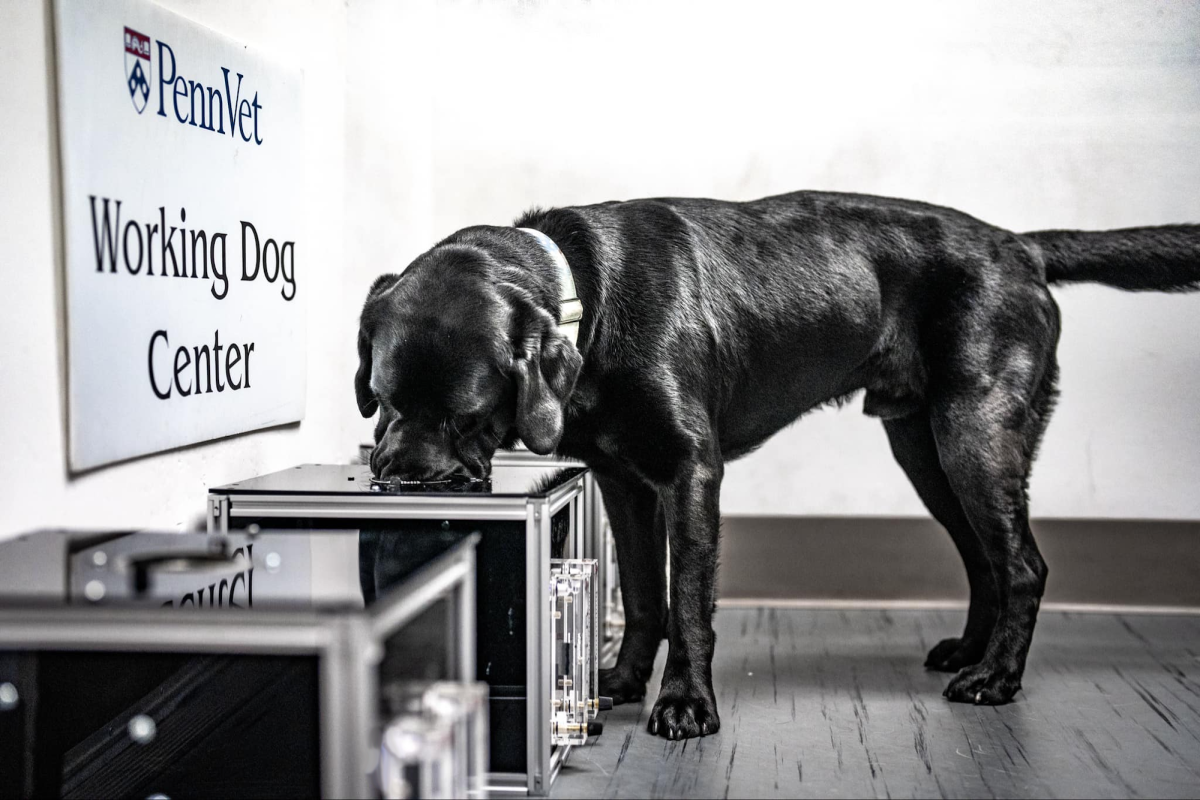
Sniffing out cancer: Trained dogs can detect hemangiosarcoma by scent
On Jan. 15, 2026, University of Pennsylvania (UPenn) researchers show that trained dogs can identify the odor of hemangiosarcoma, a devastating canine cancer, offering the hope of a better screening tool and more effective treatments. Cancer is a leading cause of death in both humans and pets; studies suggest that between one-third and one-half of all dogs will develop cancer during their lifetime.
Hemangiosarcoma, an aggressive, malignant cancer of blood vessel cells, is especially devastating. Often not diagnosed until a seemingly healthy dog collapses, it has been described as a “silent killer.” Currently, there are no diagnostic measures or tools to detect it early, and the prognosis once diagnosed is poor. To address this challenge, Cynthia M. Otto of the School of Veterinary Medicine and her colleagues have evaluated whether hemangiosarcoma has a distinct “signature” scent or pattern of volatile organic compounds that dogs can detect. Their findings are published in The Veterinary Journal.
Five bio-detection dogs previously trained to recognize odors associated with other diseases, including chronic wasting disease, post-traumatic stress disorder, human ovarian cancer, and human pancreatic cancer, participated in double-blinded tests that included blood serum samples from dogs with confirmed hemangiosarcoma, dogs with non-cancerous diseases other than hemangiosarcoma (diseased controls), and healthy controls; each dog evaluated 12 matched sample sets across seven trials per set. Notably, none of the samples had been used during the initial training sessions.
“We used olfactometers, which are very high-tech—they actually have a little infrared laser beam going across the top,” says Wilson. “When that beam is broken, it will register that the dog is interrogating the sample. And if they then stay in that beam for long enough—and it’s the correct sample—they’ll hear a tone, and they’ll know to come and get their treat.”
On average across all trials, the dogs correctly identified the hemangiosarcoma samples 70% of the time, a rate that, Wilson notes, falls within the range seen in studies of dogs detecting human cancer, a more-established approach.
Importantly, these results indicate that hemangiosarcoma does have a detectable scent profile, which is what this proof-of-concept study aimed to determine. Now, says Wilson, effort could be put into developing a machine or a test to detect it. Early detection of hemangiosarcoma would also allow researchers to test different therapies in clinical trials, says Wilson. “This is an initial kernel of hope.”
Future research that could translate these findings into a helpful screening tool, Wilson and Otto say, might not only help veterinarians better treat dogs now but could also give researchers the ability to test more treatments.
Tags:
Source: University of Pennsylvania
Credit: Photo: Dalton the dog at the olfactometer lineup. Courtesy: Shelby Wise, University of Pennsylvania.