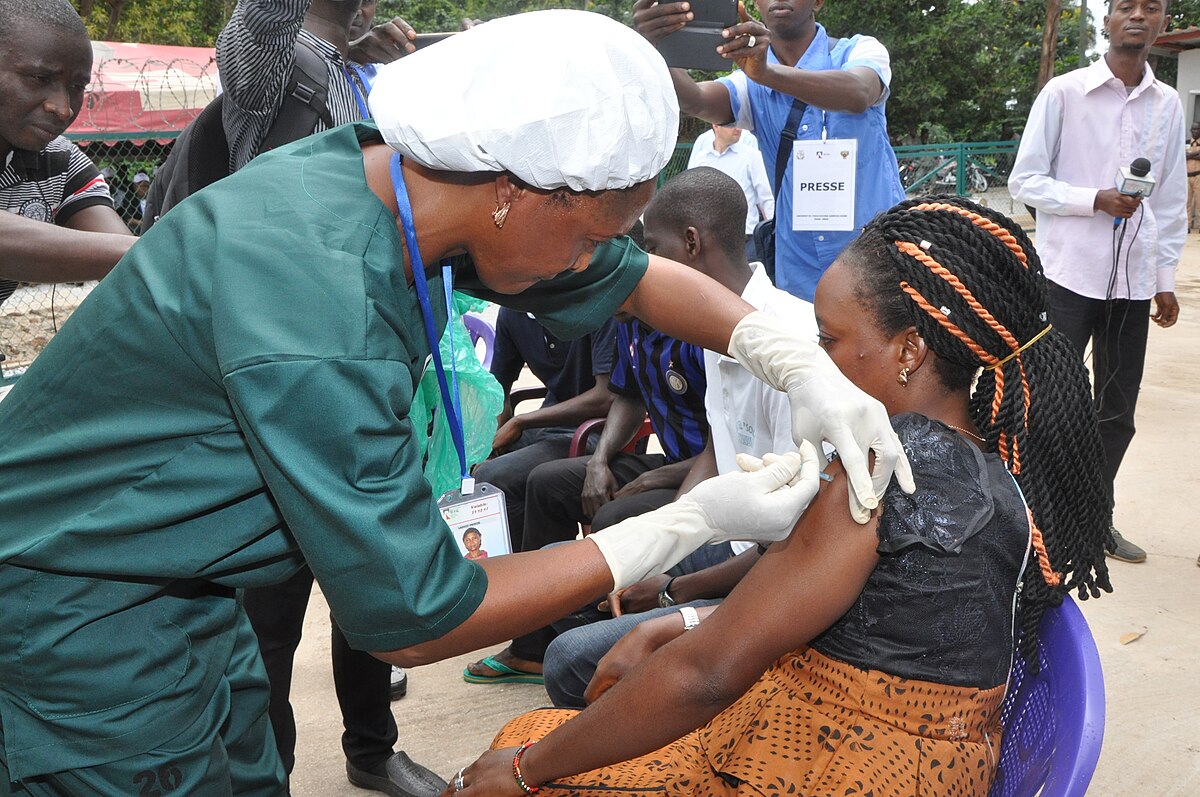
Sabin Vaccine Institute’s Investigational Marburg Vaccine Delivered to Ethiopia for Outbreak Response
On Dec. 4, 2025, the Sabin Vaccine Institute (Sabin) announced it has sent more than 640 doses of its investigational cAd3-Marburg Vaccine to Ethiopia to support the country’s response to its first-ever outbreak of Marburg virus disease. Marburg is a highly contagious hemorrhagic fever disease and can have a high case fatality rate of up to 88%. There are currently no licensed vaccines or treatments for Marburg.
Soon after Marburg was confirmed as the virus causing a hemorrhagic fever outbreak in Ethiopia’s southern region, the Ethiopia Ministry of Health engaged Sabin and the U.S. government to request access to Sabin’s investigational cAd3-Marburg Vaccine. The U.S. government approved this request. The Biomedical Advanced Research and Development Authority (BARDA), part of U.S. Department of Health and Human Services’ Administration for Strategic Preparedness and Response (ASPR), funds the development and manufacture of Sabin’s investigational vaccine candidate.
Sabin and the Ethiopia Ministry of Health have entered into a clinical trial agreement under which Sabin is providing BARDA-funded investigational cAd3-Marburg Vaccine doses for a two-cohort Phase 2, rapid response, open-label, randomized trial to assess safety, efficacy, and immunogenicity. Under this approved protocol, Cohort A is limited to high-risk health care and front-line workers or individuals who have had direct contact with infected persons within 21 days, the incubation period for Marburg virus disease. All other health care and front-line workers and contacts will be randomized in Cohort B, some receiving vaccine on Day 1 and others on Day 22 of the trial.
In addition to coordinating directly with the Minister of Health and the Armauer Hansen Research Institute (AHRI), Sabin is also working closely with manufacturing partner ReiThera, clinical research organization IQVIA and the Coalition for Epidemic Preparedness Innovations (CEPI) – the same organizations that came together to support Rwanda’s response to their 2024 outbreak. With authorization from ASPR, Sabin provided cAd3-Marburg Vaccine to the Rwanda Biomedical Center for use in a Phase 2 clinical trial.
Ethiopia’s Ministry of Health has confirmed 13 Marburg infections, including eight deaths, in their most recent update. Another three deaths are suspected but not confirmed. Officials continue to express concern about the outbreak’s proximity to fragile health settings in nearby Kenya and South Sudan. In addition to Sabin’s single-dose cAd3-Marburg Vaccine being used in a Phase 2 outbreak clinical trial in Rwanda, the vaccine is also in Phase 2 clinical trials in the U.S., Uganda and Kenya. More than 2000 trial participants have received the vaccine and no significant safety concerns have been reported. Results from Phase 1 clinical trials and nonclinical studies indicate that the vaccine is safe and elicits rapid, robust immune responses.
The Sabin cAd3-Marburg Vaccine doses have been supported in whole or in part with federal funds from the U.S. Department of Health and Human Services; Administration for Strategic Preparedness and Response; Biomedical Advanced Research and Development Authority (BARDA), under contract numbers 75A50119C00055 and 75A50123C00010.
Once rare, Marburg virus disease outbreaks have surged in Africa in recent years, with incidents reported in 2023 in Tanzania and Equatorial Guinea, in 2024 in Rwanda and in 2025 in Tanzania. Marburg is transmitted from fruit bats to humans, spreading from person to person through contact with infected bodily fluids.
Tags:
Source: Sabin Vaccine Institute
Credit: