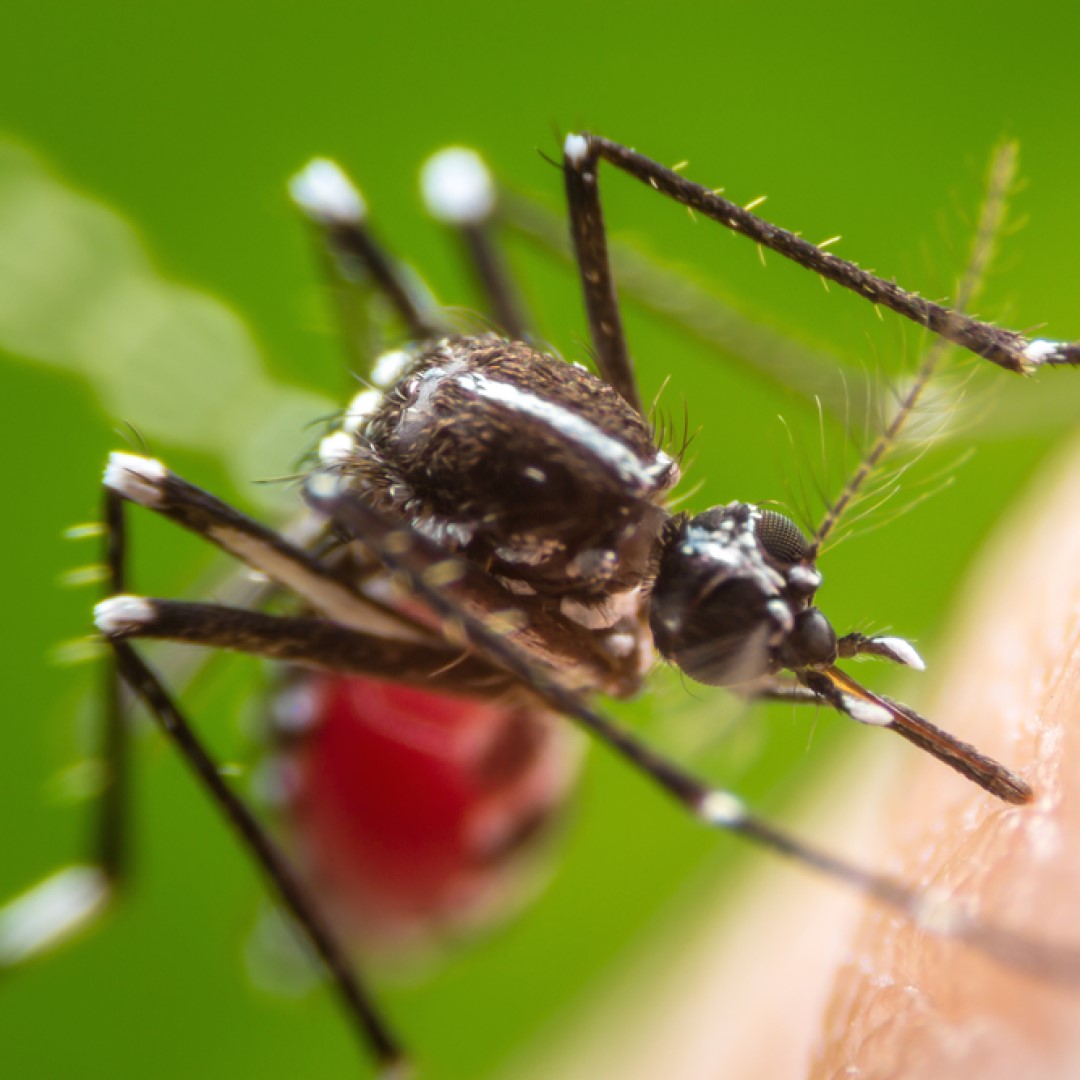
Pathogens spread by high-flying wind-borne mosquitoes
On Nov. 25, 2025, recent studies published in PNAS have revealed that many mosquito species regularly engage in high-altitude wind-borne migration, but its epidemiological significance remains unclear. The hypothesis that high-flying mosquitoes spread pathogens over long distances has not been directly tested.
The scientists report that high-flying mosquitoes are commonly infected with arboviruses, protozoans, and helminths and provide a insights into this pathogen–vector aerial network. A total of 1,017 female mosquitoes intercepted on nets suspended from helium balloons at 120 to 290 m above ground over Mali and Ghana were screened for infection with arboviruses, Haemosporida, and filariae.
The mosquitoes collected at altitude comprised 61 species, across 10 genera, dominated by Culex, Aedes, and Anopheles. Infection and infectiousness (capacity to transmit a pathogen to another host inferred based on disseminated infection) rates of migrant mosquitoes were 7.2% and 4.4% with Plasmodium spp., 1.6% and 0.6% with filariae, and 3.5% and 1.1% with flaviviruses, respectively.
Remarkably, 21 mosquito-borne pathogen species were identified from this modest sample size (1,017 female mosquitoes), including arboviruses affecting humans (dengue, West Nile, and M’Poko viruses). Infection, even with macroparasites such as filarial nematodes, does not impede mosquitoes from undertaking high-altitude flights, confirming inferences concerning migratory blackflies infected with Onchocerca volvulus. Such high infection rates raise the possibility that pathogens increase migratory activity.
The public health and economical importance of wind-borne pathogen spread by mosquitoes depends on the pathogen species composition, which in turn depends on the mosquito species composition, their abundance, and age (past exposure) at altitude. Additionally, it depends on mosquito displacement, which is determined by the wind speed, trajectory, and flight duration, the number of high-altitude journeys (nights) an individual mosquito takes, the selectivity of wind direction, and whether these mosquitoes survive their journey and refeed following their descent. The suitability of the landing destinations for the mosquitoes and the abundance of susceptible hosts there are also important.
The absence of human P. falciparum and P. ovale, common in people [65% in Mali, 73% in Ghana] suggests that the majority of these mosquitoes have fed on animals rather than people. Further, at least 20 of the 21 mosquito-borne pathogen species detected circulate among wild animals and are considered sylvatic, e.g., dengue virus serotype 2 also circulates among nonhuman primates and possibly birds in West Africa.
This study highlights the value of aerial collections in surveillance of sylvatic pathogens that are especially difficult to monitor; many even lack diagnostic assays, and providing information on pathogen and vector movement trajectories, putative sources, and destinations. Using long-flying drones or towers requires a larger initial investment but will increase collection throughput and may prove cost-effective.
Tags:
Source: Proceedings of the National Academy of Sciences.
Credit: