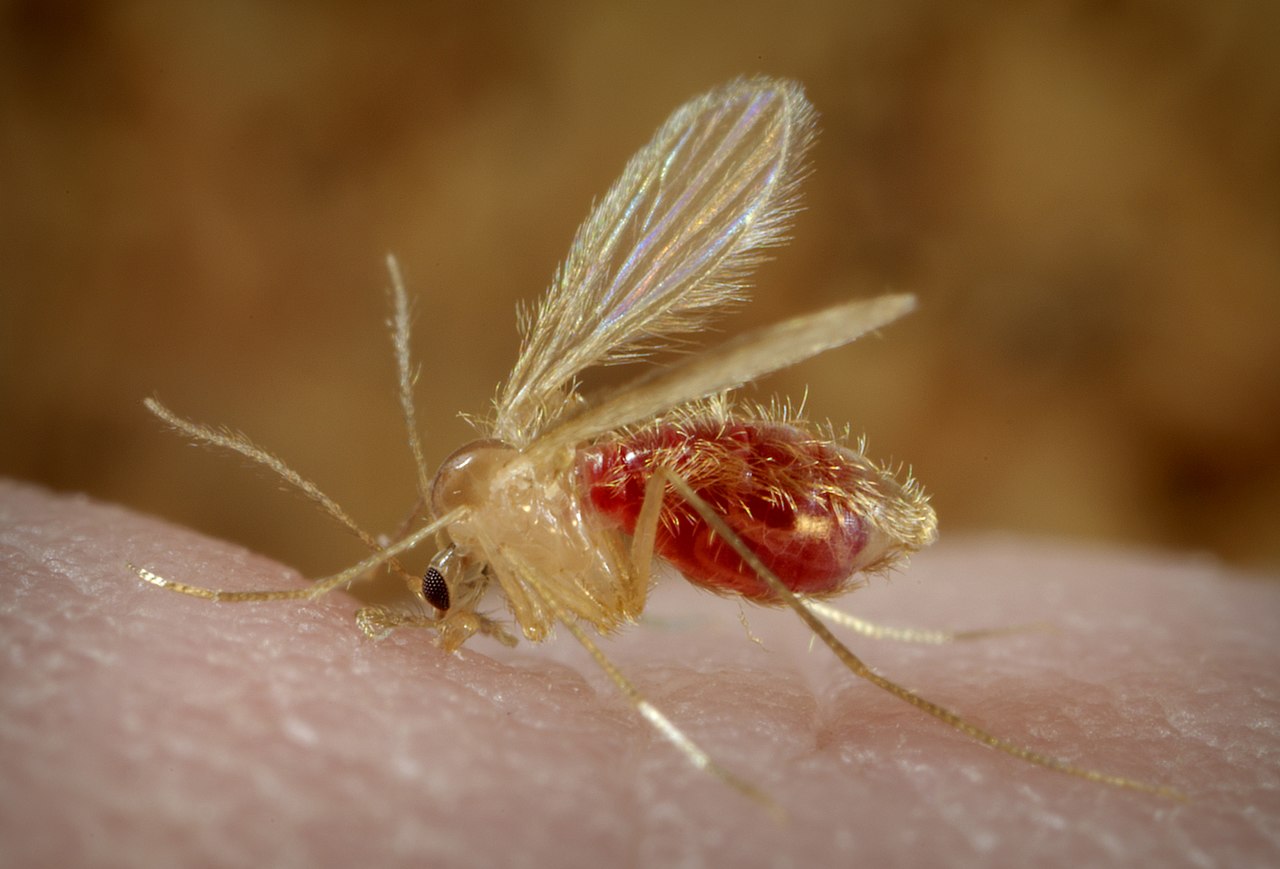
New DNA Test to Track Leishmaniasis Infections
On Nov. 12, 2025, a study led by the Hebrew University of Jerusalem, and the Laboratory of Entomology at the Israeli Ministry of Health introduced a high-resolution melting (HRM) PCR-based technique that can simultaneously identify sand fly species, detect Leishmania parasites, and pinpoint the source of the insect’s blood meal, all from a single specimen. This innovative molecular approach replaces time-consuming traditional methods with a fast, cost-effective diagnostic system that offers near-complete accuracy.
Leishmaniasis is a parasitic disease transmitted by sand flies, has long challenged veterinarians and public health experts alike. Found in humans and animals across Israel and many other parts of the world, the disease’s intricate transmission cycle involves numerous sand fly species and a wide range of wild and domestic reservoirs.
The research team analyzed nearly 2,000 sand flies collected across Israel, identifying twelve distinct sand fly species, four species of Leishmania (L. major, L. tropica, L. infantum, L. donovani), and twenty-five different blood meal sources ranging from domestic cats and cows to rock hyraxes and hares. Their findings reveal distinct ecological zones: L. major and L. donovani vectors dominated the arid southern regions, while L. tropica and L. infantum were more common in the center and north. Interestingly, sand fly species were also found outside their historically recognized habitats, suggesting environmental or climatic shifts expanding transmission zones. The HRM system achieved 96.7% success in identifying blood meal sources, a vital advance for One Health studies that bridge veterinary and human epidemiology. Domestic cats, hyraxes, hares, and cows accounted for more than half of all identified blood meals, underscoring the crucial role of animals in sustaining the disease’s life cycle.
Leishmaniasis is both a veterinary and human health concern, affecting dogs, cats, and wildlife reservoirs alongside people. HRM technology’s ability to distinguish between species and trace infection patterns enables earlier intervention and targeted control strategies. For veterinarians, it provides a diagnostic window into infection ecology, helping identify animal hosts that serve as silent reservoirs and improving outbreak prediction. This pioneering molecular toolkit not only enhances Israel’s surveillance of vector-borne diseases but also offers a model adaptable to other endemic regions. By merging molecular diagnostics with field ecology, the study marks a significant step forward in the fight against neglected tropical diseases that cross the animal-human divide.
The research paper titled “A multifaceted molecular approach to surveillance of leishmaniasis: Identification of sand fly species, Leishmania parasites, and blood meal sources using high-resolution melting analysis” was published in PLOS Neglected Tropical Diseases.
Tags:
Source: Hebrew University of Jerusalem
Credit: