Last Look: Critical Ebola Research from Now-Closed U.S. NIAID BSL-4 Lab
On Jun. 5, 2025, the final studies from the recently shuttered National Institute of Allergy and Infectious Diseases’ (NIAID) Integrated Research Facility (IRF) at Fort Detrick reveal how oxidative stress contributes to immune cell death in Ebola virus infection.
A study published in npj Imaging sheds new light on the role of oxidative stress in Ebola virus disease (EVD). Conducted at the IRF facility at Fort Detrick—one of the few federal labs authorized to study Ebola under biosafety level 4 (BSL-4) conditions—the research provides critical new data on how reactive oxygen species (ROS) contribute to immune cell loss and disease progression.
The study, led by Venkatesh Mani and colleagues at the IRF, uses a combination of ex vivo immunohistochemistry and in vivo ROS-sensitive MRI in domestic ferrets to establish a link between oxidative tissue damage and the depletion of T and B lymphocytes in the spleen—a hallmark of severe EVD.
Researchers observed a progressive increase in ROS-related oxidative stress markers in the spleens, livers, and kidneys of Ebola-exposed ferrets. Notably, the accumulation of 4-hydroxy-2-nonenal (4-HNE) and myeloperoxidase (MPO)—biomarkers for oxidative stress—was highest in the spleen at terminal stages of the disease. MRI imaging using the Fe-PyC3A probe confirmed these findings in vivo, detecting significant ROS-related signal enhancement corresponding to disease severity.
Flow cytometry revealed a marked decline in CD4+ and CD8+ T cells in the spleens of ferrets as the disease progressed. CD4+ T cell apoptosis increased steadily, and this pattern significantly correlated with ROS-related tissue changes detected by both MRI and immunohistochemistry. B cells also showed increased apoptosis, although their absolute numbers remained stable. These findings suggest ROS may play a direct or indirect role in immune cell death during Ebola infection.
The data strongly support a role for ROS in the pathogenesis of EVD and raise new questions about whether therapies targeting oxidative stress could mitigate immune cell loss and improve outcomes. Importantly, the study’s success underscores the critical capabilities of BSL-4 facilities like the now-closed IRF in Frederick, Maryland.
Given the challenges of safely studying lethal pathogens, the use of ferrets and molecular imaging in this study provides a scalable model for future investigations. It also highlights the irreplaceable role of federal research infrastructure in preparing for and responding to biological threats.
Tags:
Source: Global Biodefense
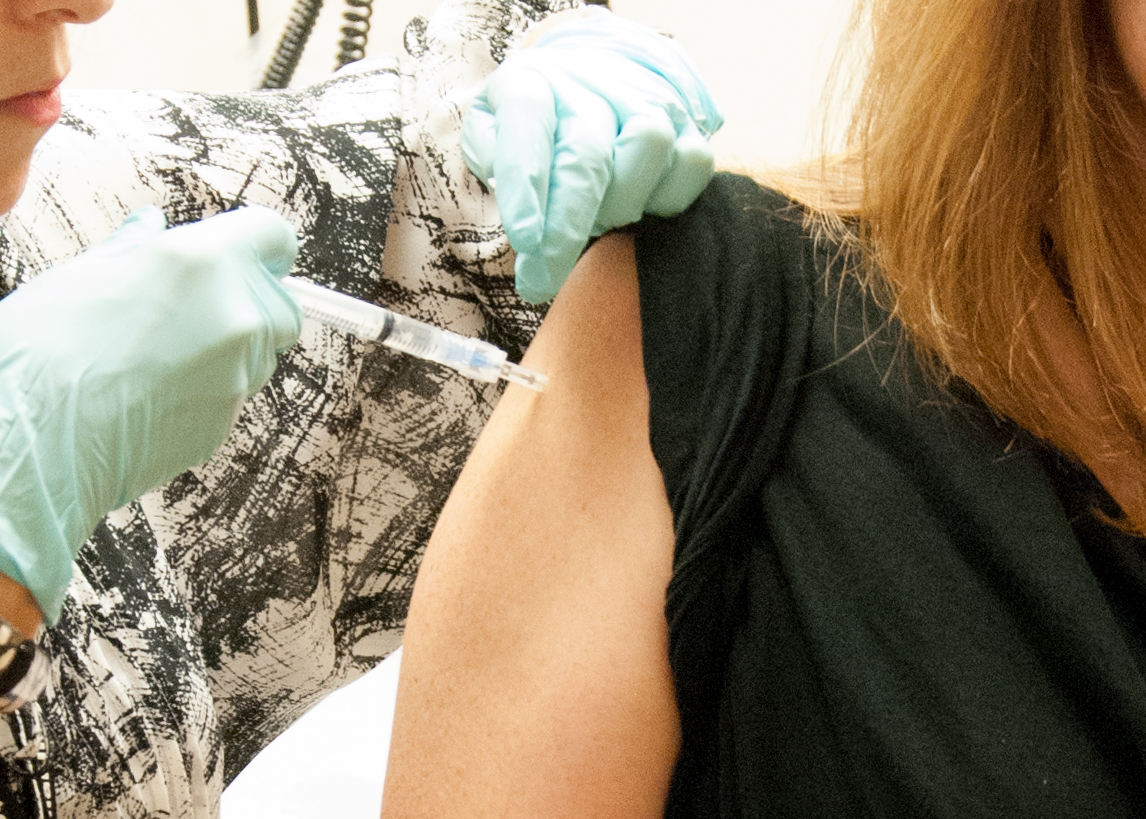
Credit: Photo: A 39-year-old woman, the first participant enrolled in VRC 207, receives dose of NIAID/GSK Ebola vaccine, NIH Clinical Center, Bethesda, Md, Courtesy: National Institute of Allergy and Infectious Diseases.