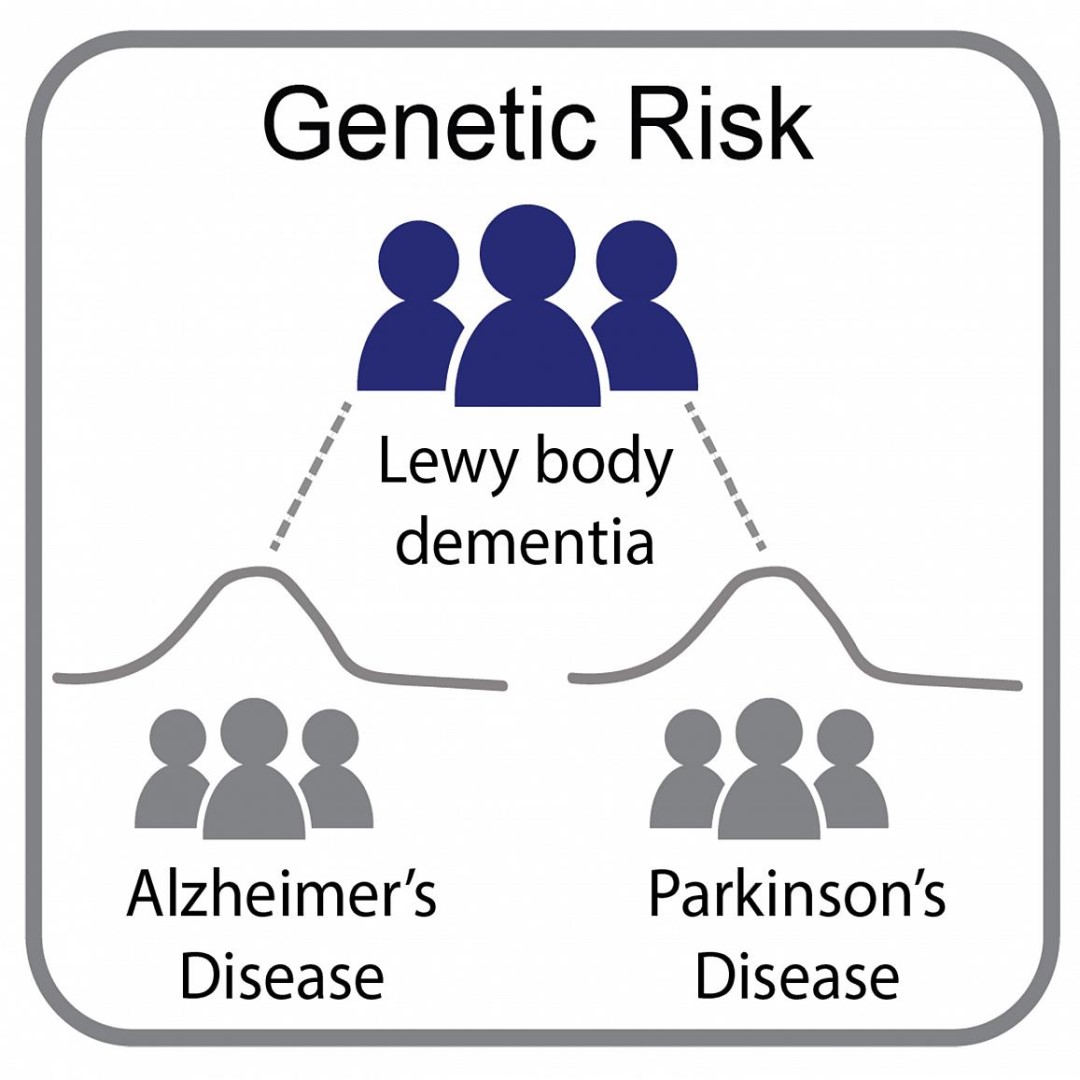
Genetic study of Lewy body dementia supported ties to Alzheimer’s and Parkinson’s diseases

, , , , ,

On Feb. 16, 2021, in a study led by National Institutes of Health (NIH) researchers, scientists found that five genes may play a critical role in determining whether a person will suffer from Lewy body dementia, a devastating disorder that riddles the brain with clumps of abnormal protein deposits called Lewy bodies. Lewy bodies are also a hallmark of Parkinson’s disease.

Lewy body dementia usually affects people over 65 years old. Early signs of the disease include hallucinations, mood swings, and problems with thinking, movements, and sleep. Patients who initially have cognitive and behavioral problems are usually diagnosed as having dementia with Lewy bodies, but are sometimes mistakenly diagnosed with Alzheimer’s disease.

Alternatively, many patients, that are initially diagnosed with Parkinson’s disease, may eventually have difficulties with thinking and mood caused by Lewy body dementia. In both cases, as the disease worsens, patients become severely disabled and may die within eight years of diagnosis.

A growing body of evidence suggests genetics may play a role in the disorder and that some cases may be inherited. Scientists have found that some of these rare cases can be caused by mutations in the gene for alpha-synuclein (SNCA), the main protein found in Lewy bodies. Further studies have found that variants in the gene for apolipoprotein E (APOE), which is known to play a role in Alzheimer’s disease, may also play one in Lewy body dementia.

The results, published in Nature Genetics, not only supported the disease’s ties to Parkinson’s disease but also suggested that people who have Lewy body dementia may share similar genetic profiles to those who have Alzheimer’s disease.

Tags:


Source: National Institutes of Health
Credit: