‘Fire amoeba’ from Lassen Volcanic National Park survives in hotter conditions than any other complex cell
On Dec. 2, 2025, a team of microbiologist announced they discovered an organism at Lassen Volcanic National Park in northern California’s Cascade mountain range they named it Incendiamoeba cascadensis, which translates to ‘fire amoeba from the cascades’ that can grow at 63 °C (145.4 °F), a record for eukaryotic life.
This cell likes it hot. A tiny, single-celled amoeba that can thrive at temperatures that kill all other known complex life — organisms whose cells contain a nucleus and internal structures — has been found. The discovery questions the notion that such ‘eukaryotic’ life — which includes all animals and plants — is not suited to the kind of extreme conditions that can be tolerated by bacteria and other organisms lacking a cell nucleus.
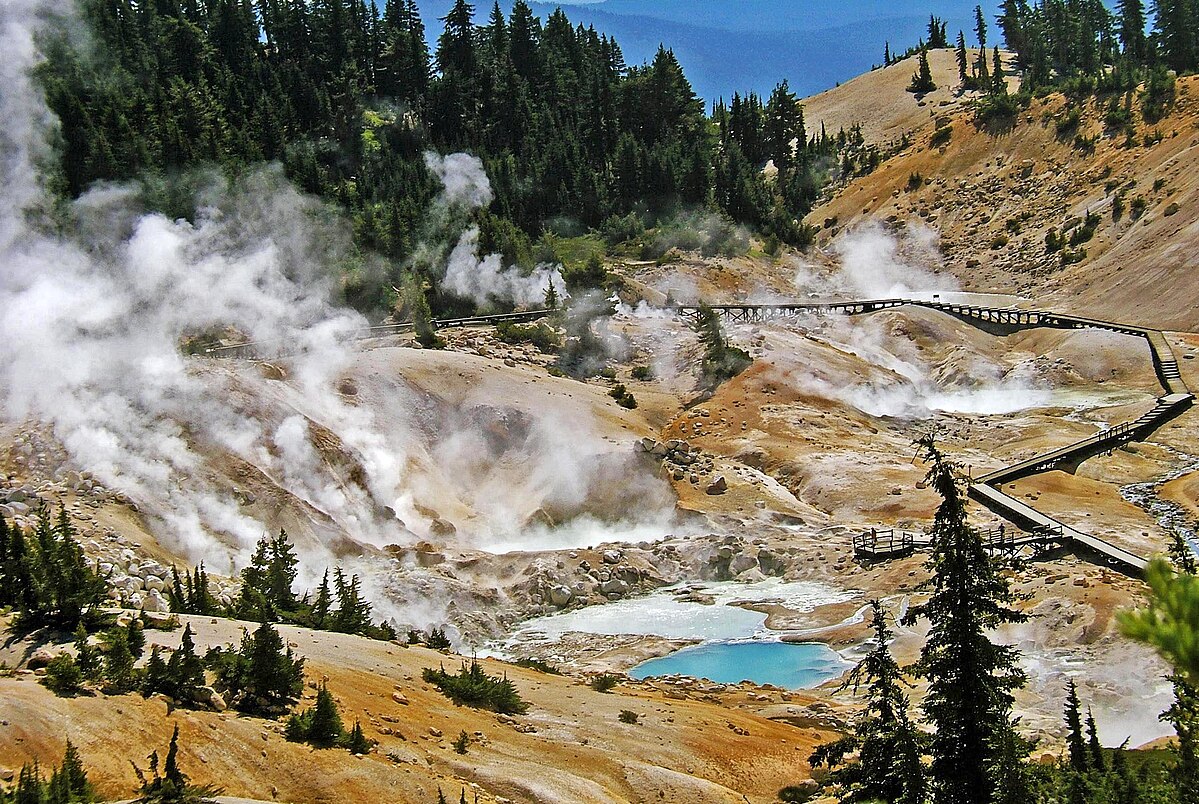
The park is famous for gurgling acid lakes and incandescent geothermal pools, but I. cascadensis comes from a pH-neutral ‘hot stream’. “It’s the most uninteresting geothermal feature you’ll find in Lassen,” says Syracuse microbiologist Beryl Rappaport.
Water samples from the stream looked devoid of life under a microscope, but after culturing them with nutrients, the researchers spotted the amoeba growing at 57 °C, within the stream’s temperature range. The scientists slowly raised the temperature, sailing past the previous eukaryote record of 60 °C. I. cascadensis was still able to divide at 63 °C and was still moving around at 64 °C. Even at 70 °C, the cells could form dormant ‘cysts’ that were capable of reactivating at cooler temperatures.
The work, which had not yet been peer reviewed, was described in a preprint.
Tags:
Source: Nature
Credit: