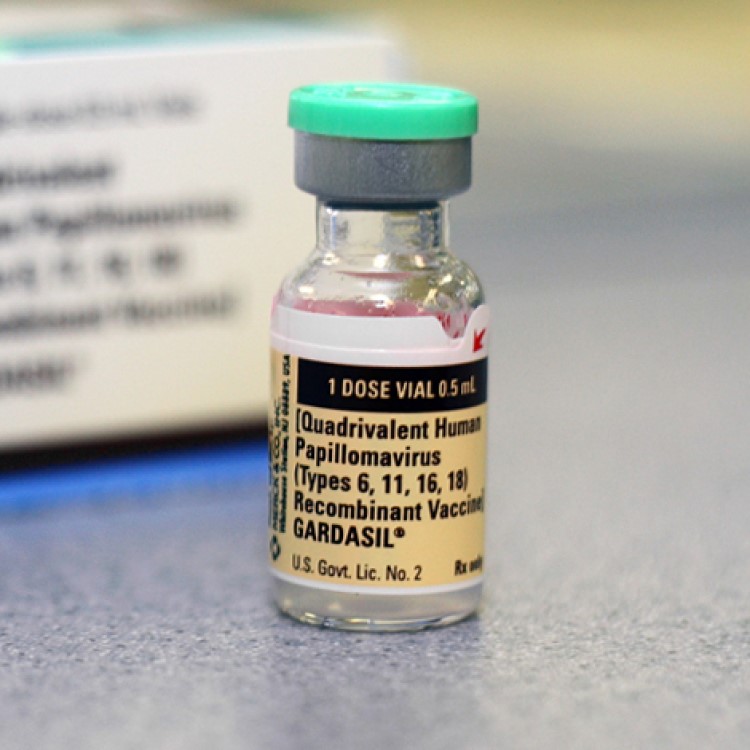
FDA expanded Gardasil 9 licensure to include males age 16-26 years
On Dec. 14, 2015, the U.S. Food and Drug Administration (FDA) announced it had expanded Merck’s Gardasil 9 licensure to include males age 16-26 years. The inclusion of 16-26 year old males made the age indication for 9vHPV consistent with that of quadrivalent HPV vaccine (4vHPV), which is the other HPV vaccine licensed for use in males.
GARDASIL 9 (Human Papillomavirus 9-valent Vaccine, Recombinant) includes the greatest number of HPV types in any available HPV vaccine. GARDASIL 9 adds protection against five additional HPV types — 31, 33, 45, 52 and 58 — in addition to the four original HPV types covered by GARDASIL [Human Papillomavirus Quadrivalent (Types 6, 11, 16, and 18) Vaccine, Recombinant]. Seven HPV types in GARDASIL 9 (HPV 16, 18, 31, 33, 45, 52 and 58) cause approximately 90-95 percent of HPV-related anal cancers, approximately 90 percent of cervical cancers, and approximately 80 percent of high-grade cervical lesions (cervical precancers, defined as CIN 2 and CIN 3) worldwide.
These seven HPV types also cause 90 percent of HPV-related vulvar cancers and 85 percent of HPV-related vaginal cancers. HPV types 6 and 11 cause approximately 90 percent of genital warts cases in males and females. Not all vulvar, vaginal, and anal cancers are caused by HPV, and GARDASIL 9 protects only against those vulvar, vaginal, and anal cancers caused by HPV 16, 18, 31, 33, 45, 52 and 58.
In the United States, HPV will infect most sexually active males and females in their lifetime. According to the CDC, there are approximately 14 million new genital HPV infections in the United States each year, half of which occur in people 15 through 24 years of age. For most people, HPV clears on its own, but for others who don’t clear the virus, it could lead to significant cancers and other diseases in males as well as females, and there is no way to predict who will clear the virus.
HPV causes approximately 85-90 percent of anal cancers in both males and females. According to the American Cancer Society, an estimated 2,600 men and 4,600 women in the United States will be diagnosed with anal cancer in 2015, and overall rates have been increasing. There is no routine screening recommended for the general population to reduce the risk of anal cancer.
HPV causes approximately 90 percent of genital warts in both males and females. There are approximately 360,000 cases of genital warts each year in the United States. Treatment of genital warts can be painful, and they may recur after treatment, especially in the first three months. Approximately 3 out of 4 people get them after having genital contact with someone who has genital warts.
In women, HPV also causes virtually all cervical cancer cases. Each day another 35 women are diagnosed with cervical cancer in the United States — about 12,900 women per year. HPV also causes approximately 70-75 percent of vaginal cancer cases and approximately 30 percent of vulvar cancer cases in females. Additionally, there are an estimated 3 million abnormal Pap results, many of which are caused by HPV, that require follow-up each year in the United States.
Tags:
Source: Merck
Credit: