Researchers Borrow from biology to power next-gen data storage
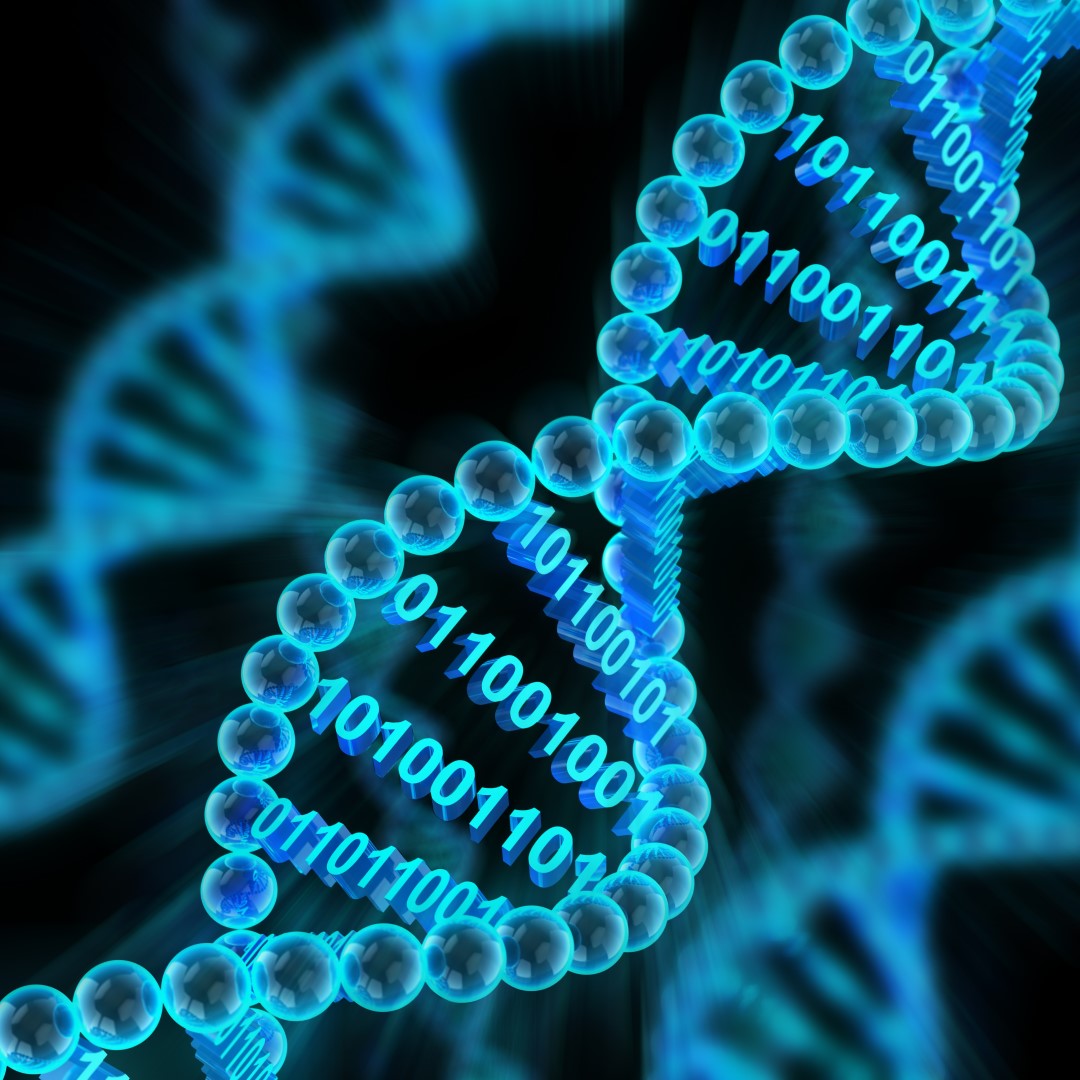
On Feb. 24, 2026, a research team from the Pennsylvania State University (Penn State) show that DNA, the genetic blueprints in every living organism, is nature’s most efficient storage mechanism, capable of storing about 215 million gigabytes of data per gram. That storage capacity, if applied to electronics, could enable significantly more efficient data centers, speedier data processing and the ability to process far more complicated data.
The trick to making this technological leap is getting DNA, a biological material, to work with electronics. A team led by Penn State researchers has figured out how to bridge the wide compatibility gap. The work, published in Advanced Functional Materials and with a patent application filed, hinged on two materials, according to the researchers: synthetic DNA, or commercially available, chemically engineered molecules making up short genetic sequences designed to match the electronic device needs; and a semiconducting material called crystalline perovskite, commonly used in solar cells, lasers and data storage devices.
“Biology and electronics are different domains,” said Kavya S. Keremane, co-corresponding author and postdoctoral researcher in materials science and engineering at Penn State. “Bridging these two fields required developing an entirely new materials platform that allows them to function seamlessly together. By combining the information storage capabilities of DNA with the exceptional electronic properties of perovskite semiconductors, we created a bio-hybrid system that fundamentally changes how low-power memory devices can be designed.”
The researchers developed a memory resistor, or “memristor,” that requires little energy to operate. Conventional resistors maintain a fixed resistance to current flow in electronic devices, from cell phones to space shuttles, but they lose all information once power is removed. Memristors, in contrast, can allow current flow even after its power source is turned off and it can remember the direction of prior current flow. This ability to store and process data in the same location mimics how neurons functions in the brain, potentially enabling simultaneous and more comprehensive data processing. However, the researchers said, it only works with enough storage and power — both of which would be too large for cost-effective commercial use without DNA’s capability to densely pack and store data with very little energy use.
Unlike natural DNA — long, entangled strands that behave like wet spaghetti when handled — short, rigid synthetic DNA fragments enable true architectural precision at the nanoscale. Molecularly engineered DNA achieves a level of structural order, tunable electrical conductivity and functional control that native DNA cannot deliver in thin films, according to co-author Neela H. Yennawar, research professor and director of the Penn State Huck Institutes of the Life Sciences’ Biomolecular Interactions Core Facility.
Together, the DNA doped with silver nanoparticles and perovskite developed bio-hybrid channels to funnel current flow. When the team applied less than 0.1 volt — for comparison, standard U.S. outlets have 120 volts — electrons reliably moved through the device. When the current was switched, the device responded in kind. The device, stabilized by the precise DNA composition and structures linked to perovskite, could consistently perform up to almost 250 degrees Fahrenheit and at room temperature for more than six weeks far exceeding the performance standards of current perovskite-based memory storage devices, the researchers said.
They explained that their device could performs the same memory function of similar existing technologies, but only uses one-tenth of the power, making it far more suitable for next-generation, energy-efficient electronics. Next, the researchers plan to refine their approach and investigate other bio-inspired electronic applications.
Tags:
Source: Pennsylvania State University
Credit: