Banning lead in gas worked – The proof is in our hair
On Feb. 2, 2026, University of Utah scientists reports an analysis of hair samples shows precipitous reductions in lead levels since 1916. The proof is in your hair. Prior to the establishment of the Environmental Protection Agency (EPA) in 1970, Americans lived in communities awash with lead from industrial sources, paint, water supply pipes and, most significantly, tailpipe emissions. A dangerous neurotoxin that accumulates in human tissues and is linked to developmental deficits in children, environmental lead levels have come way down in the years since, and so have human exposures.
The findings underscore the vital role of environmental regulations in protecting public health. The study notes lead rules are now being weakened by the Trump administration in a wide-ranging move to ease environmental protections. “We should not forget the lessons of history. And the lesson is those regulations have been very important,” said co-author Thure Cerling, a distinguished professor of both geology and biology. “Sometimes they seem onerous and mean that industry can’t do exactly what they’d like to do when they want to do it or as quickly as they want to do it. But it’s had really, really positive effects.”
Lead is the heaviest of heavy metals that, like mercury and arsenic, accumulate in living tissue and are toxic at even low levels. Yet lead holds very useful properties, great for fashioning into pipes and as a chemical additive. Lead was added to paint to improve durability, speed up drying, and produce vibrant colors with greater coverage. Lead also improved the performance of automobile engines by preventing pistons from “knocking.” By the 1970s, its toxicity became well established, and EPA regulations began phasing it out of paint, pipes, gasoline and other consumer products.
“The Utah part of this is so interesting because of the way people keep track of their family history. I don’t know that you could do this in New York or Florida,” said Smith, who directed the U’s Pedigree and Population Program at the Huntsman Cancer Center while these studies were conducted.
This region supported a vibrant smelting industry through most of the 20th century, centered in the cities of Midvale and Murray. Most of Utah’s smelters were shuttered by the 1970s, around the same time the EPA clamped down on the use of lead in consumer products.
The research team ran the hair samples through mass spectrometry equipment at the facility directed by Fernandez. The team’s findings regarding lead in hair run parallel to the reductions of lead in gasoline following the EPA’s establishment by President Richard Nixon.
Prior to 1970, for example, gasolines contained about 2 grams of lead per gallon. That might not sound like much, but considering the billions of gallons of fuel American automobiles burn each year, it adds up to nearly 2 pounds of lead released into the environment per person a year. But after the 1970s, even as gasoline consumption escalated in the United States, the concentrations of lead in the hair samples plummeted, from as high as 100 parts per million (ppm) to 10 ppm by 1990. In 2024, the level was less than 1 ppm. The study was published in the Proceedings of the National Academy of Sciences (PNAS).
Tags:
Source: University of Utah
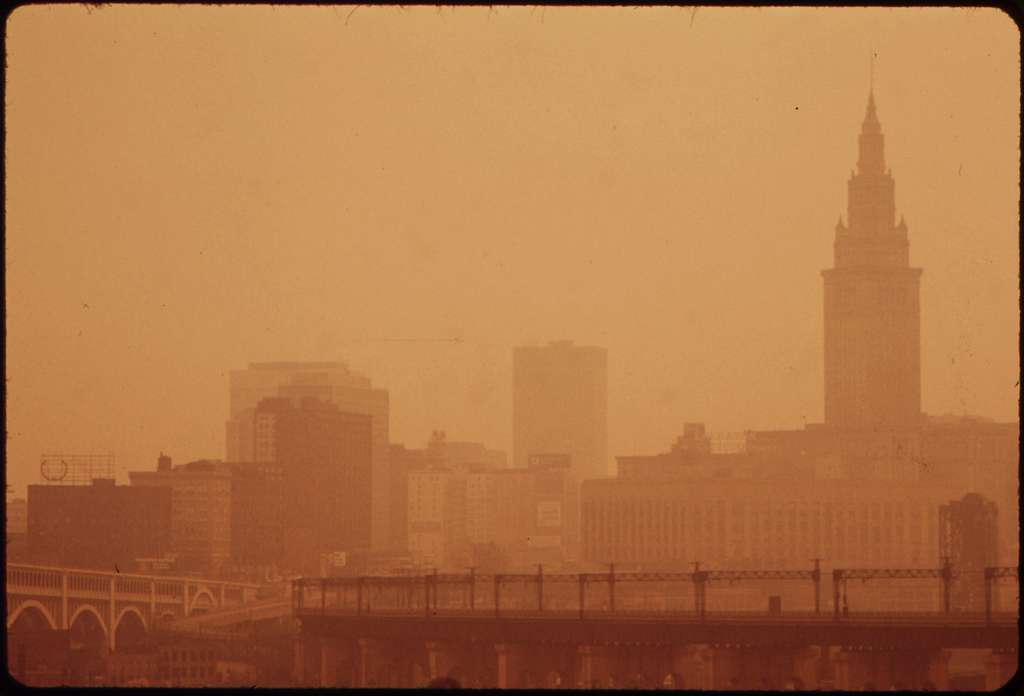
Credit: Photo: Cleveland, Ohio skyline on July, 20, 1973. Courtesy: Picryl.