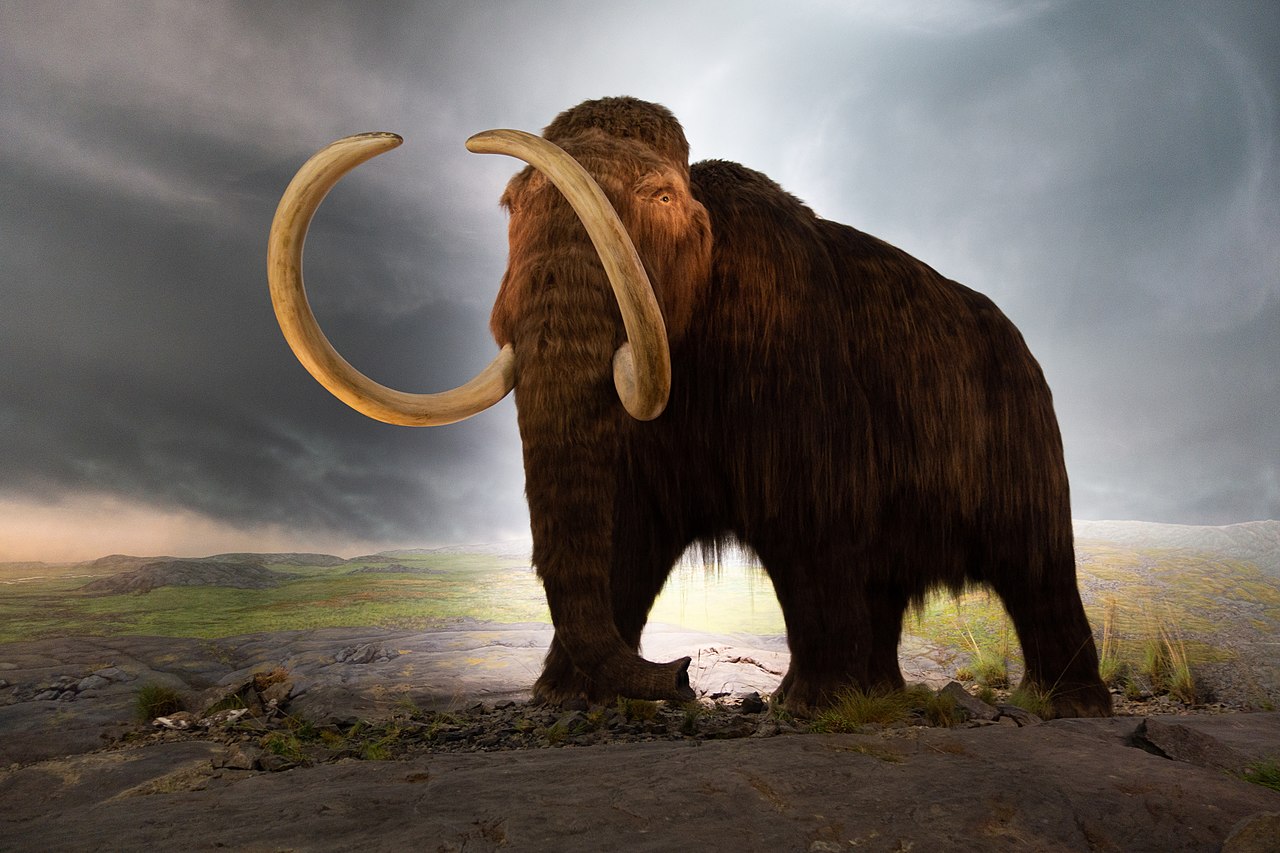
International team of scientists sequenced the whole genome of the woolly mammoth
On Apr. 23, 2015, an international collaboration that involved researchers from Sweden, the United States, Canada, and Russia announced they had completed genome sequences isolated from two ancient mammoth specimens.
One of those mammoths, representing the last population on Russia’s Wrangel Island, was estimated to have lived about 4,300 years ago. The other specimen, from northeastern Siberia, was about 44,800 years old. The study results were reported in the Cell Press journal Current Biology.
Sequencing ancient genomes is no easy feat, explains Dalén and Eleftheria Palkopoulou. In most cases, the DNA is damaged, highly fragmented, and contaminated by DNA from microbes and sediments. After considerable screening, the researchers managed to find two samples with exceptionally well-preserved mammoth DNA.
Because an individual’s genome is a mosaic of bits and pieces of DNA inherited from a large number of its ancestors, a single genome contains a vast amount of information about a species’ population history. Taking advantage of this, the researchers inferred that woolly mammoth populations suffered a blow in the Middle or Early Pleistocene, some 250,000 to 300,000 years ago, for reasons that aren’t at all clear. That more ancient and temporary loss in numbers was followed by a more severe decline at the end of the last glaciation, from which the woolly mammoth never recovered.
The study is a result of an international collaboration that involved researchers from Sweden, the United States, Canada, and Russia. The researchers say that they plan to continue sequencing genomes representing different time points in order to further investigate the woolly mammoth’s evolutionary history.
Tags:
Source: eurekalert.org
Credit: