OHSU study revealed SARS-CoV-2 reacted to antibodies of virus from 2003 SARS outbreak
On Jan. 25, 2021, Oregon Health & Science University (OHSU) announced a new study demonstrated that antibodies generated by the novel coronavirus reacted to other strains of coronavirus and vice versa, according to research published in the journal Cell Reports.
However, antibodies generated by the SARS outbreak of 2003 had only limited effectiveness in neutralizing the SARS-CoV-2 virus. Antibodies are blood proteins that are made by the immune system to protect against infection, in this case by a coronavirus.
“Our finding has some important implications concerning immunity toward different strains of coronavirus infections, especially as these viruses continue to mutate,” said senior author Fikadu Tafesse, Ph.D., assistant professor of molecular microbiology and immunology in the OHSU School of Medicine.
Given the speed of mutations – estimated at one to two per month – it’s not surprising that an antibody generated from a virus 18 years ago provides a meager defense against the new coronavirus. Nonetheless, Tafesse said the findings suggest more work needs to be done to determine the lasting effectiveness of COVID-19 vaccines.
The study also suggests that efforts to accurately discern a previous COVID-19 infection, by analyzing antibodies in blood, may be confounded by the presence of antibodies reacting to other strains of coronavirus including the common cold. Although this complicates diagnosis of older infections, researchers say the finding actually expands scientists’ ability to study the biology and disease-causing effects of the SARS-CoV-2 virus since they know it reacts to antibodies of multiple strains of coronaviruses.
Tags:
Source: Oregon Health & Science University
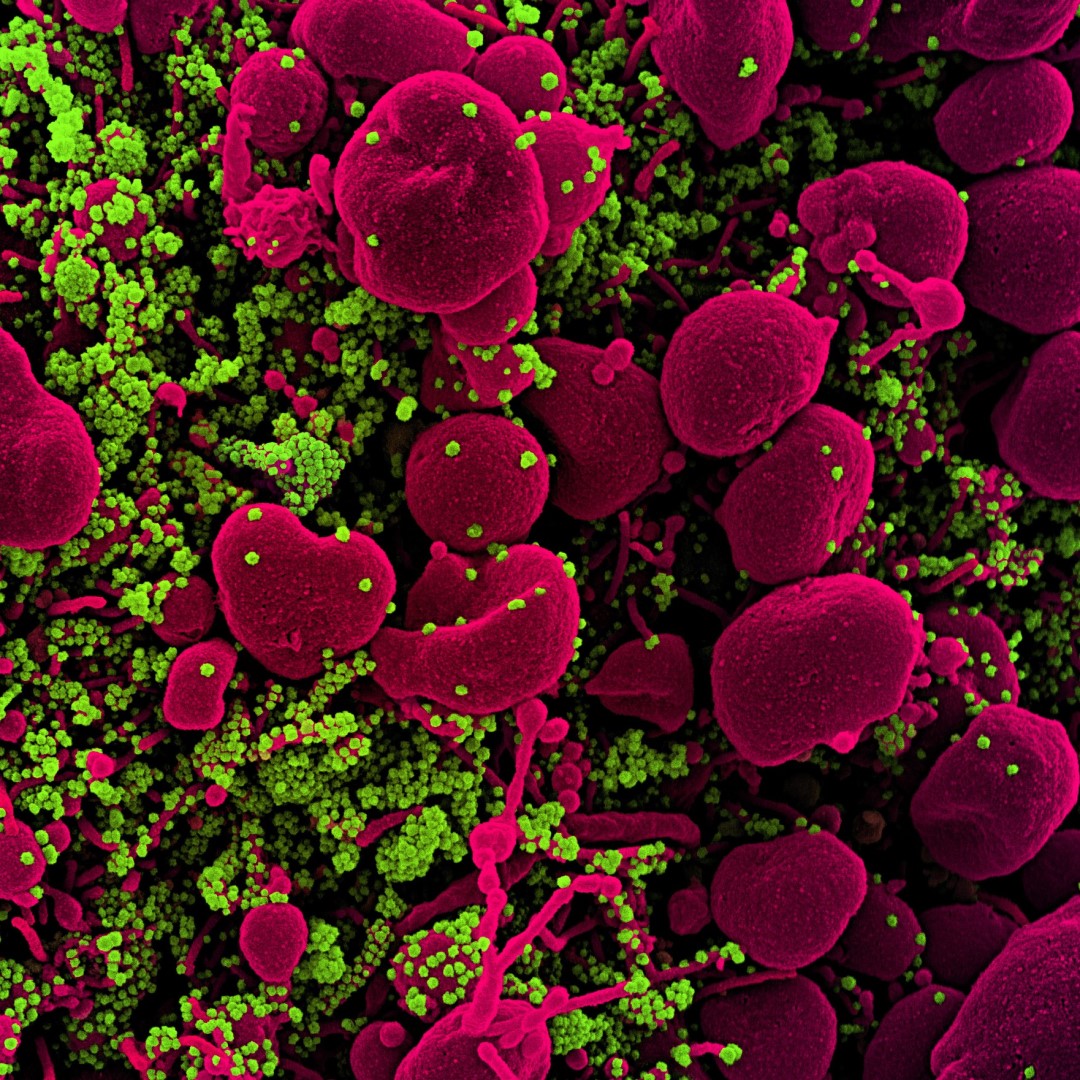
Credit: Photo: Colorized scanning electron micrograph of an apoptotic cell (pink) heavily infected with SARS-CoV-2 virus particles (green), isolated from a patient sample. Courtesy: National Institute of Allergy and Infectious Diseases.