Drug-delivery technology leads to sustained HIV antibody production in NIH study
On Mar. 9, 2020, researchers from the National Institute of Allergy and Infectious Diseases (NIAID), part of the NIH, reported finding a new approach to direct the body to make a specific antibody against HIV led to sustained production of that antibody for more than a year among participants in a NIH clinical trial.
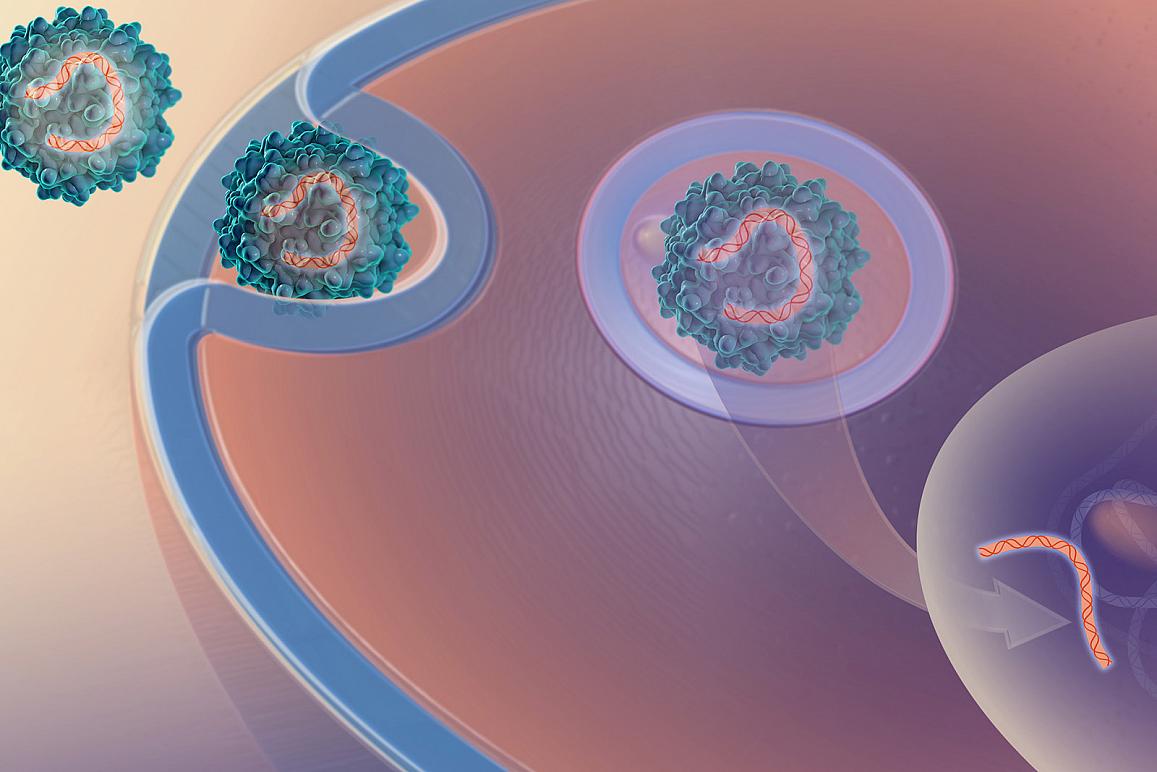
This drug-delivery technology uses a harmless virus to deliver an antibody gene into human cells, enabling the body to generate the antibody over an extended time. Researchers from NIAID reported the findings on Mar. 9 in an oral presentation at the 2020 Conference on Retroviruses and Opportunistic Infections.
Antibodies are immune system proteins that help prevent or clear infections. Traditional vaccines induce the immune system to generate protective antibodies. Another approach to preventing infections is to deliver monoclonal antibodies — preparations of a specific antibody designed to bind to a single target — directly into people. Monoclonal antibodies also are used therapeutically, with many already approved for treating cancer, autoimmune diseases and other conditions and others being evaluated for treatment of infectious diseases, such as Ebola virus disease.
Administering proteins to people requires periodic injections or infusions to retain protective or therapeutic levels, which can be challenging, particularly in resource-limited settings. Delivery of antibody genes using a virus as a carrier, or vector, offers a potential alternative.
The drug-delivery system developed by scientists at NIAID’s Vaccine Research Center (VRC) uses adeno-associated virus serotype 8 (AAV8) to deliver an antibody gene. AAVs — small viruses that do not cause disease in humans — have proven to be safe, well-tolerated vectors for gene therapy. In a previous study in animal models, VRC researchers found that using AAV8 to deliver genes for antibodies against simian immunodeficiency virus (SIV), the monkey equivalent of HIV, led monkeys to safely produce high levels of anti-SIV antibodies and protected them from acquiring SIV.
Building on this preclinical work, researchers designed a Phase 1 clinical trial known as VRC 603. It aims to assess the safety and tolerability of an AAV8 vector carrying an anti-HIV antibody gene in adults living with well-controlled HIV, and to evaluate whether it could cause human cells to produce the antibody. The vector carries the gene for an anti-HIV monoclonal antibody called VRC07, which was originally isolated from the blood of a person with HIV.
VRC07 is a broadly neutralizing antibody (bNAb), meaning it can stop a wide range of HIV strains from infecting human cells in the laboratory. Other clinical studies are underway to determine whether bNAb infusions can protect humans from acquiring HIV. Scientists also are evaluating whether combinations of HIV bNAbs can suppress the virus in people living with HIV.
Tags:
Source: National Institute of Allergy and Infectious Diseases
Credit: Image: Courtesy National Human Genome Research Institute.