CDC published ACIP recommendations for typhoid vaccination
On Mar. 27, 2015, the U.S. Centers for Disease Control and Prevention (CDC) published new Immunization Practices Advisory Committee (ACIP) recommendations for typhoid vaccination. Two typhoid vaccines were available for use in the U.S.: 1) a Vi capsular polysaccharide vaccine for parenteral use (Typhim Vi, manufactured by Sanofi Pasteur) and 2) an oral live-attenuated vaccine (Vivotif, manufactured from the Ty21a strain of Salmonella serotype Typhi by PaxVax).
The CDC also included an update on the epidemiology of enteric fever in the United States, focusing on increasing drug resistance in Salmonella enterica serotype Typhi, the cause of typhoid fever, as well as the emergence of Salmonella serotype Paratyphi A, a cause of paratyphoid fever, against which typhoid vaccines offer little or no protection.
Salmonella enterica serotypes Typhi and Paratyphi A, Paratyphi B (tartrate negative), and Paratyphi C cause a protracted bacteremic illness referred to respectively as typhoid and paratyphoid fever, and collectively as enteric fever. Enteric fever can be severe and even life-threatening. It is most commonly acquired from water or food contaminated by the feces of an infected person.
The incubation period is 6–30 days, and illness onset is insidious, with gradually increasing fatigue and fever. Malaise, headache, and anorexia are nearly universal. A transient macular rash can occur. When serious complications (e.g., intestinal hemorrhage or perforation) occur, it is generally after 2–3 weeks of illness. Untreated illness can last a month. Patients with untreated typhoid fever were reported to have case-fatality rates >10%; the overall case-fatality rate with early and appropriate antibiotic treatment is typically <1%.
Typhoid fever is uncommon in the United States, with an average of about 400 cases reported annually during 2007–2011. Approximately 90% of U.S. cases occur among persons returning from foreign travel, and >75% of travelers had been in India, Bangladesh, or Pakistan. Most travelers (≥55%) reported that their reason for travel was visiting friends or relatives.
Even short-term travel to high-incidence areas is associated with risk for typhoid fever. CDC recommends typhoid vaccination for travelers to many Asian, African, and Latin American countries, but, as of 2010, no longer recommends typhoid vaccine for travelers to certain Eastern European and Asian countries.
The importance of vaccination and other preventive measures for typhoid fever is heightened by increasing resistance of Salmonella serotype Typhi to antimicrobial agents, including fluoroquinolones, in many parts of the world
Tags:
Source: U.S. Centers for Disease Control and Prevention
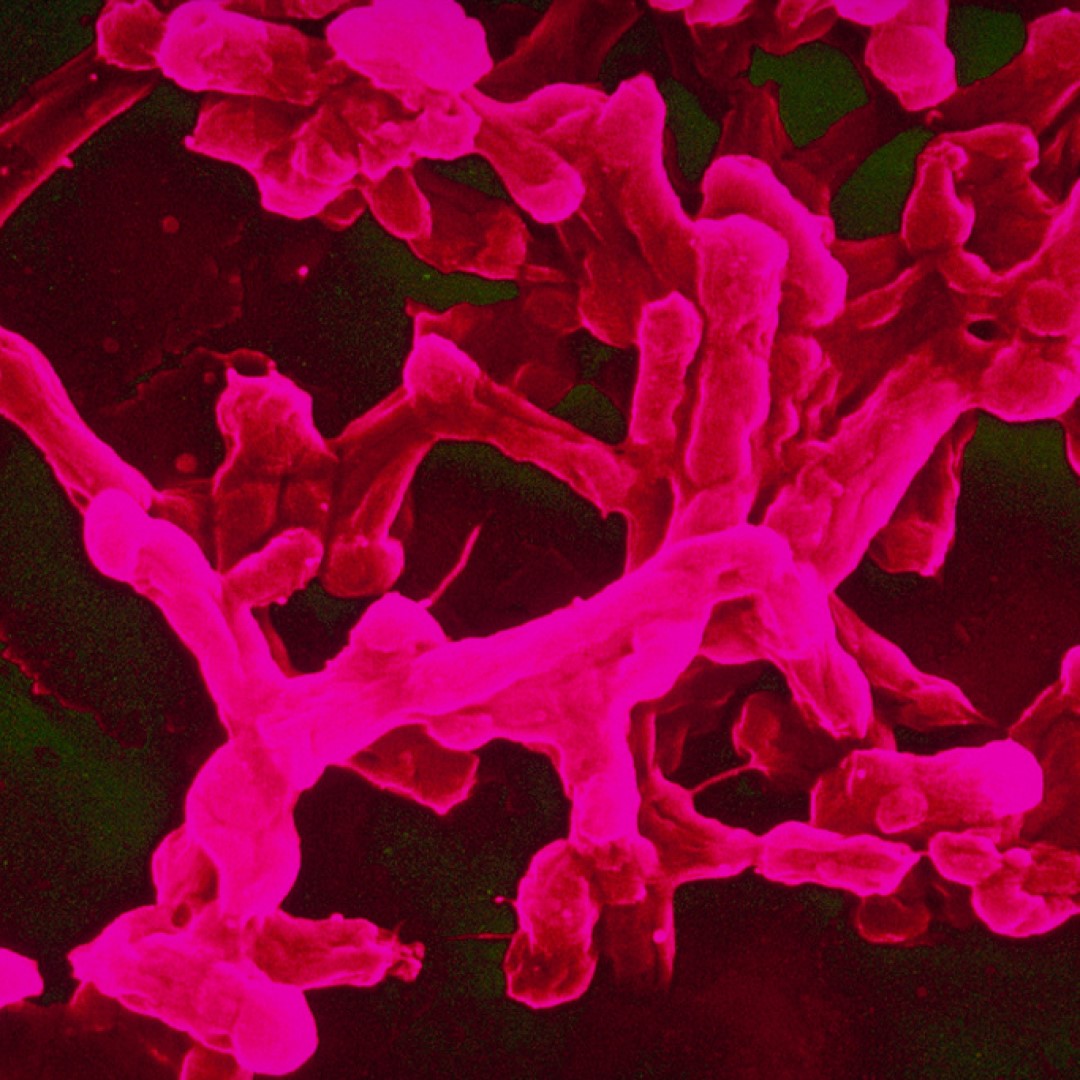
Credit: Photo: Electron microscopic image of bacteria that causes typhoid fever by Alain Grillet. Courtesy: Sanofi Pasteur.