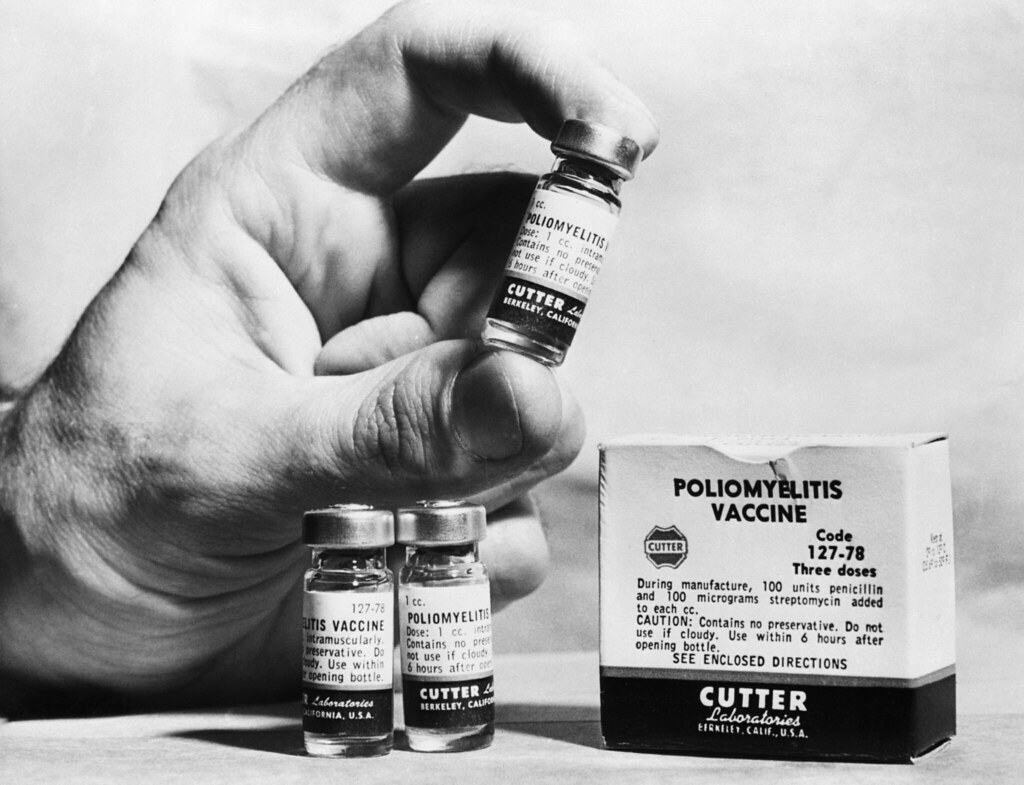
Officials discover polio cases after vaccine produced by Cutter Laboratories accidently contained live virus
On Apr. 26, 1955, Officials first noticed an increase in reported polio cases in California. In April 1955 more than 200 000 children in five Western and mid-Western USA states received a polio vaccine in which the process of inactivating the live virus proved to be defective.
Within days there were reports of paralysis and within a month the first mass vaccination programme against polio had to be abandoned. Subsequent investigations revealed that the vaccine, manufactured by the California-based family firm of Cutter Laboratories, had caused 40 000 cases of polio, leaving 200 children with varying degrees of paralysis and killing 10.
The Cutter incident had an ambivalent legacy. On the one hand, it led to the effective federal regulation of vaccines, which today enjoy a record of safety `unmatched by any other medical product’. On the other hand, the court ruling that Cutter was liable to pay compensation to those damaged by its polio vaccine—even though it was not found to be negligent in its production—opened the floodgates to a wave of litigation.
As a result, `vaccines were among the first medical products almost eliminated by lawsuits’. Indeed, the National Vaccine Injury Compensation Program was introduced in 1986 to protect vaccine manufacturers from litigation on a scale that threatened the continuing production of vaccines.
Still, many companies have opted out of this low-profit, high-risk field, leaving only a handful of firms to meet a growing demand (resulting in recent shortages of flu and other vaccines).
Tags:
Source: U.S. National Library of Medicine
Credit: