Microrobot Delivers Drugs Directly to Their Site of Action
On Nov. 14, 2025, researchers at the University of Würzburg announced developing a microrobot that delivers drugs precisely to their target location in the body and may soon be clinically available. A stroke occurs when blood clots block the vessels that supply the brain with blood. Twelve million people worldwide suffer a stroke every year – many die or are left with disabilities, such as paralysis. To dissolve blood clots, drugs are currently administered that are distributed throughout the body. A high dose must be given to ensure that the necessary amount of the drug reaches the clot. However, this can have significant side effects, such as internal bleeding.
Drugs are often only needed at a specific site in the body. That is why medical research has long been trying to deliver them precisely to where they are needed – in the case of a stroke, directly to the vicinity of the blood clot. A team from ETH Zurich has now achieved decisive breakthroughs on several levels in pursuit of this goal. The results have been published in the prestigious journal Science.
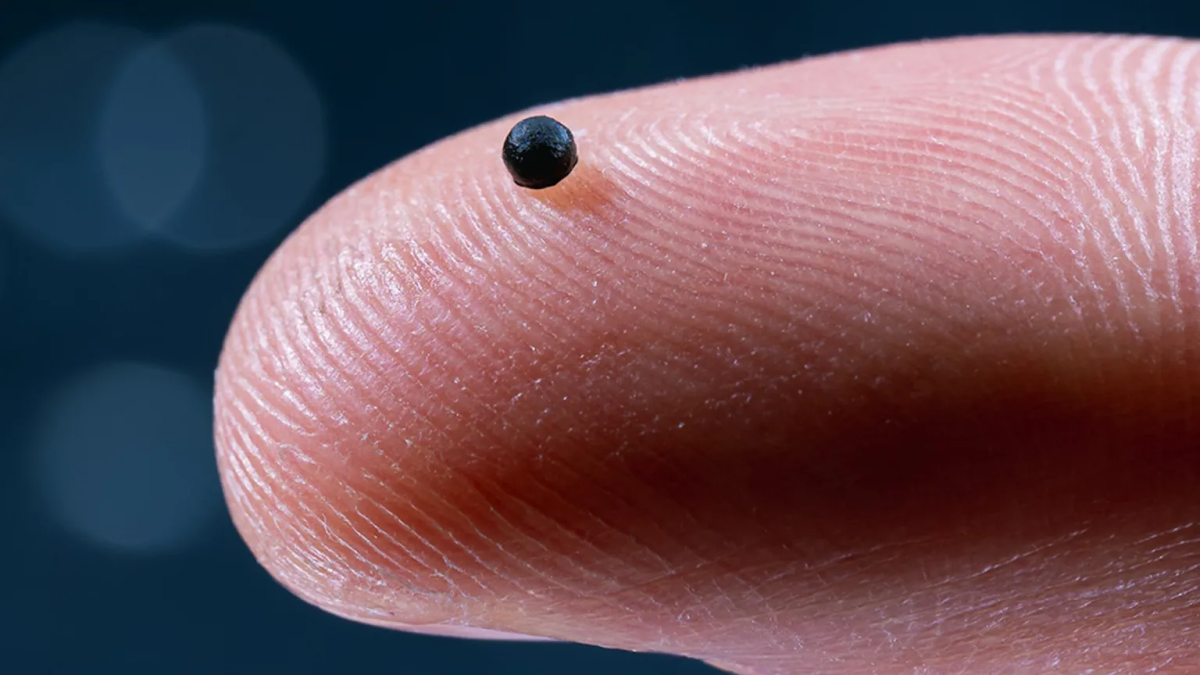
For the targeted transport of drugs, the researchers are relying on a microrobot – a spherical capsule developed by themselves. It consists of a dissolvable gel shell and iron oxide nanoparticles. These make it possible to control the microrobot magnetically through the body. ‘Because the vessels in the human brain are so small, the capsule must also be of a certain size. The technical challenge is that such a small capsule must also have sufficiently strong magnetic properties,’ explains Fabian Landers, first author of the paper and postdoctoral researcher at the Multi-Scale Robotics Lab at ETH Zurich.
In order for doctors to be able to track how the capsule moves through the vessels using X-ray imaging, a contrast agent is required for the robot to be used. The researchers used tantalum nanoparticles, which are frequently used in medicine, for this purpose. The researchers succeeded in loading the microrobots with common drugs for various applications. These included a drug that dissolves blood clots, an antibiotic and an anti-tumour agent. The drugs are released by a high-frequency magnetic field that heats the magnetic nanoparticles and dissolves the gel shell and the microrobot.
The drug used to dissolve blood clots is an enzyme approved by the U.S. Food and Drug Administration (FDA) called tissue plasminogen activator (tPA). The new microrobots could be used not only against blood clots, but also for localised infections or tumours. At every stage of development, the research team has taken into account that everything it develops can be used in the operating theatre as soon as possible. The next goal is to begin clinical trials in humans as soon as possible.
Tags:
Source: University of Würzburg
Credit: Image: Luca Donati / lad.studio Zürich.