Researchers Decipher the Past with DNA from Parchment Pages
On Feb. 17, 2025, a team led by researcher Tim Stinson, an english professor at North Carolina State University, announced a new way to collect DNA from pages of parchment, validating a brand-new way to carefully collect cellular material from documents that have been preserved for hundreds of years.
“We’re bringing together very different disciplines — medieval and manuscript studies from humanities and an array of techniques from the sciences — to see what information we can glean genetically to contextualize the written data,” says Stinson, an associate professor of English and University Faculty Scholar in the College of Humanities and Social Sciences.
Researchers have known for a while that our ancestors’ writing surfaces might hold more information than merely what’s inscribed on them. But collecting DNA from materials degraded by harsh manufacturing processes, Mother Nature and Father Time — not to mention handled repeatedly — is no small feat.
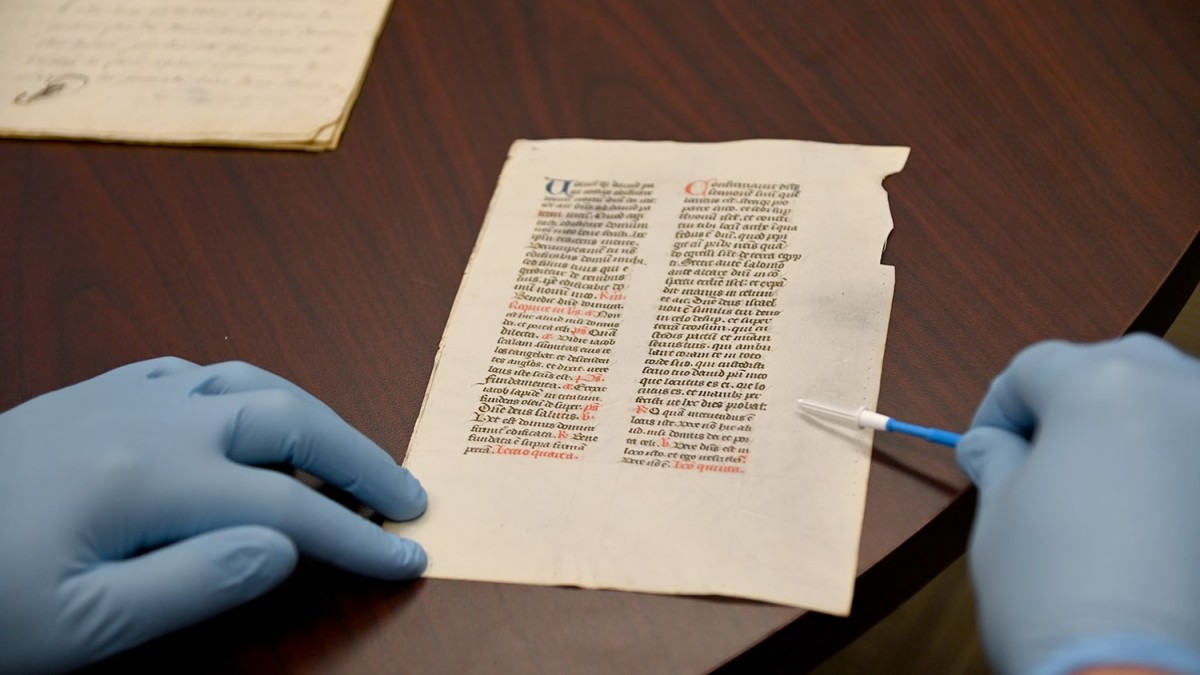
Until recently, an eraser was the only way to collect cellular material without causing damage. By gently rubbing a PVC-based eraser on an artifact, the eraser crumbs pick up cellular material through static electricity. You can then collect DNA from that cellular material. But as you might imagine, the eraser-crumb collection method takes a lot of time — and physical effort.
The research team proved cytology brushes — specifically, those used to test for cervical cancer — could collect cellular material containing DNA from documents dating back to 700 C.E. without causing any damage. Stinson says they showed their brushing technique, coupled with new sequencing methods, can capture whole mitochondrial genomes, which in turn, are used to determine source species. They published their findings in the peer-reviewed journal PLOS One.
Tags:
Source: North Carolina State University
Credit: