Horseshoe Crabs Break Free from Biomedical Testing
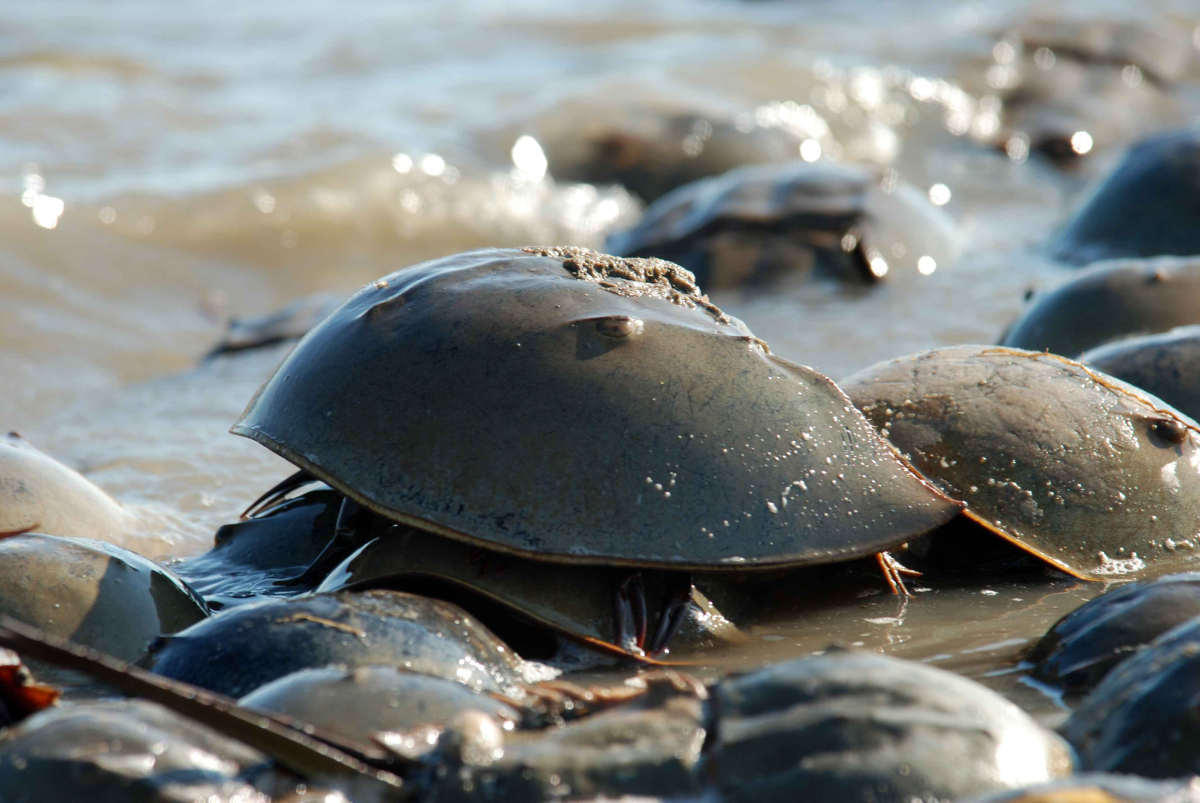
On Jul. 29, 2025, The Scientist reported that for 40 years, researchers relied on horseshoe crab blood to catch endotoxins in drugs. Now, synthetic alternatives and updated regulations can end the practice. Every year in May when high tide coincides with the full moon, horseshoe crabs convene on the beaches of the mid-Atlantic coast to lay millions of eggs. At the same time, migratory shorebirds on their journey north make a pit stop to feed on these eggs. This seemingly precisely timed series of events has been happening for over ten thousand years, but for the last few decades, it has been interrupted by the pharmaceutical industry seeking horseshoe crab blood. The industry uses this blood to test the safety of the drug supply before they can distribute the therapies to people. Drug companies harvest more than one million horseshoe crabs each year for this purpose.
To protect this fragile ecosystem and to manage risk in the drug supply chain, scientists have created synthetic alternatives to horseshoe crab blood to test drug safety over the last four decades. Adoption of these methods has been slow, yet scientists and conservationists are hopeful that recent changes to testing guidelines will make the industry less reliant on these ancient creatures.
Drug manufacturers need to test every injectable drug or medical device—including vaccines, cell and gene therapies, and dialysis products—for endotoxins. Endotoxins are a natural component of the cell wall of Gram-negative bacteria that provide the bacteria with a structural and protective function. When drug companies use these bacteria to produce recombinant protein and nucleic acid drugs, the bacteria can release endotoxins as a normal part of their growth and death. The main endotoxin of concern for the drug industry are lipopolysaccharides (LPS), and most endotoxin testing is designed to detect LPS.
“Endotoxin, when it enters into our bloodstream, will switch on a lot of immune responses,” said Jeak Ling Ding, a molecular innate immunologist and emeritus professor at the National University of Singapore. Endotoxins can trigger inflammation, septic shock, and if not controlled, death.
In 1956, medical researchers Frederick Bang and Jack Levin found that horseshoe crab blood would clot if it came into contact with endotoxins. This clotting mechanism protects the crab by trapping invading microbes and their toxins, preventing their spread through the crab’s circulatory system. Two decades after this discovery, the Food and Drug Administration (FDA) approved limulus amebocyte lysate (LAL)—the aqueous extract of blood from horseshoe crabs containing clotting proteins—for endotoxin testing. This replaced the use of rabbits, which had been used for endotoxin testing since the 1940s.
The LAL test works like this: If a drug is contaminated with endotoxin, it will activate the enzyme limulus clotting Factor C, which then triggers a cascade of reactions that result in an insoluble gel. This is the basis of the gel clot LAL test, but two other LAL methods rely on either a color change or a fluorescence readout.
Of the top 50 pharmaceutical companies in the world, only 10 to 15 of them have started using synthetic alternatives for endotoxin testing, said Elizabeth Bennett, the director of communications at Revive & Restore, a conservation organization that applies biotechnology towards the survival of endangered species. “By and large, a vast majority of pharmaceutical companies are still using LAL,” Bennett said. One barrier to adoption she cited is the regulatory guidelines.
The US Pharmacopeia (USP), an independent nonprofit organization that publishes quality guidelines for the medical industry, sets the endotoxin testing guidelines for the United States. In the past, USP included guidelines for the LAL test, but not synthetic alternatives. While independent from the FDA, standards set by the USP are often used by regulatory agencies.
Efforts to update the USP guidelines on endotoxin testing began in 2019, but these early attempts never panned out for various reasons—internal politics, a vested interest in continued LAL production by LAL vendors, and lingering doubts on the alternatives. It wasn’t until May 2025 that the USP added a new chapter on synthetic alternatives to LAL.
Revive & Restore recently launched the Sustainability Scorecards for Endotoxin Testing, which track the adoption of sustainable alternatives to LAL by pharmaceutical companies. These scorecards are what Bennett called the “first public metric that measures the progress of the pharmaceutical industry” in sustainable endotoxin testing. She added, “It’s an accountability tool. We like to say [it’s] a gamified version of the environmental stewardship that we would like to see in the industry.”
Revive & Restore collaborated with the Horseshoe Crab Recovery Coalition and various pharmaceutical companies to develop the scorecards, which measure public acknowledgement of replacing LAL, reducing LAL use, and whether pharmaceutical companies have adopted synthetic alternatives for new or legacy products.
Tags:
Source: The Scientist
Credit: